
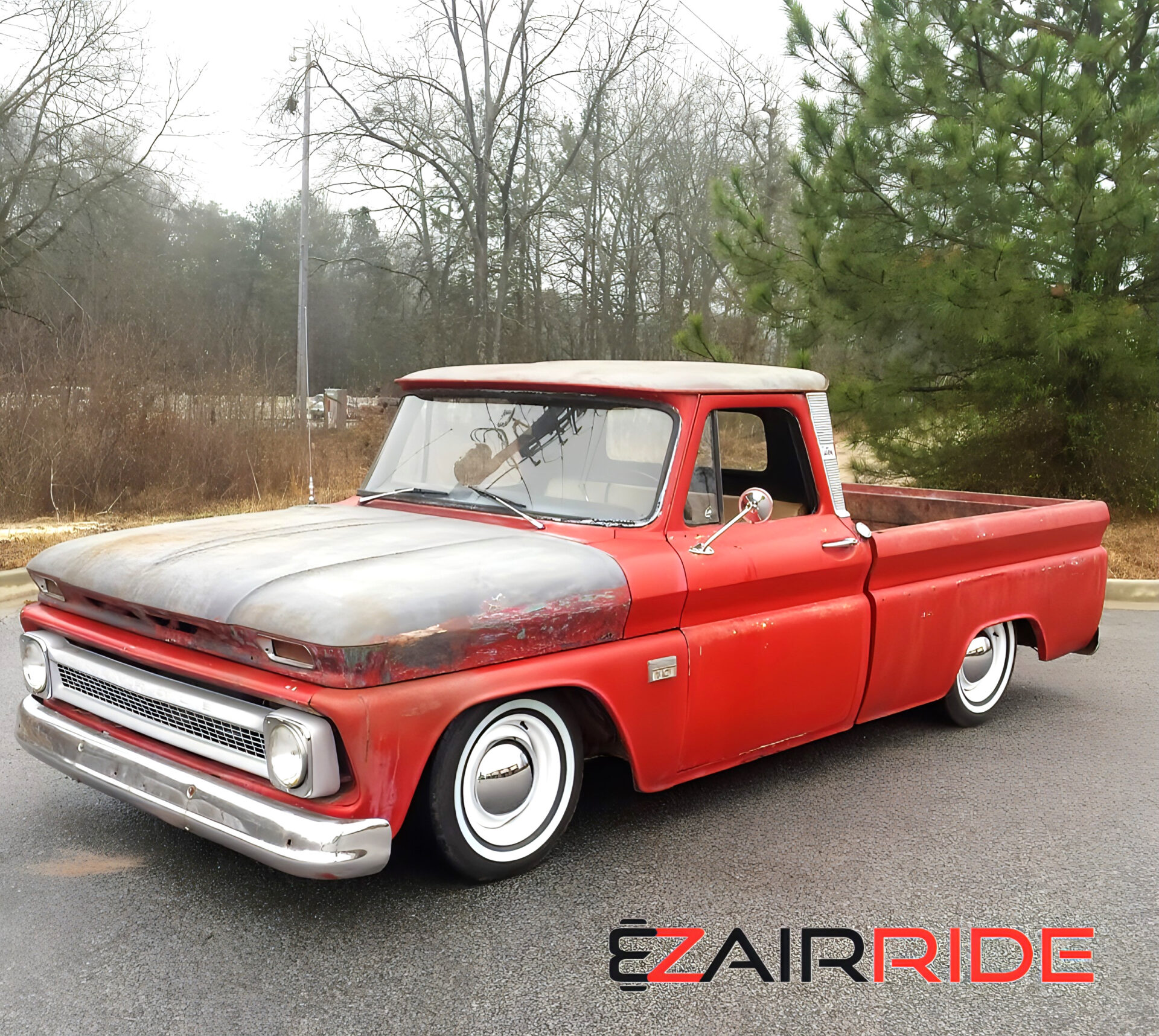
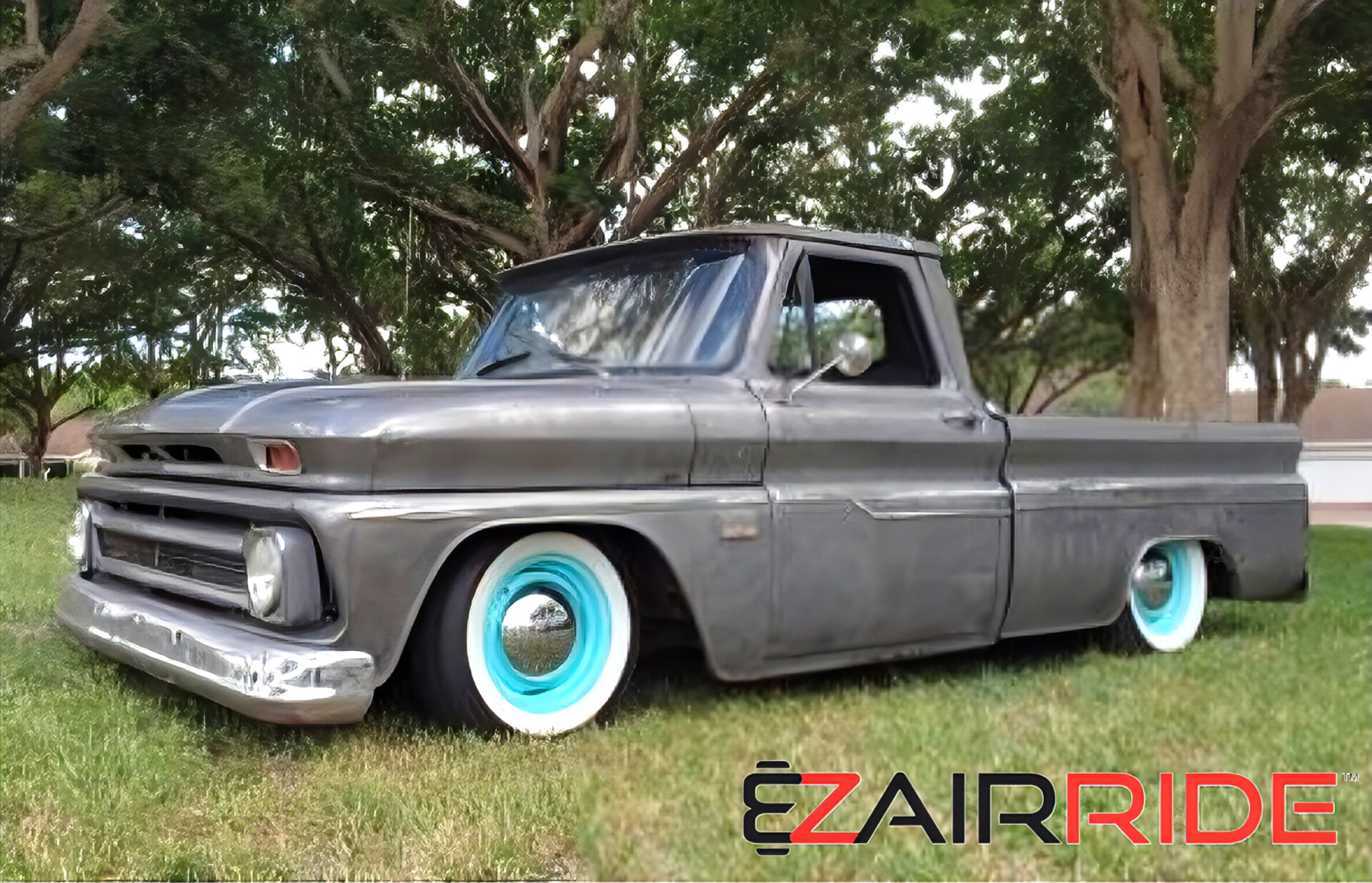
Engineered for the 1963-1972 Chevrolet C10/Suburban
Built to Lay Frame. Ready to Cruise Smooth.
We don’t believe in “one-size-fits-all” brackets and stiff towing helper bags designed for heavy-hauling work trucks. While standard kits restrict your travel and create a stiff, rigid ride, our custom setups utilize 10-inch stroke airbags to deliver an incredible range of adjustability—delivering the ultimate balance of a low stance, header clearance, and total road comfort.
Tailored for ’63–’72 C10 / Suburban Geometry
We engineered this bolt-on kit to integrate perfectly with your factory front control arms and your iconic rear trailing arm suspension. Because GM designed this classic chassis with both the front and rear shocks mounted outside of the coil springs, our system gives you a direct, zero-hassle, bolt-on fit:
100% Bolt-On: Designed to bolt right into your existing factory coil locations with absolutely zero shock relocation and zero welding.
Protects Low-Hanging Parts: Instantly lift your chassis to clear steep driveways, saving your oil pan, headers, and exhaust from scraping.
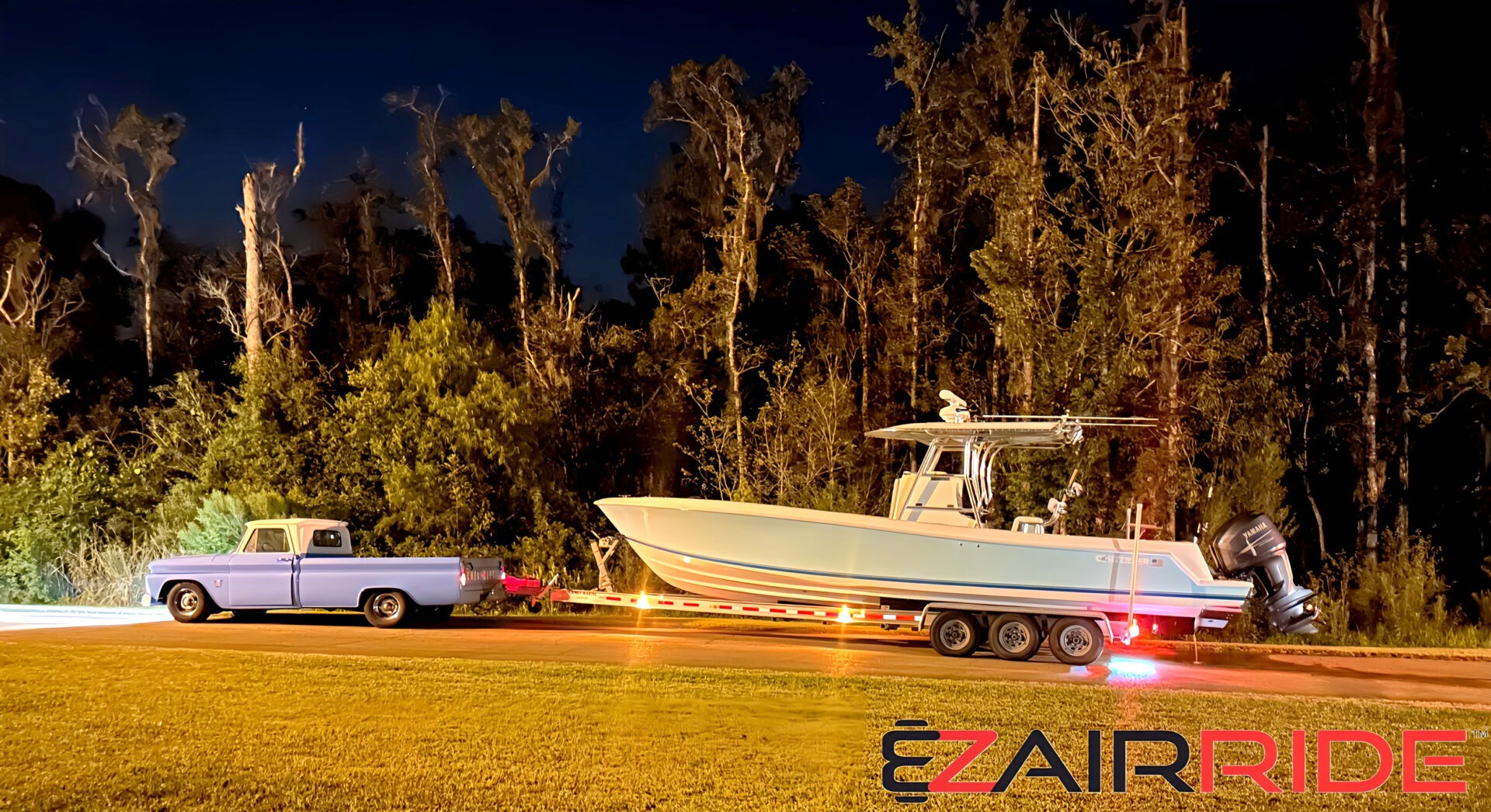
Handles Heavy Engine & Tow Loads: Effortlessly supports everything from heavy cast-iron big blocks to weekend towing, keeping your truck level without bottoming out.
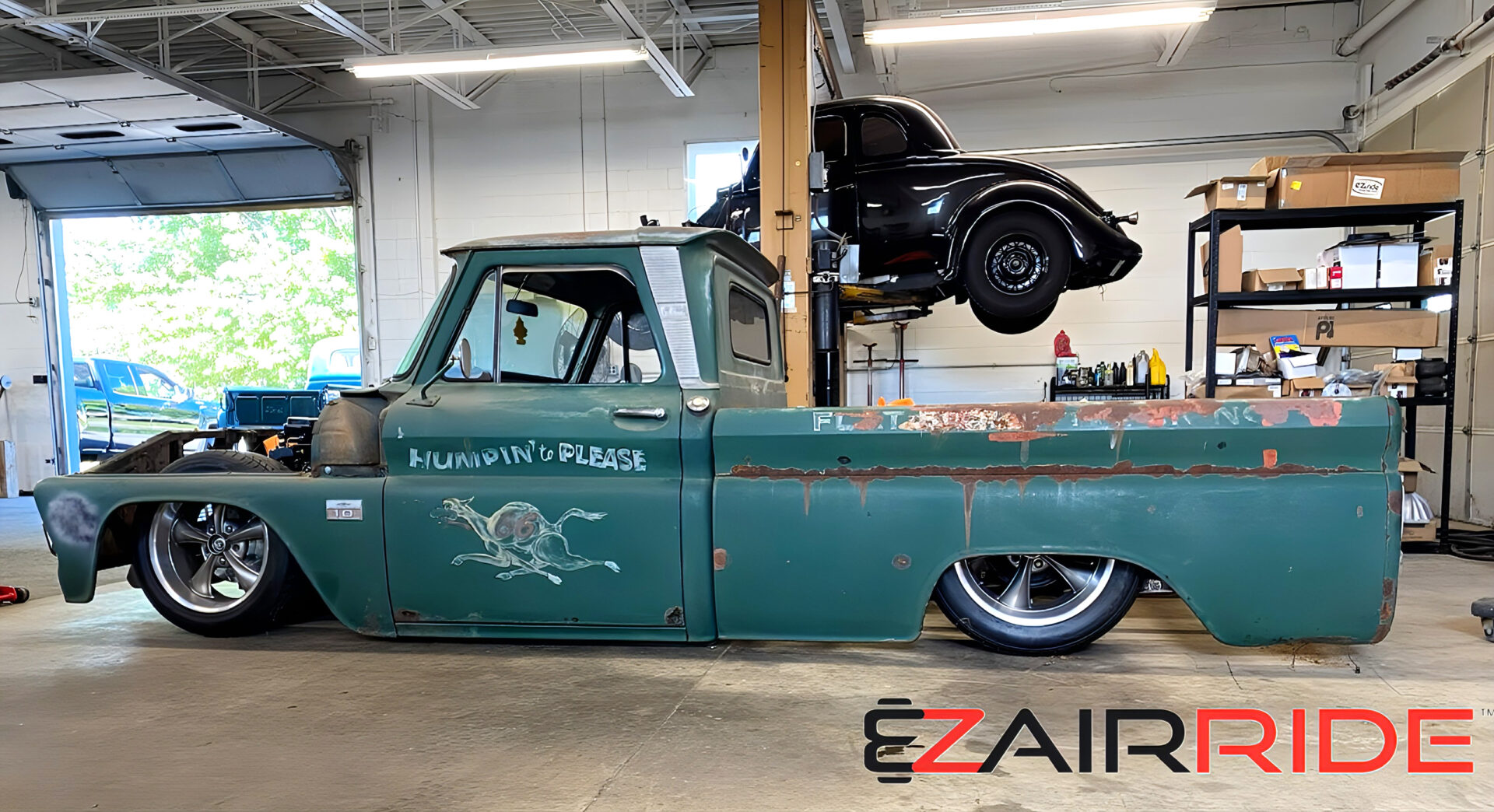
The Ultimate Stance: Drops your truck to a frame-laying stance when parked, while maintaining a smooth, comfortable ride down the road.
Classic Plus Kit
Analog System: Manual Paddle Control
Built for the purist who demands a direct, mechanical connection to their suspension, this system strips away the digital clutter—no finicky ride-height sensors, no self-leveling headaches, and absolutely no electrical gremlins.
Instead of fighting an operating system to get your truck to sit right, you are in total command using dash-mounted mechanical paddle valves. Operation is instinctive and bulletproof: lift the lever to air up, or push it down to lay the chassis out, releasing the pressure with a distinct pneumatic hiss. By combining classic dual-needle gauges with precise manual control, this time-tested system puts you in absolute control of your ride height without faulty electronics getting in the way.
Kit Highlights:
- Bolt-On Simplicity: Front and rear brackets are engineered to utilize your chassis’ existing mounting points or factory spring seats. No heavy fabrication or welding is required for the standard installation, making it a true garage-friendly upgrade for classic builds.
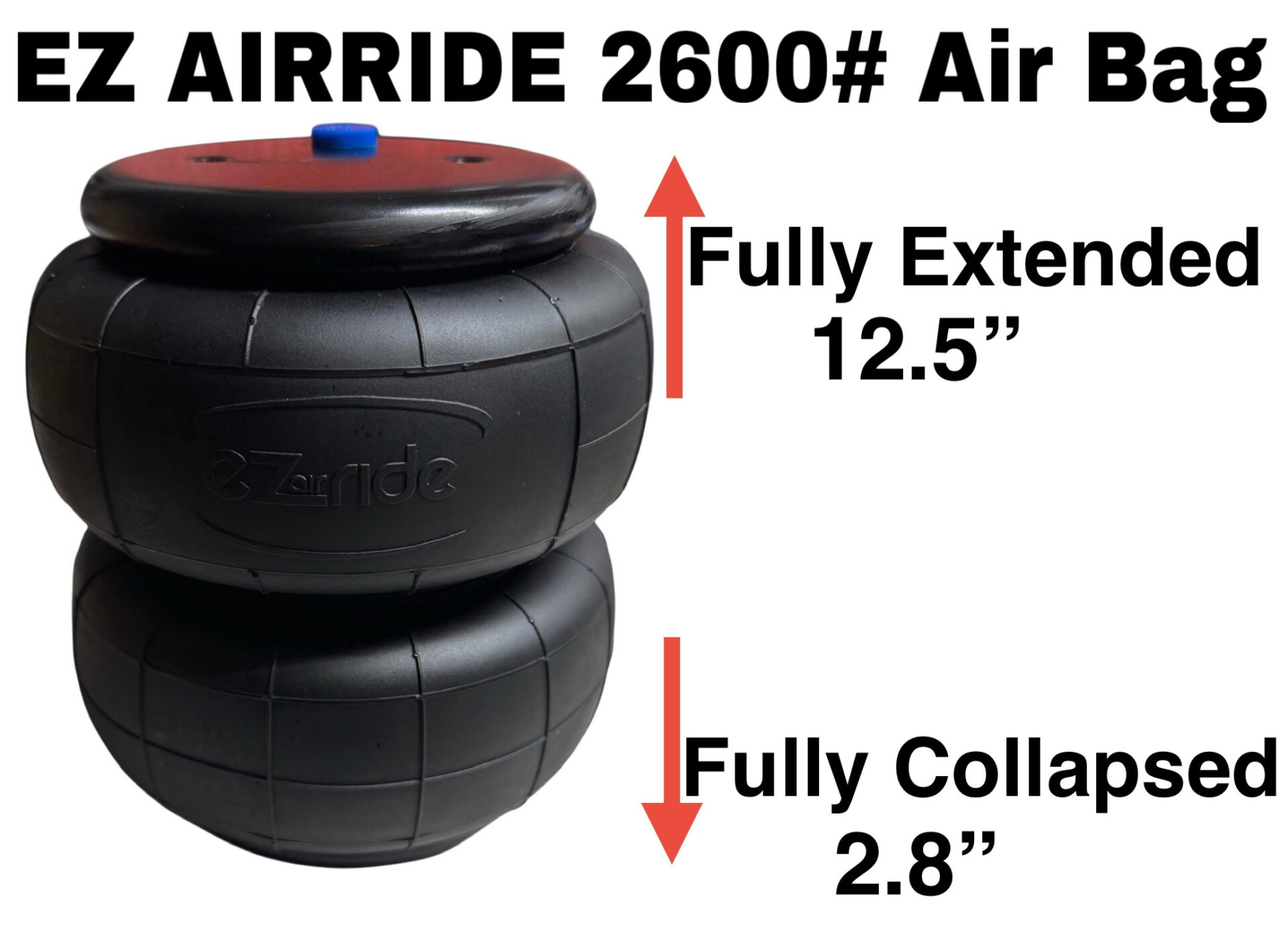
- Maximum Stroke Premium Airbags: Engineered for extreme stance and structural integrity. Our custom bags compress down to a razor-thin 2.8″ to achieve a completely slammed profile, and extend to a massive 12.5″—delivering nearly 10 full inches of usable stroke and a 600 PSI burst rating for unmatched pressure capacity.
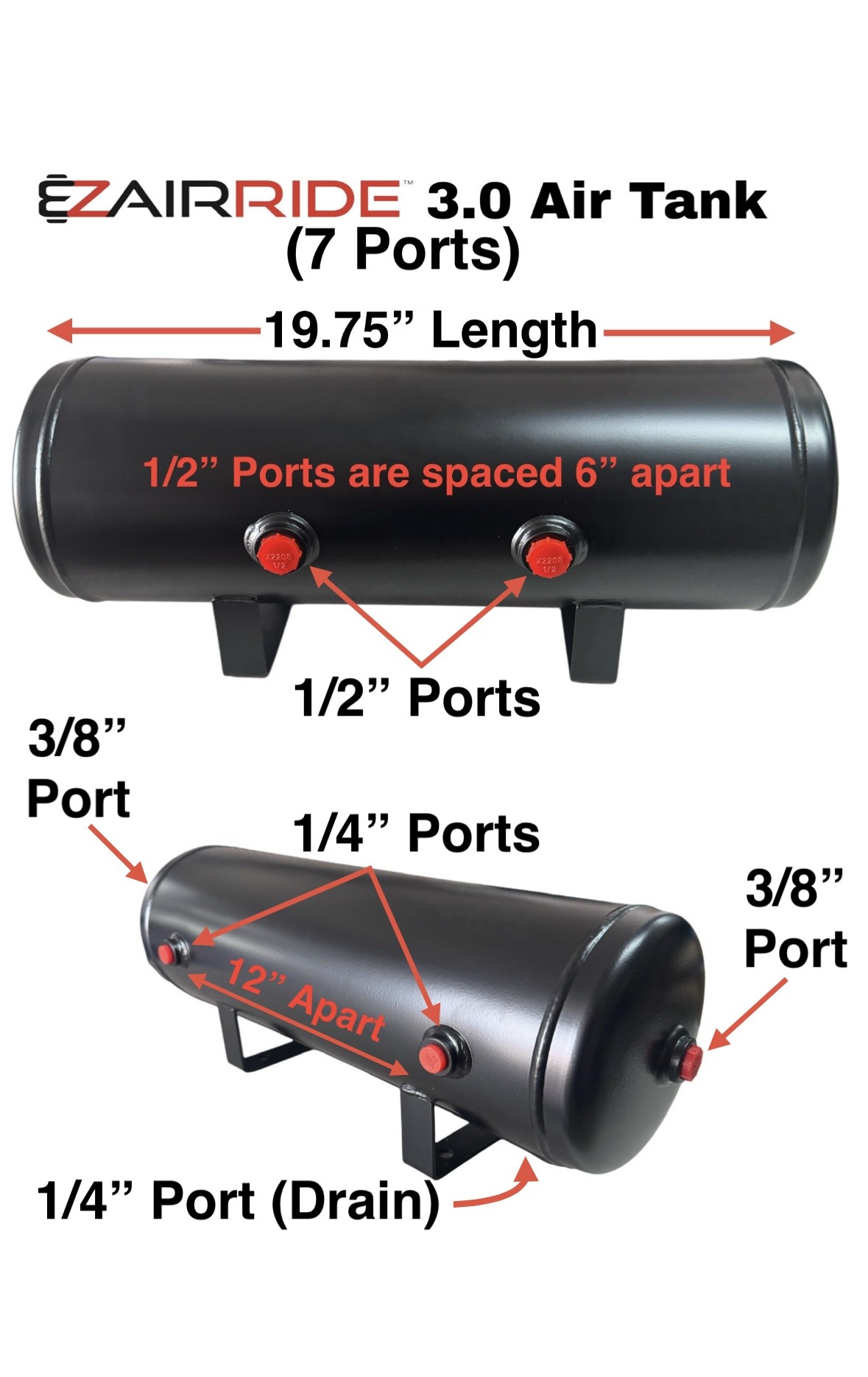
- Exclusive 6+ Gallon Air Tank: Forget standard 4-to-5 gallon setups that leave you waiting around. We include our exclusive, high-capacity 6+ gallon tank to give you maximum air volume, and plenty of reserve for when you want to play with the switches.(Note: Standard 6-gallon tank can be upgraded to our Twin 3-Gallon Mini-Split system at checkout).
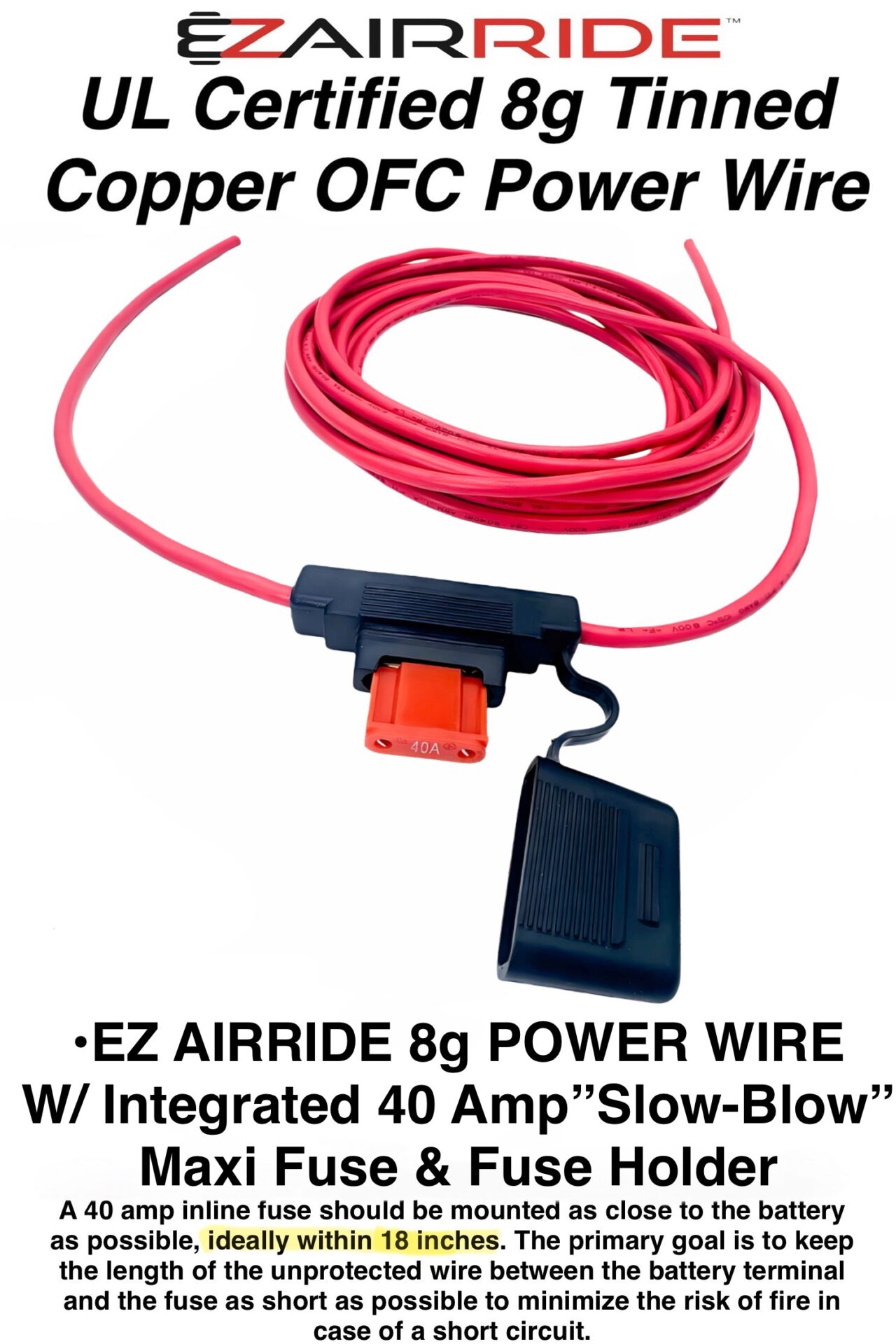
- Premium Heavy-Gauge Wire Package: Power your compressor reliably with heavy-duty, 8-gauge UL-listed power wire, complete with an integrated 40-amp Maxi fuse assembly to ensure proper circuit and system protection right out of the box.
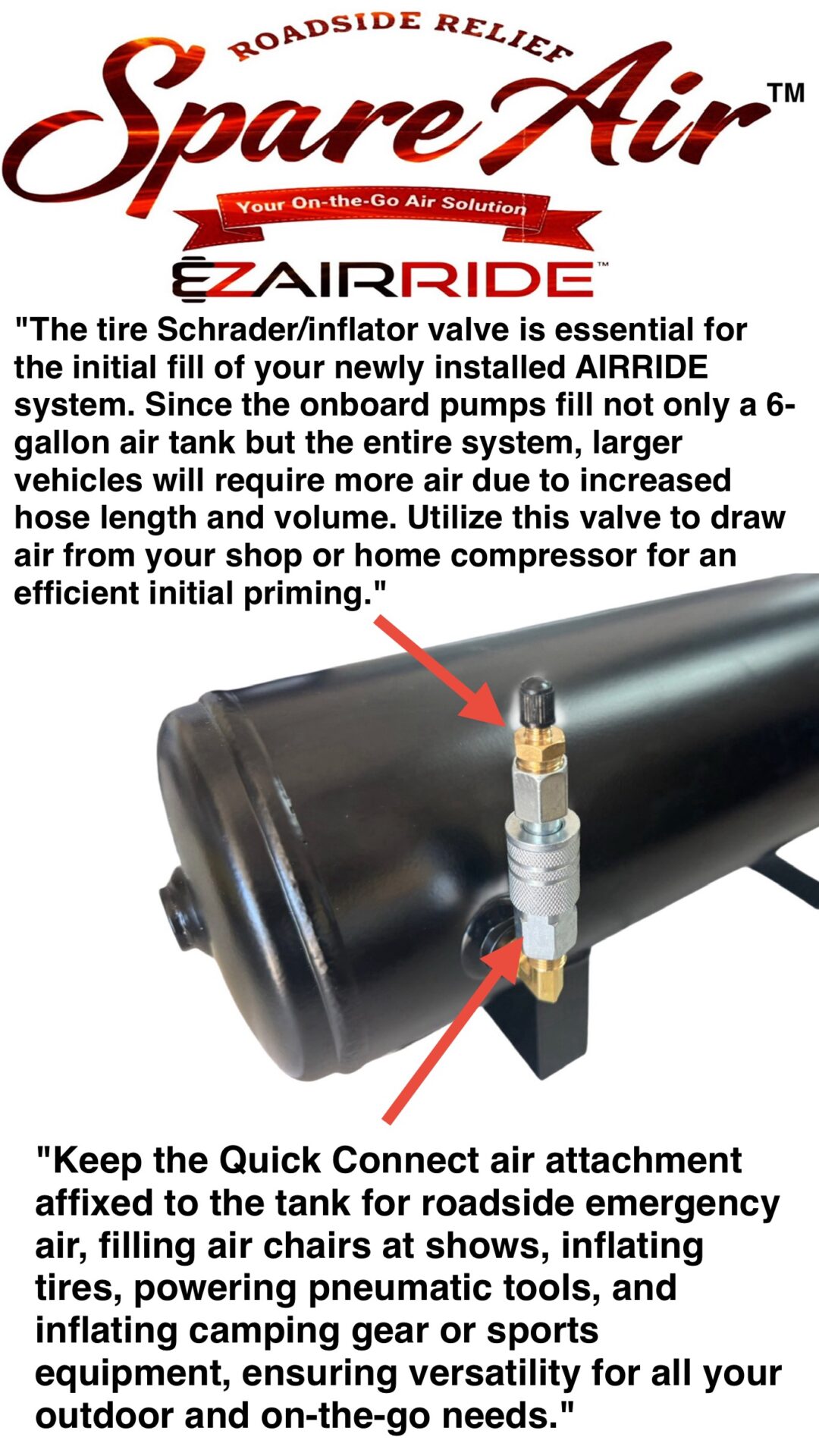
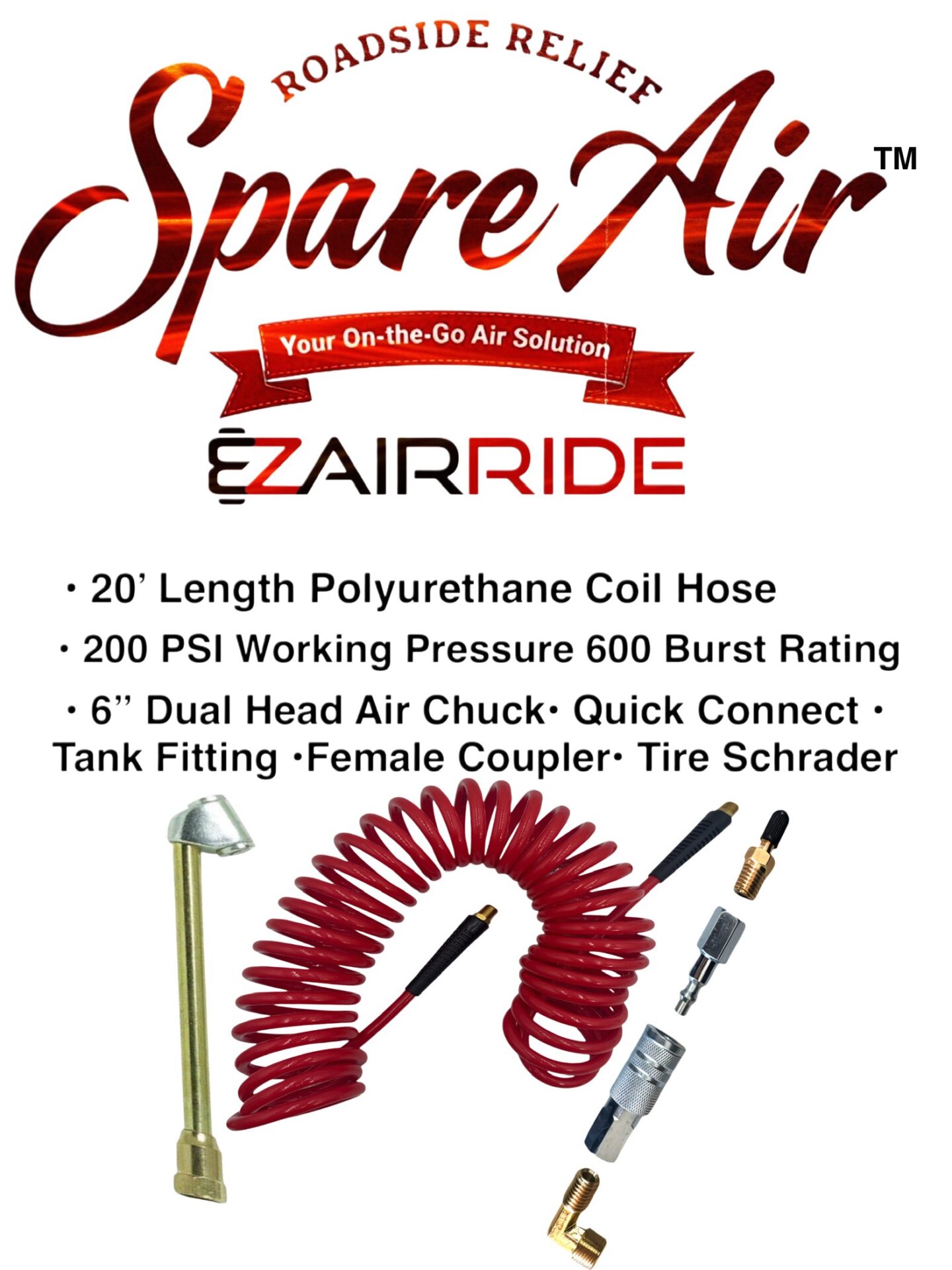
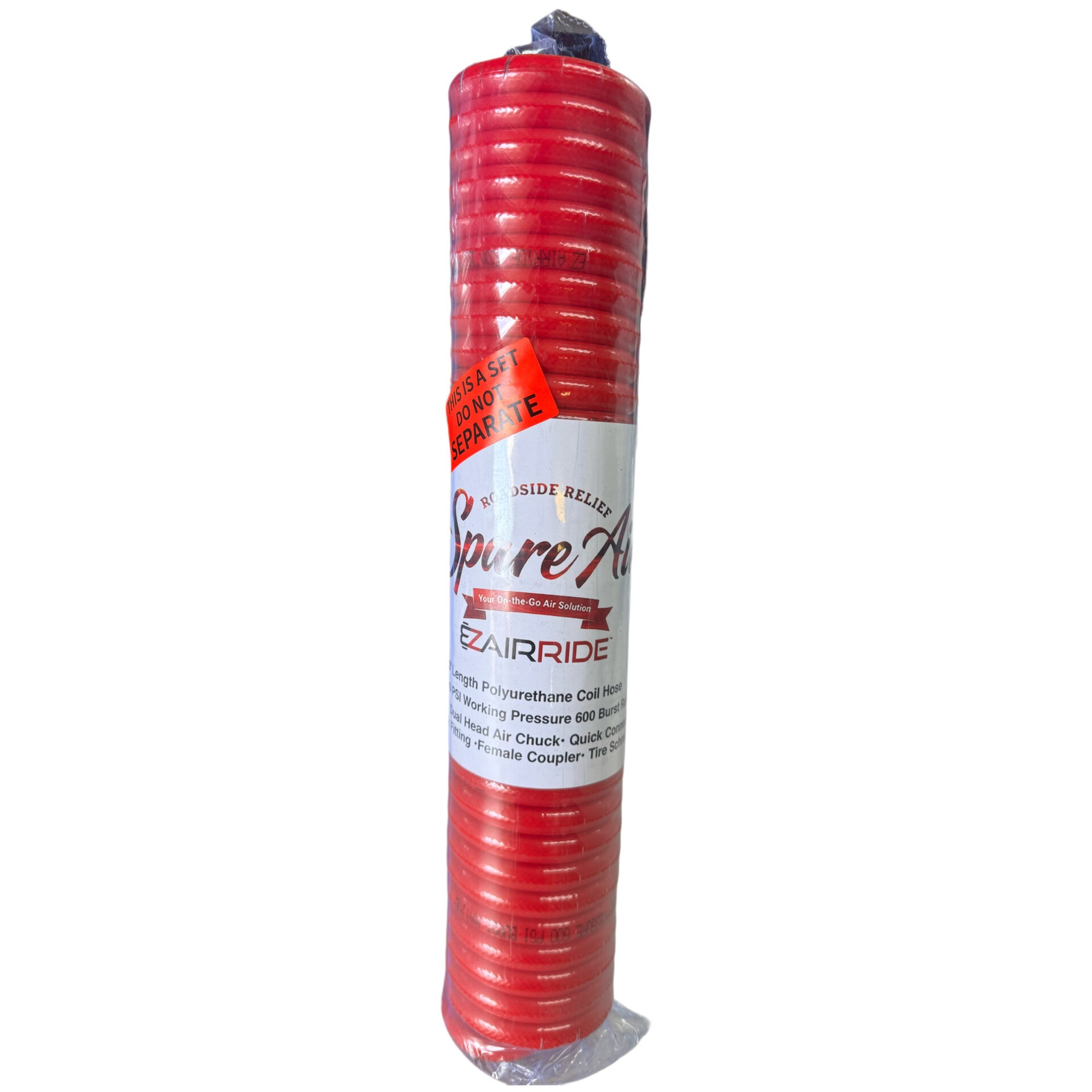
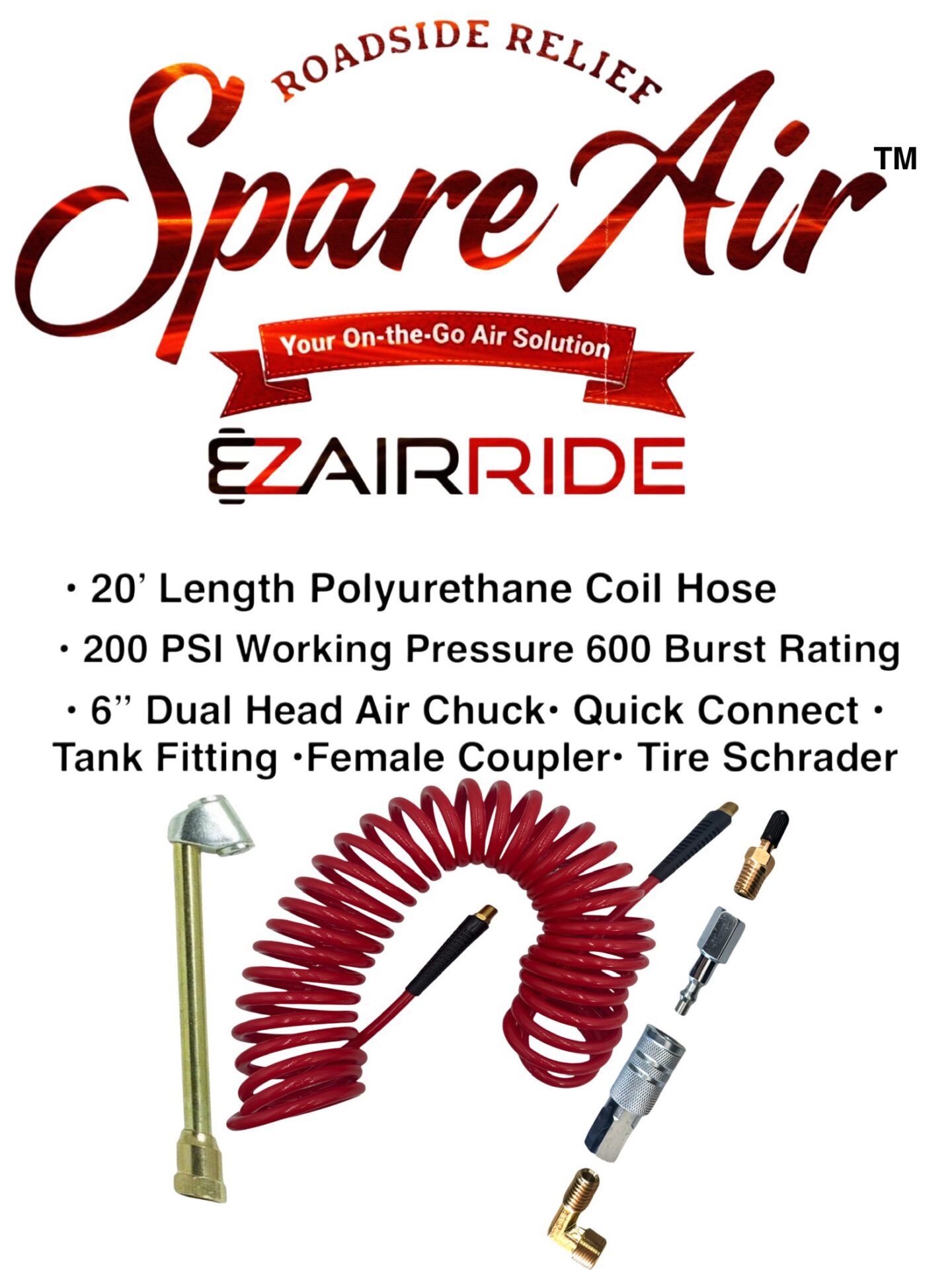
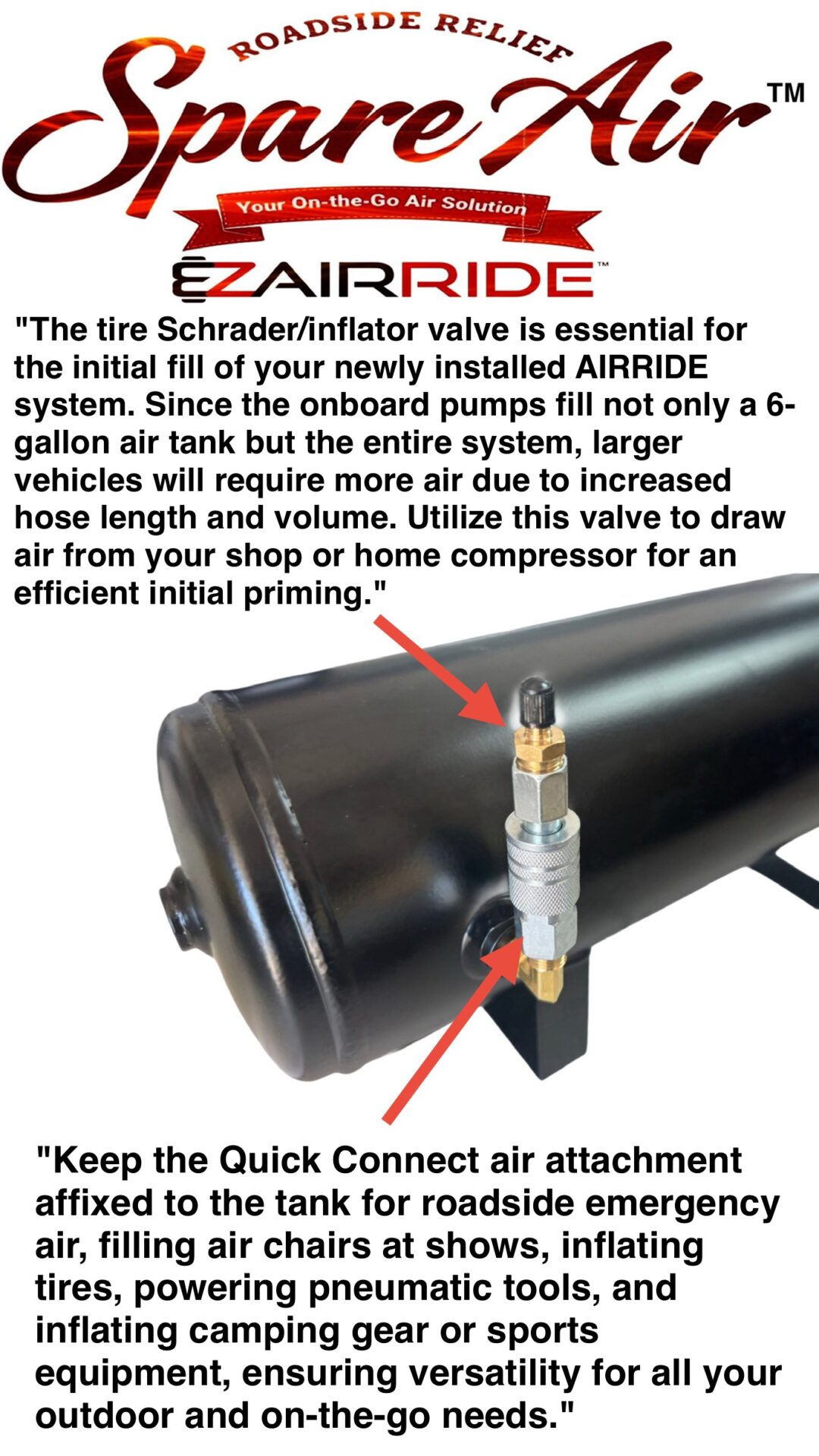
- Spare Air Roadside Relief Package: Ultimate peace of mind. This package features a tank quick-connect and a 20-foot air coil hose with an air chuck, allowing you to easily air up a flat tire or use your onboard air anywhere around the vehicle.
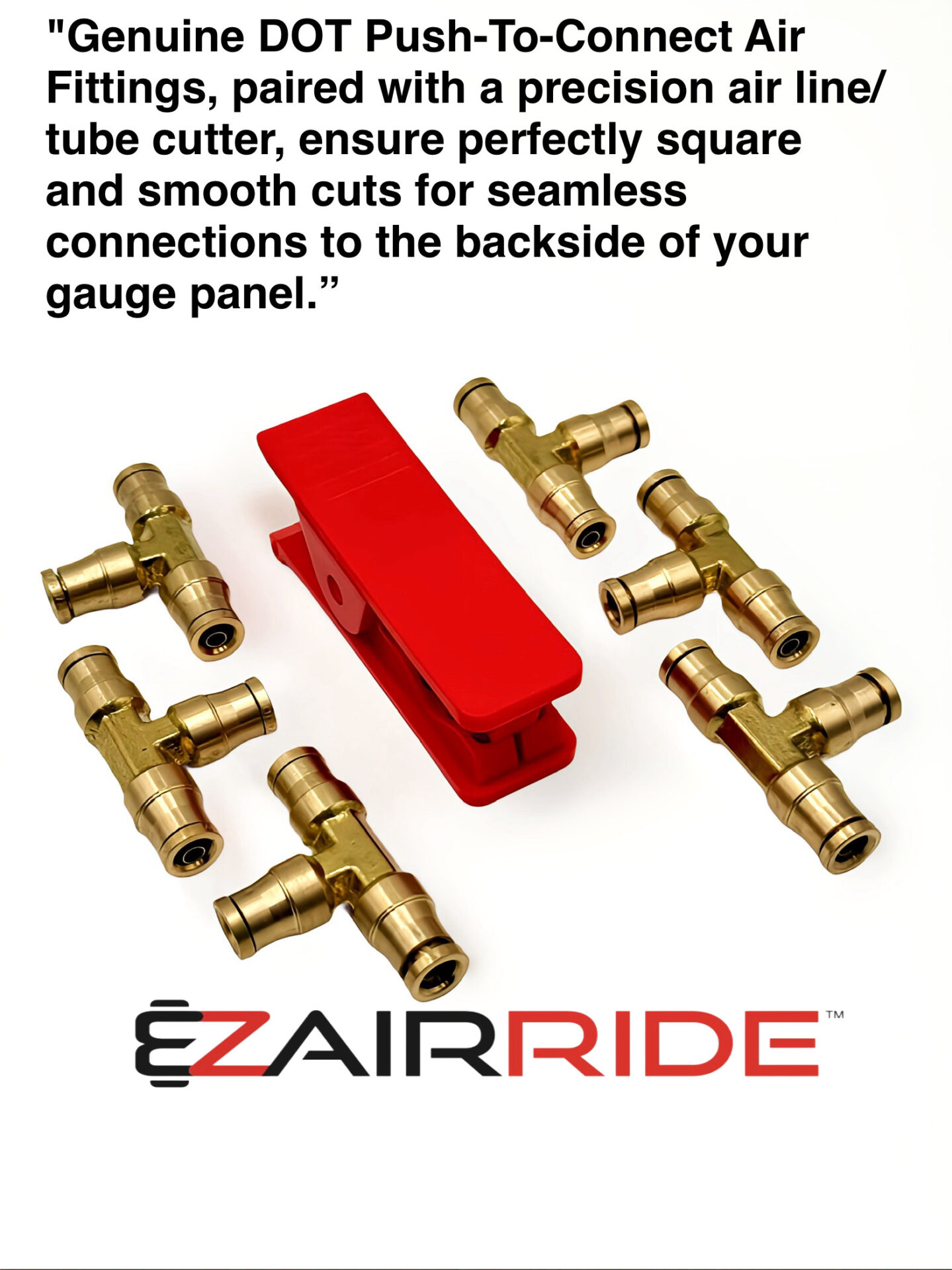
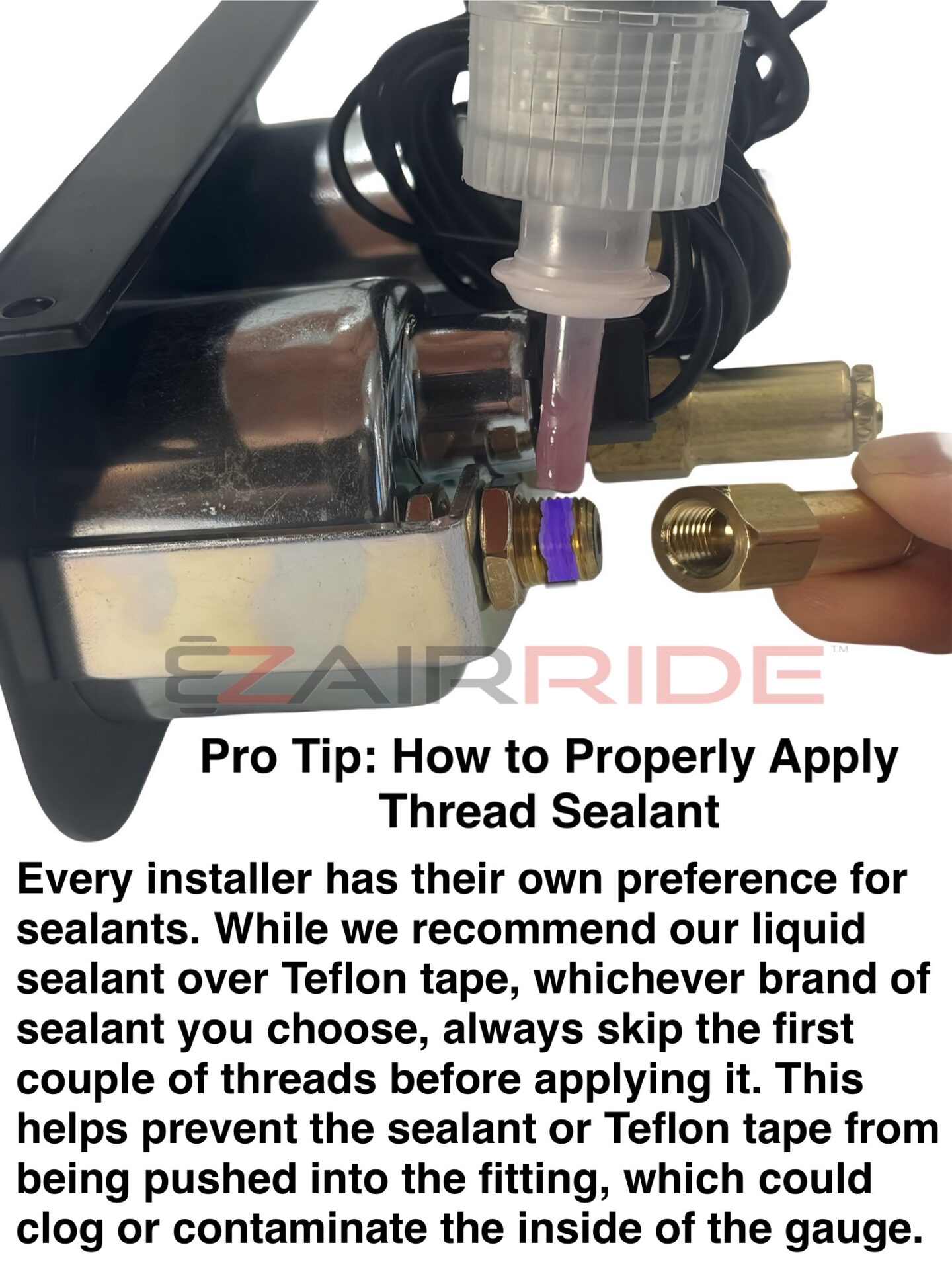
- Precision Plumbing Essentials: No hacked lines or tedious leaks. We pair our premium DOT Brass air fittings with a dedicated tubing cutter for razor-sharp, square cuts and include high-performance airtight sealant to ensure a dependable, airtight seal.
What’s Included:
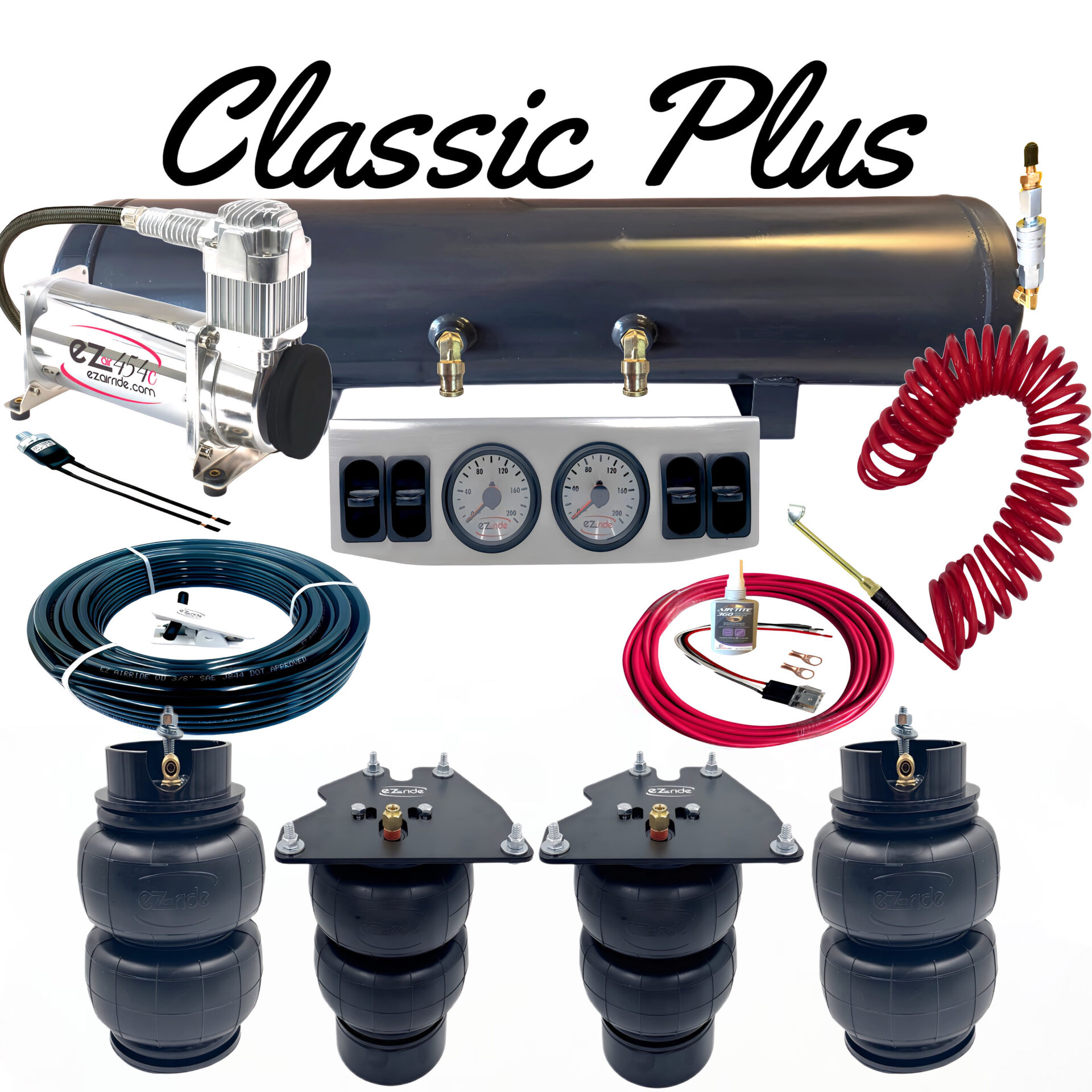
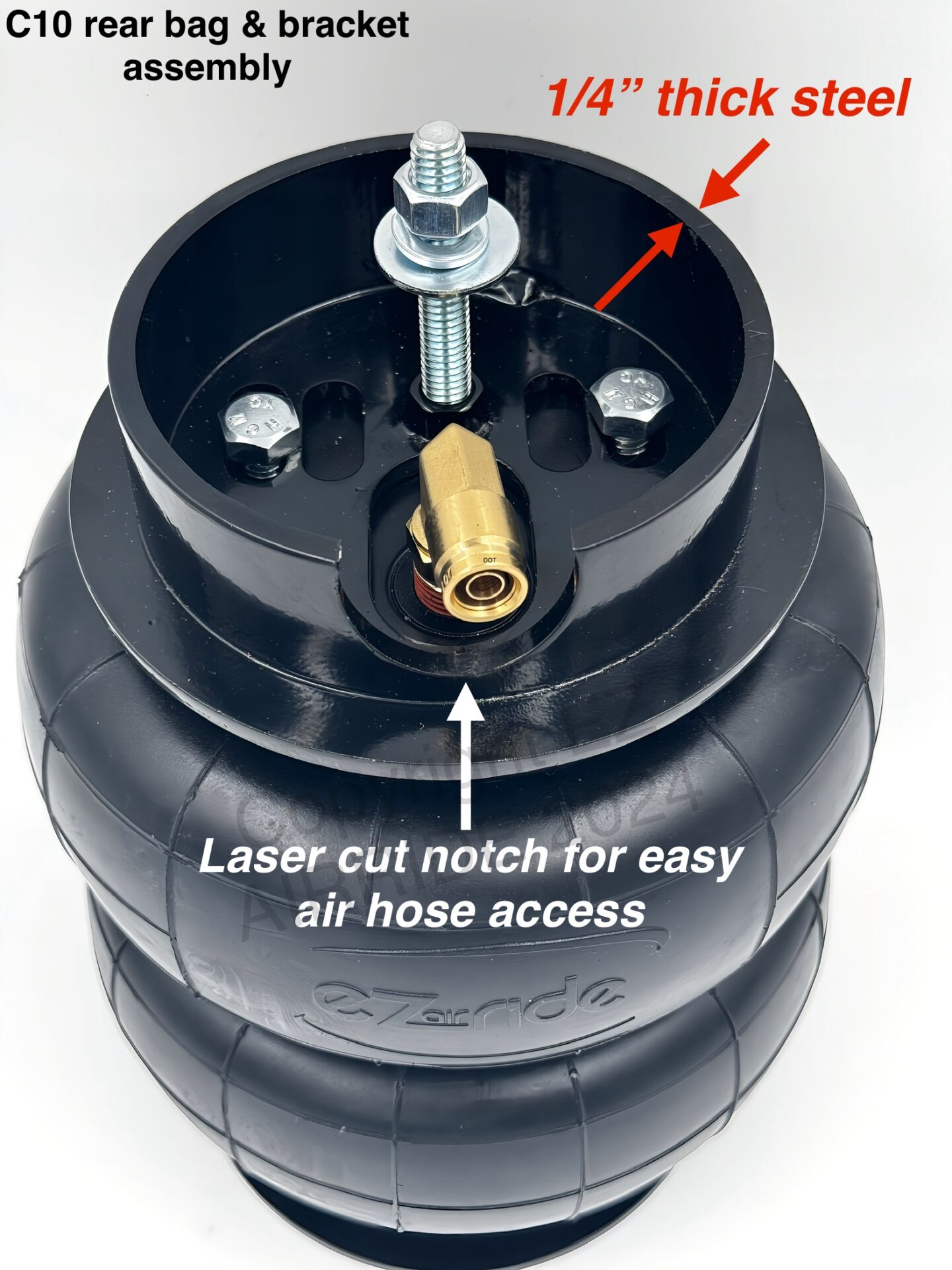
- (4) Premium 2600-Series EZ AIRRIDE Airbags: Featuring a steel-braided waistband, a massive 600 PSI burst rating for unmatched pressure capacity, a razor-thin 2.8” compressed height, and a 12.5” extension for nearly 10 inches of usable stroke.
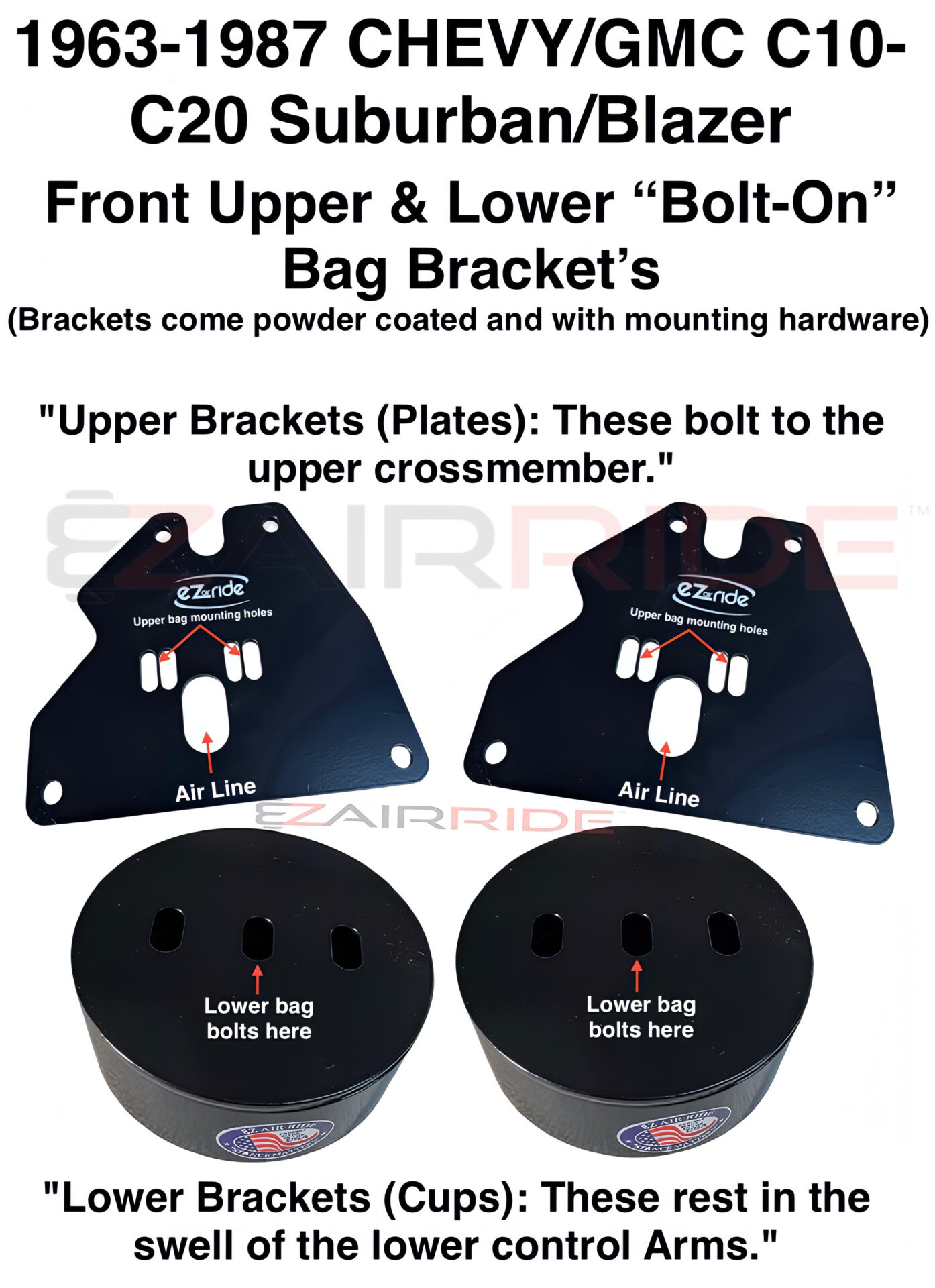
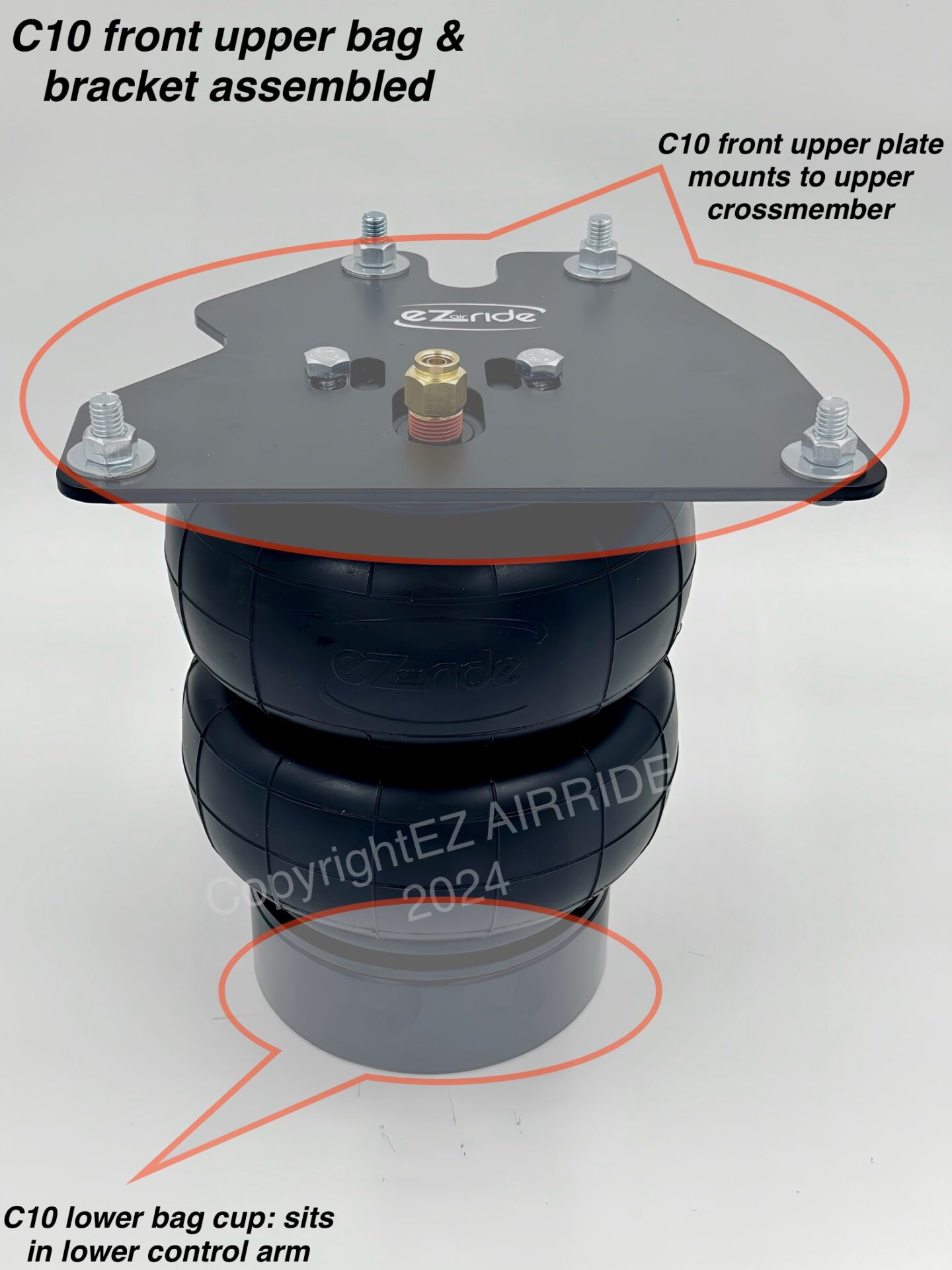
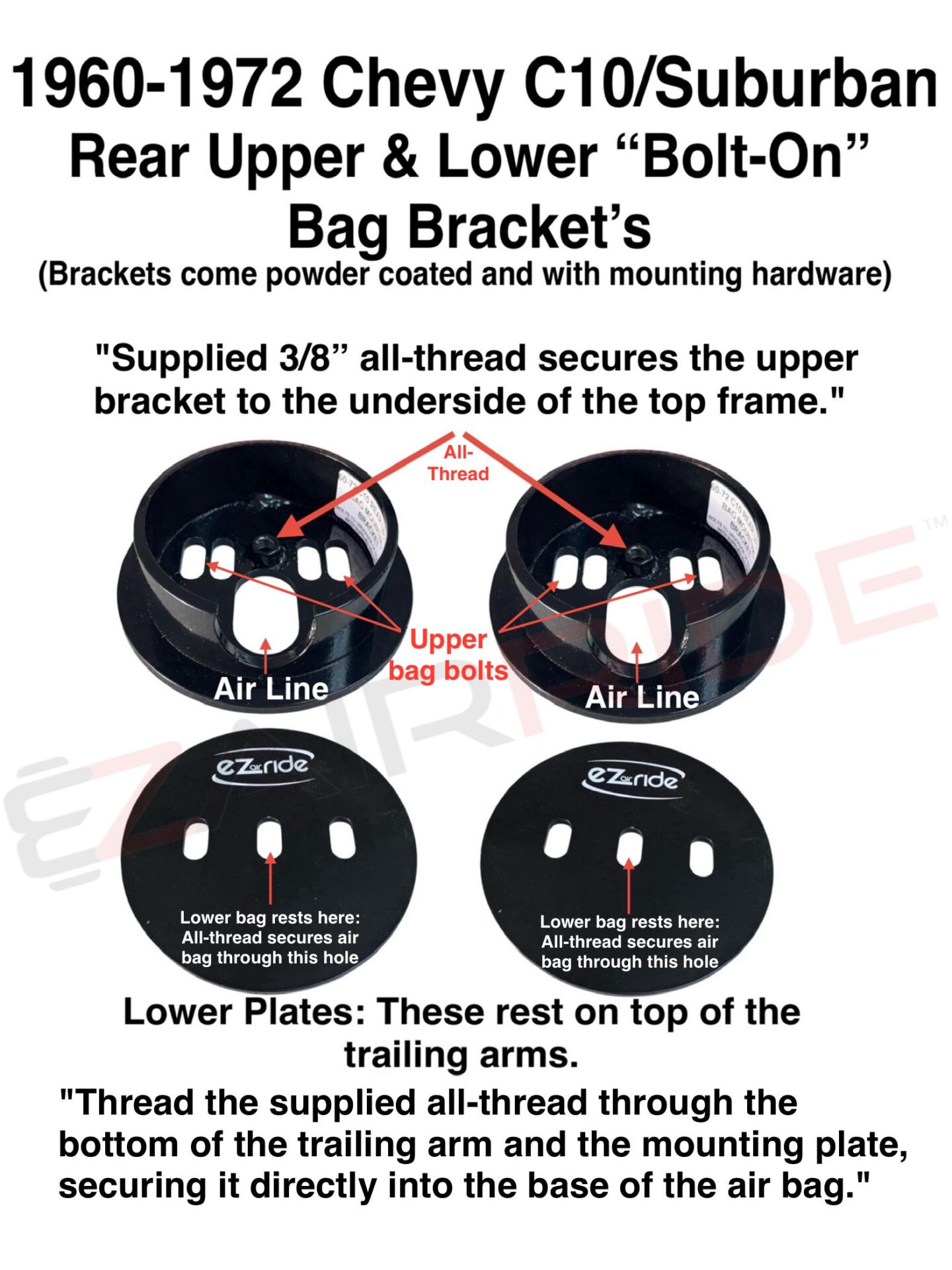
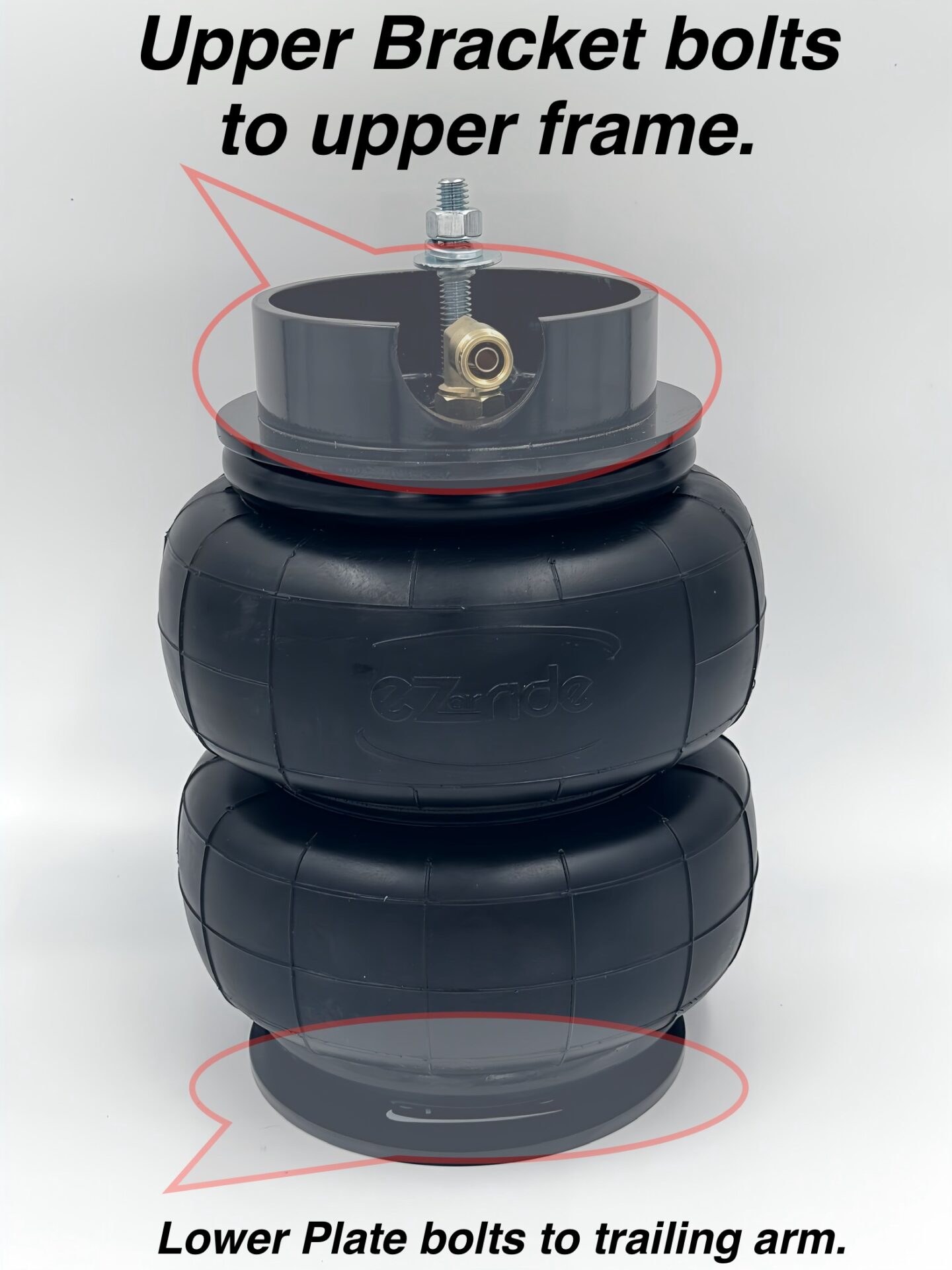
- Complete C10-Specific Bracket Kit: Powder-coated front and rear brackets designed specifically for your chassis. Includes all necessary bracket-mounting hardware.
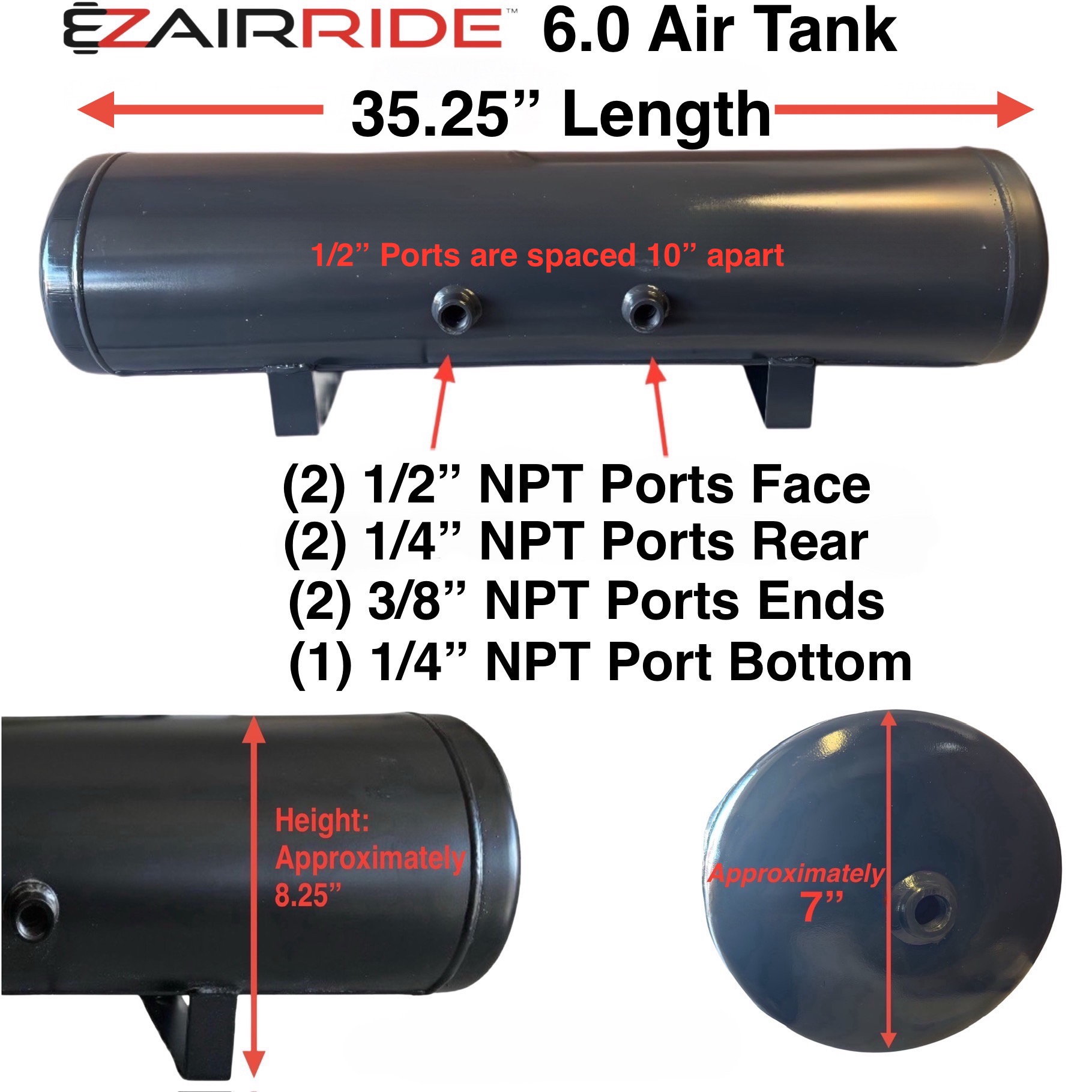
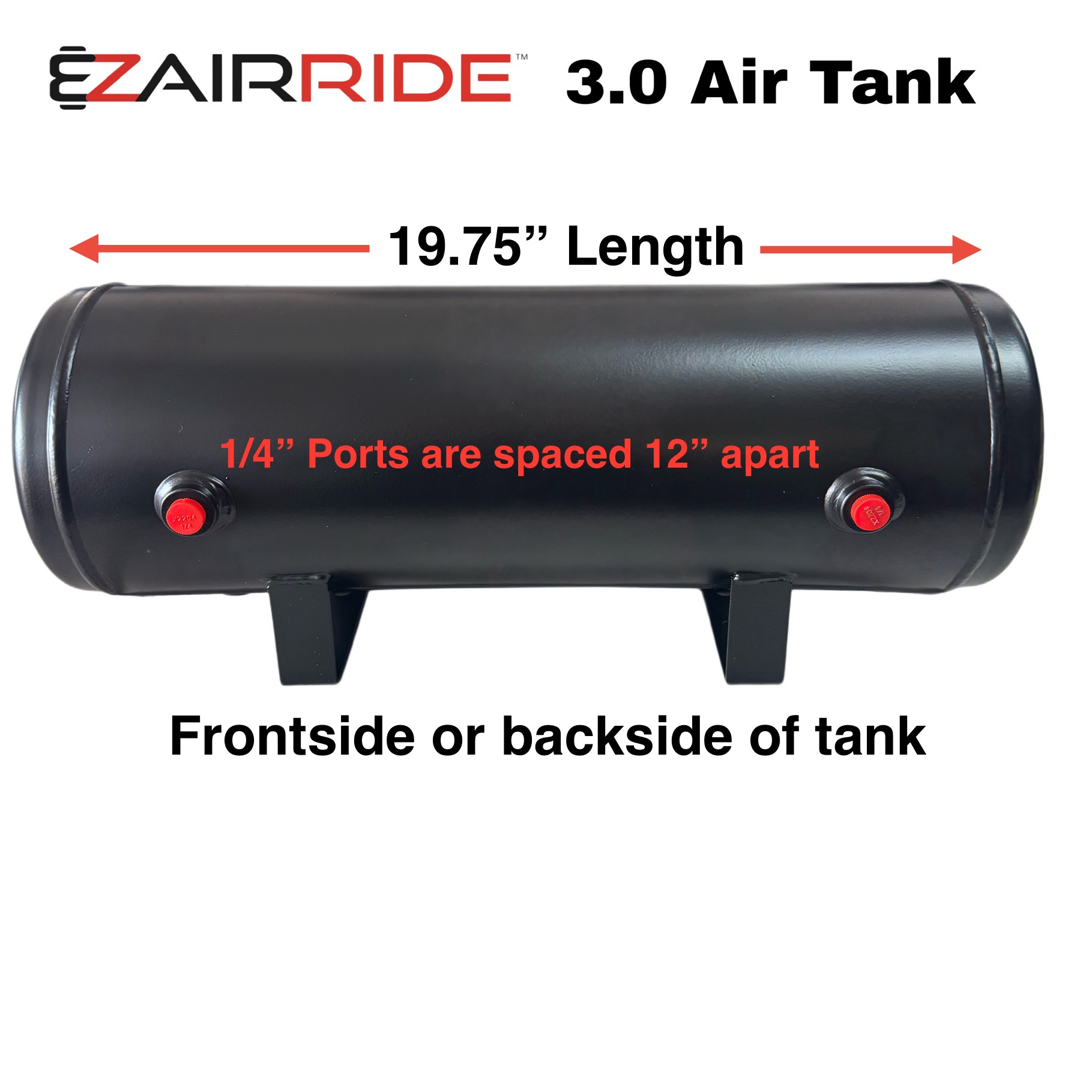
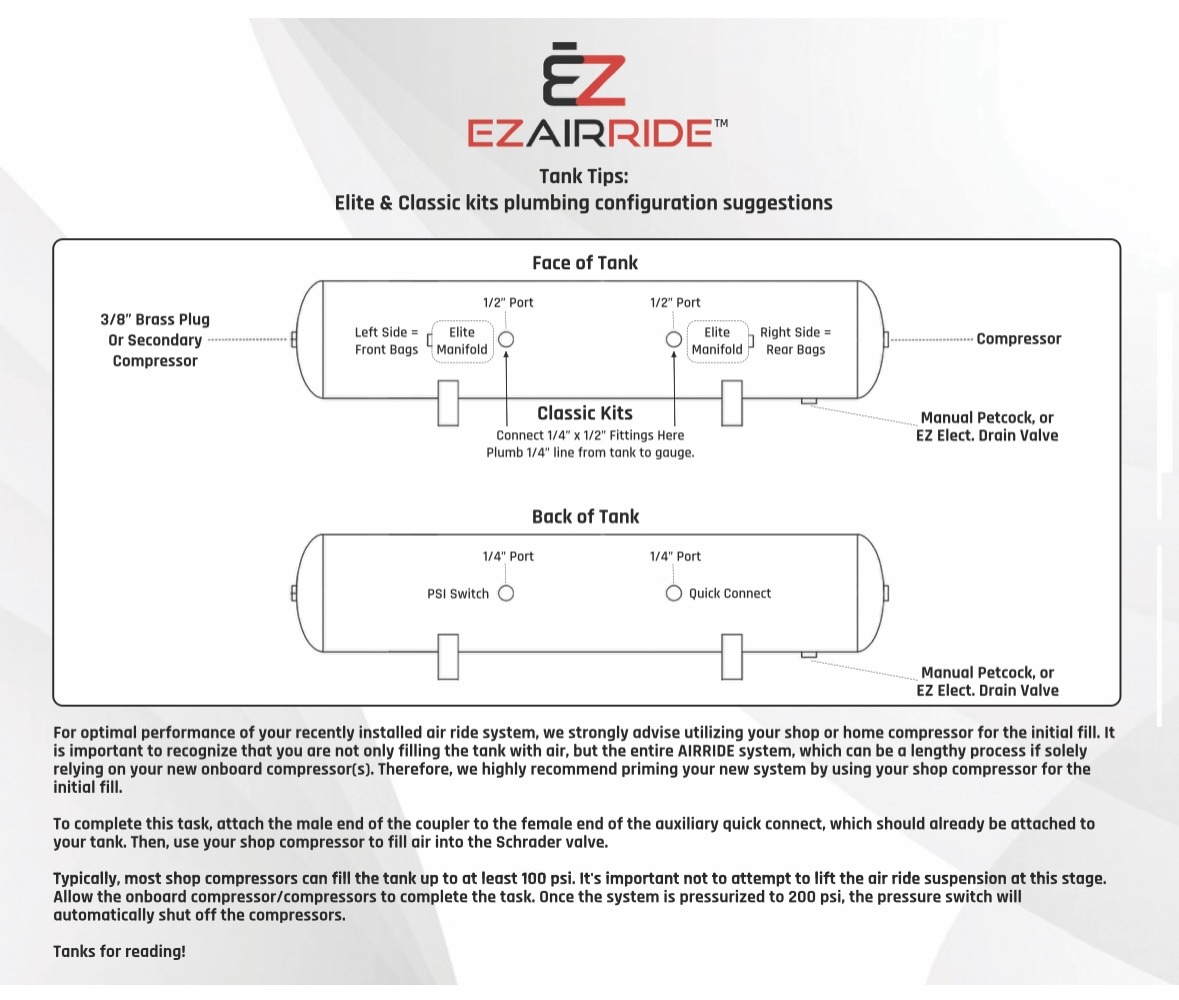
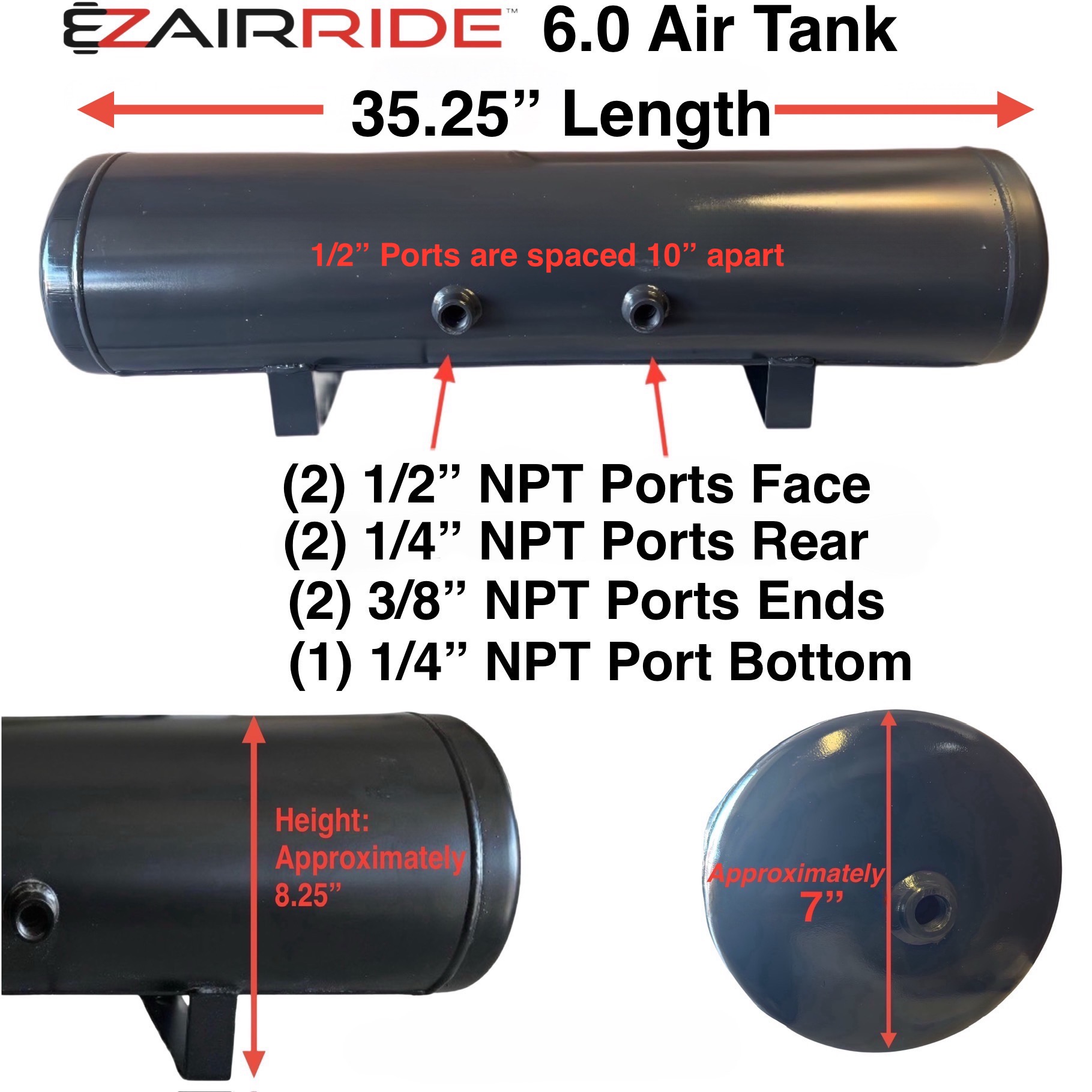
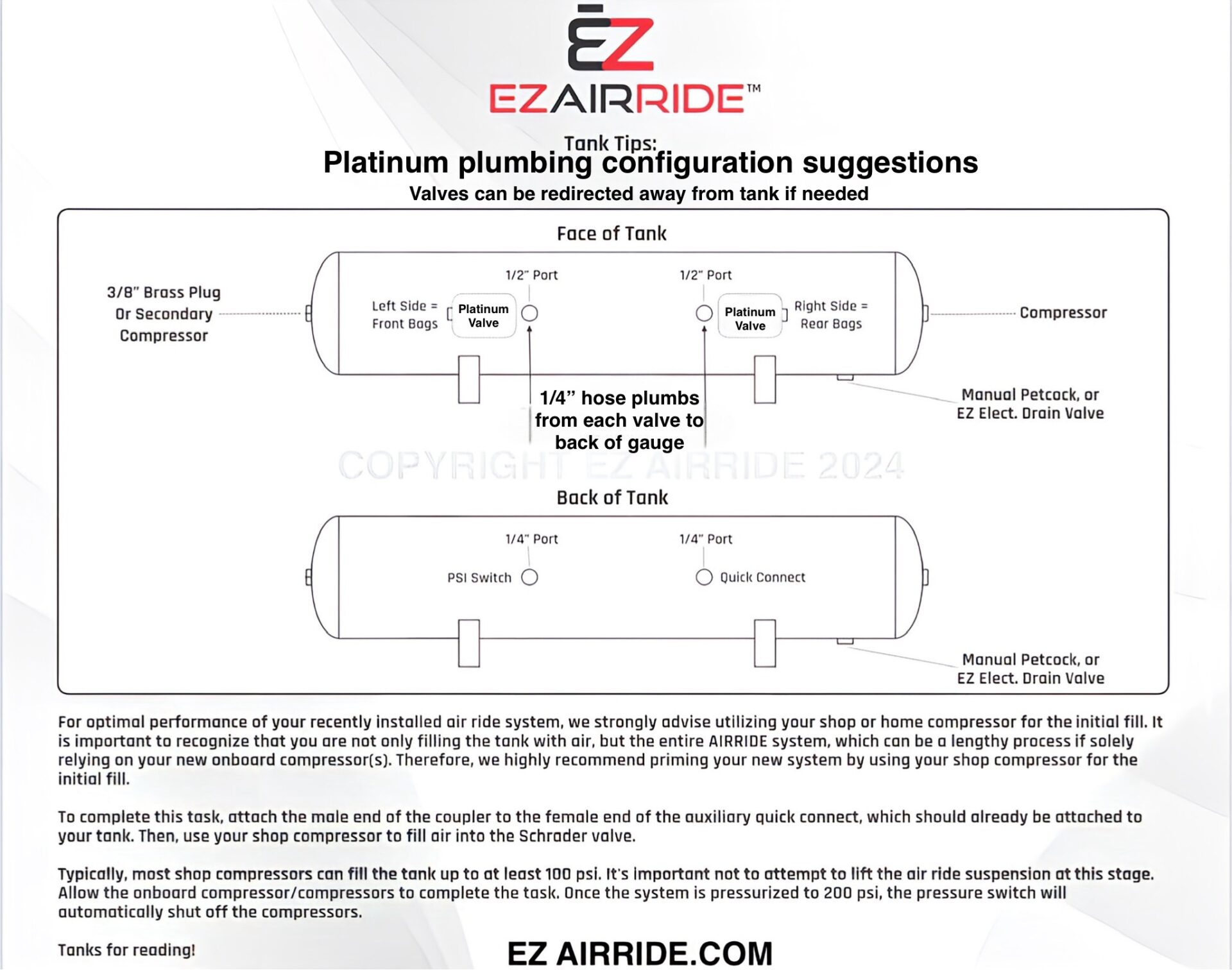
- Exclusive 6+ Gallon Air Tank: High-capacity tank featuring a custom port configuration designed exclusively for this kit’s plumbing layout.
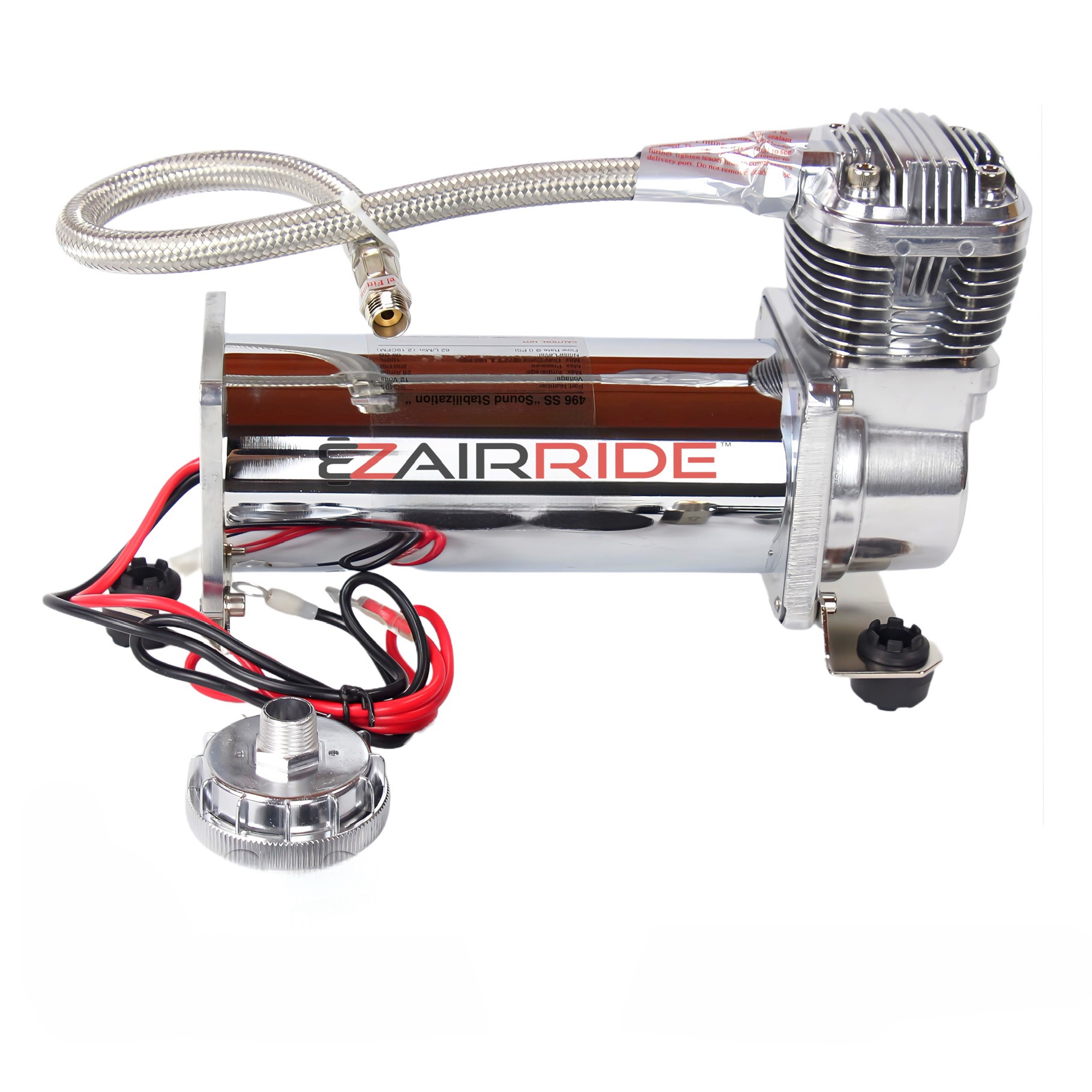
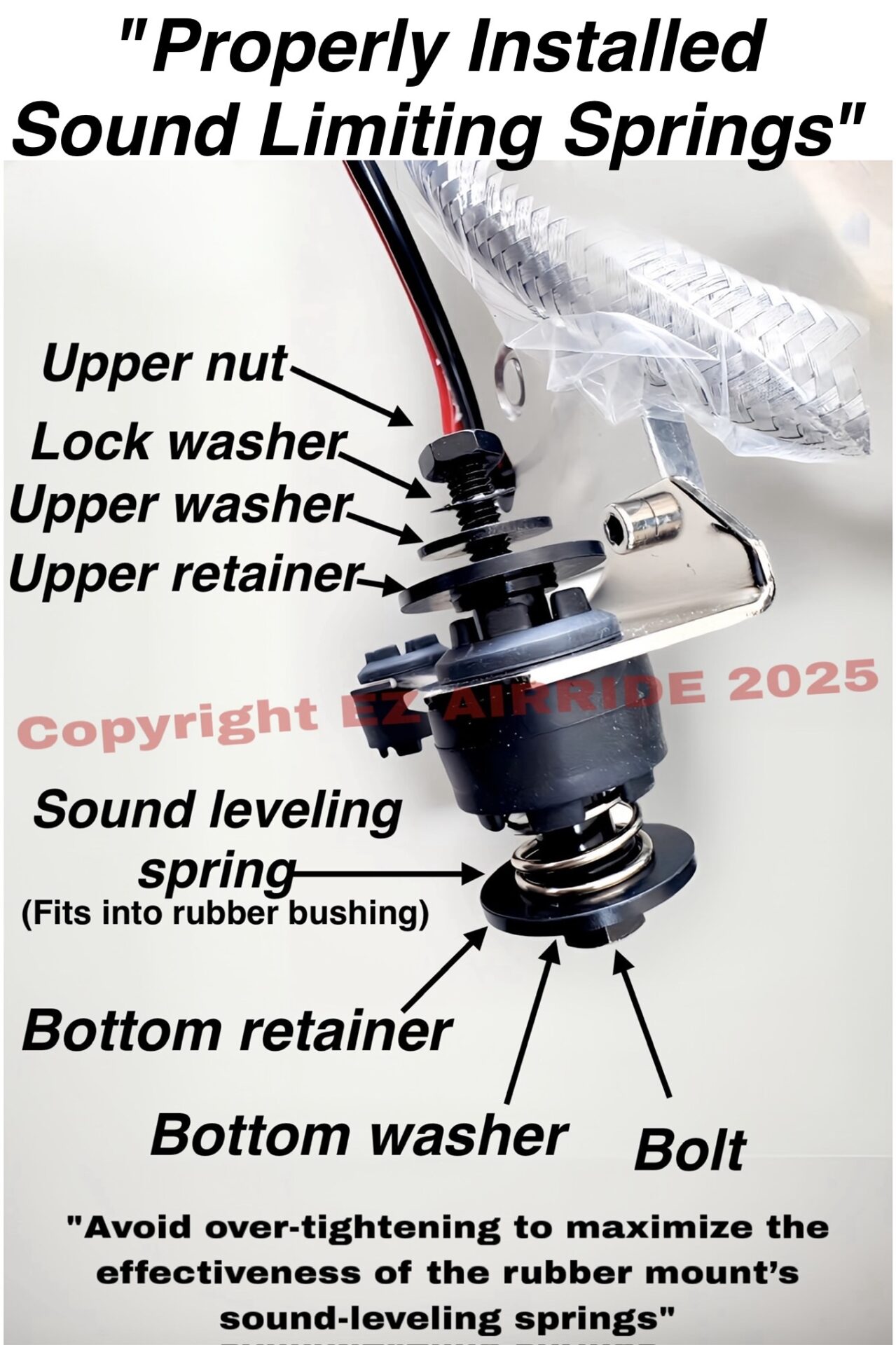
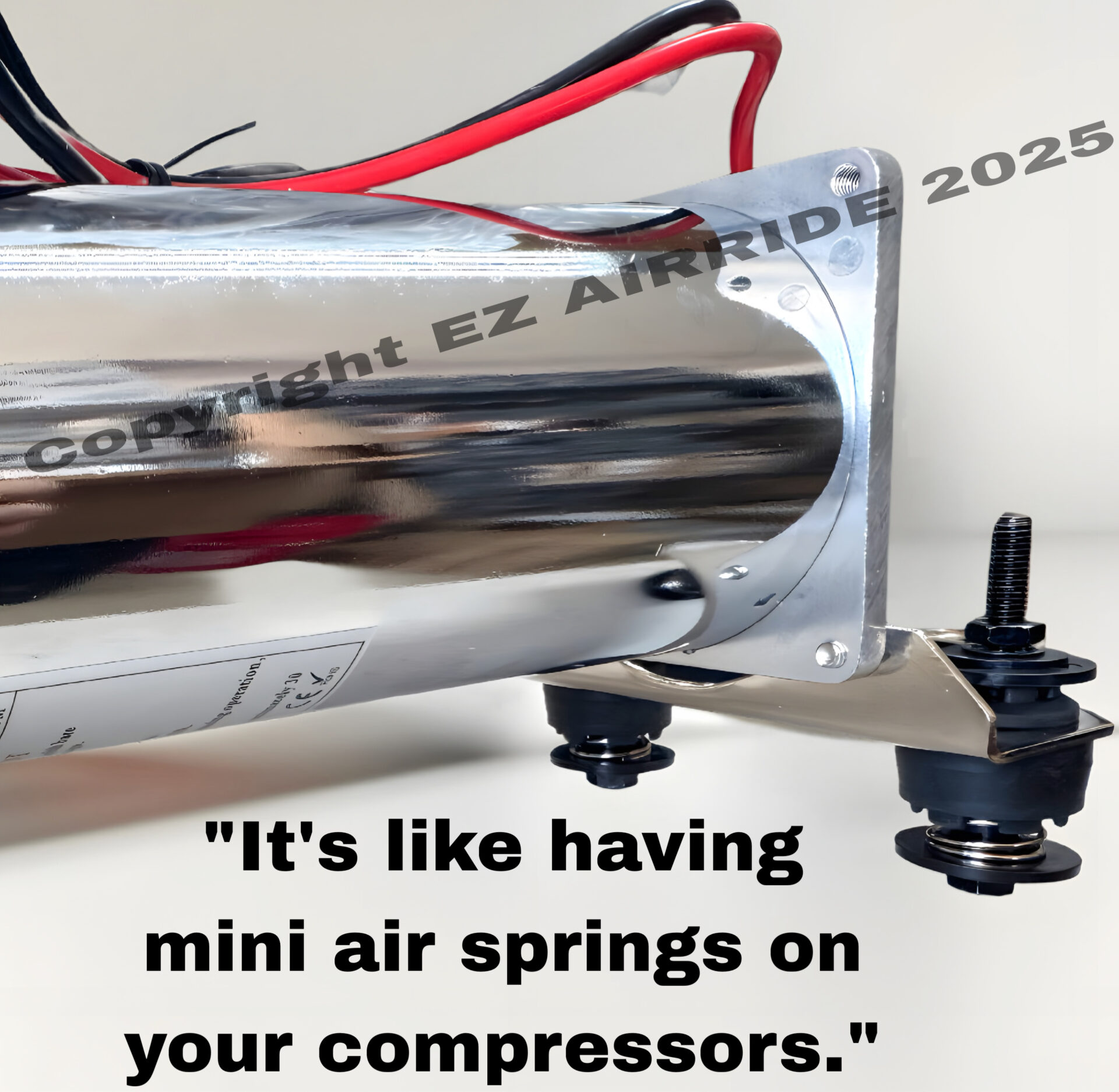
- 200 PSI High-Output Compressor: Features a 100% duty-cycle output, a 3/8″ stainless steel leader hose with a built-in check valve, and our exclusive anti-vibration “Sound Stabilizer” isolation mounting kit.
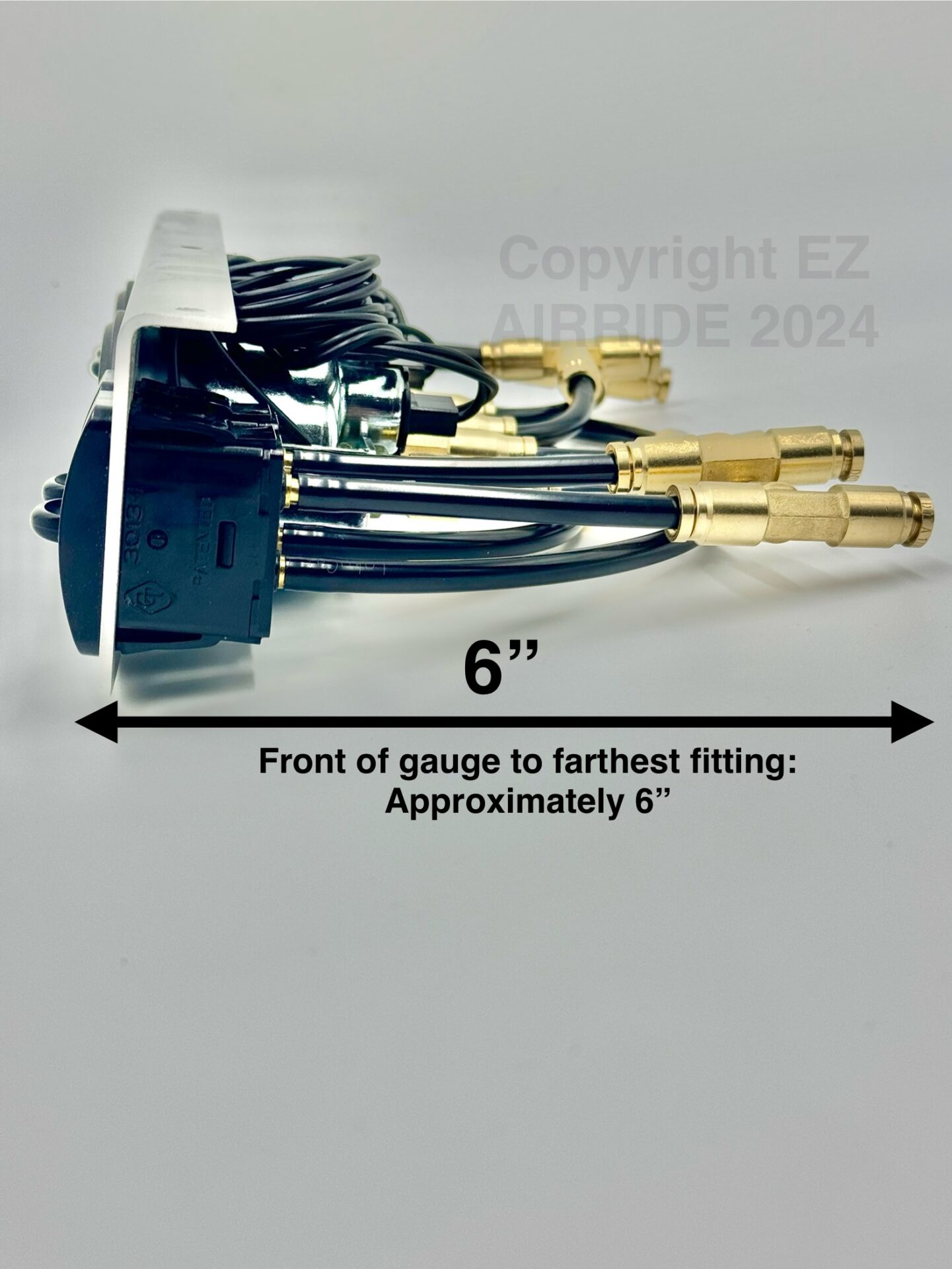
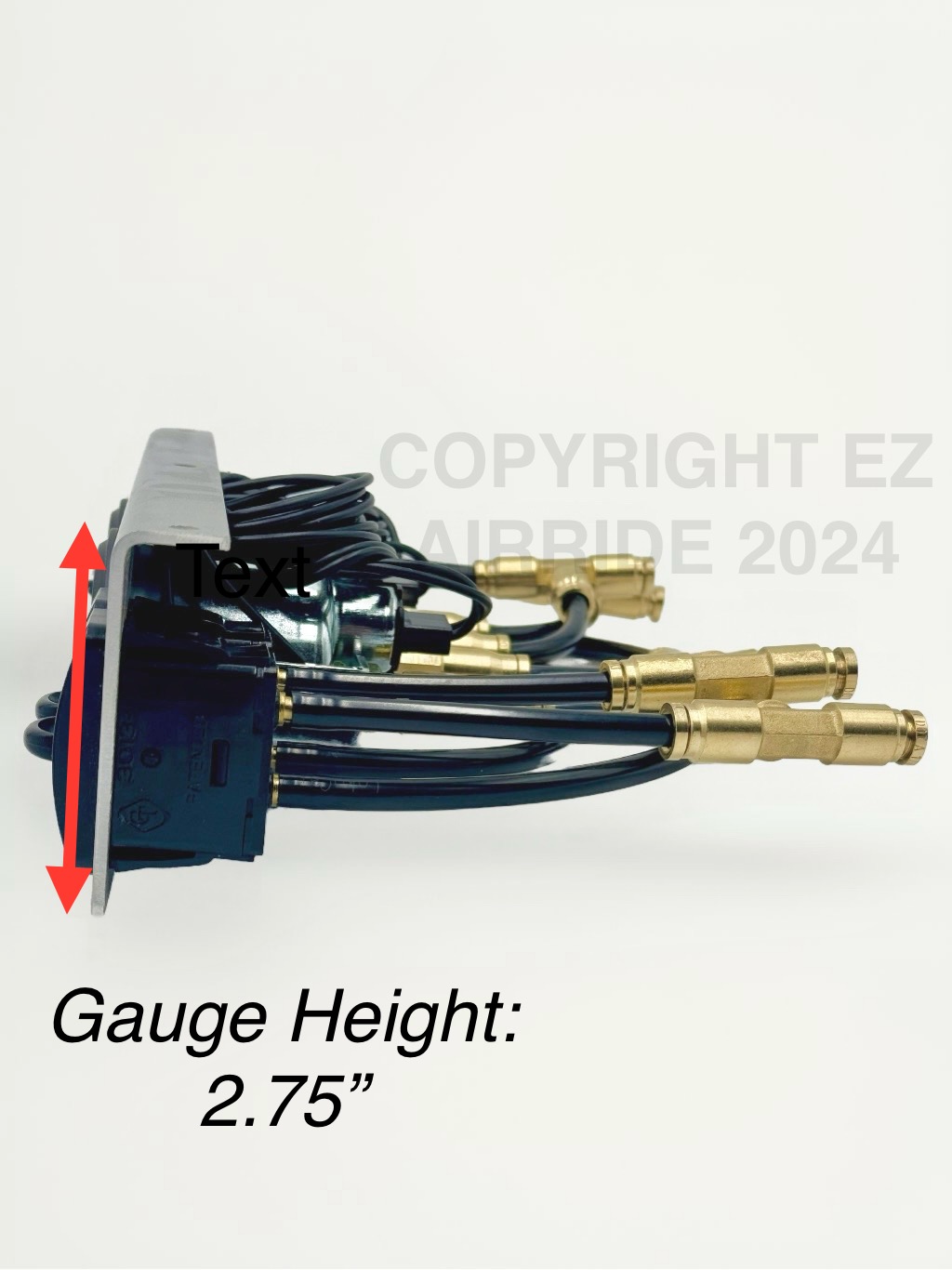
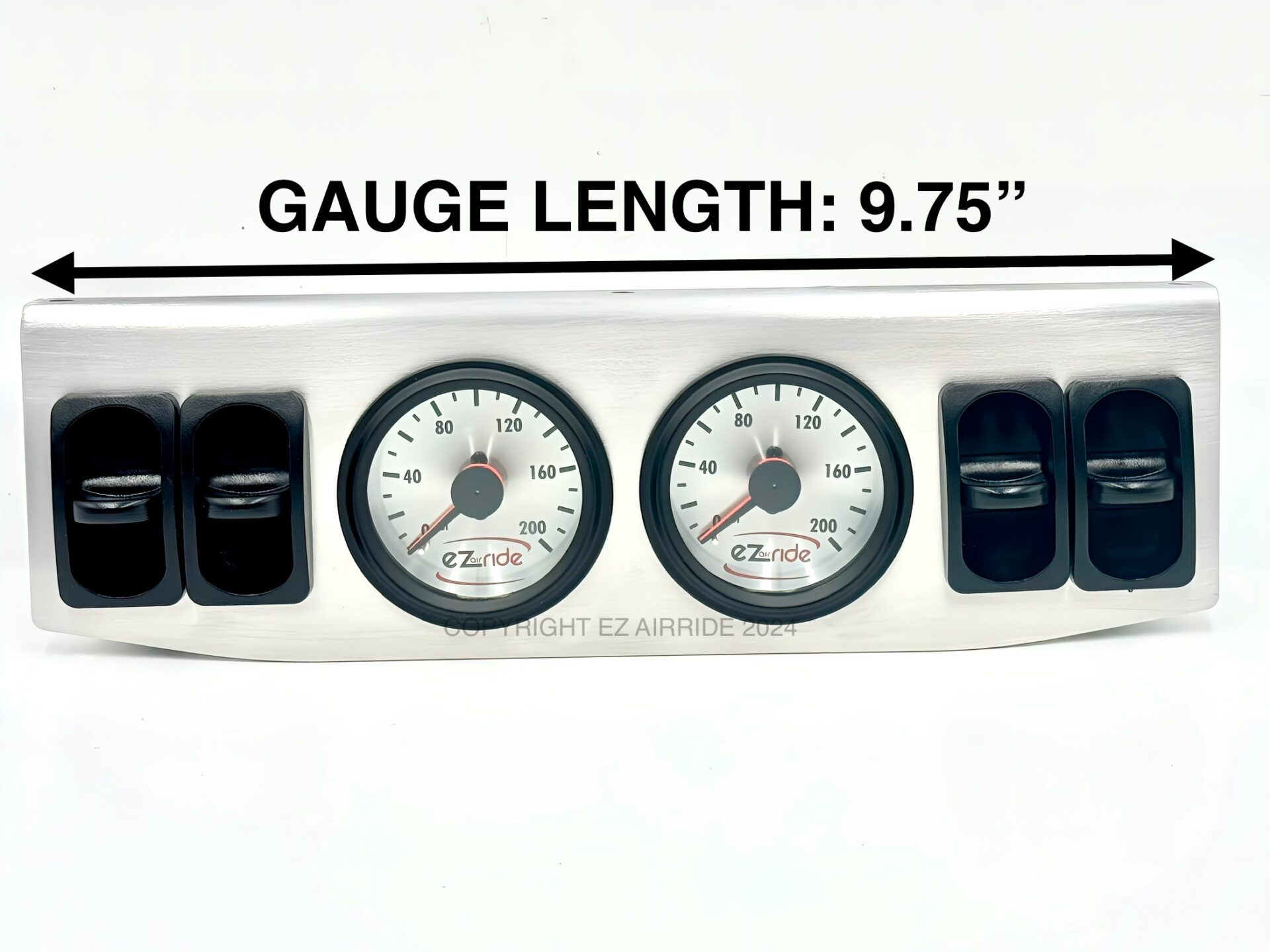
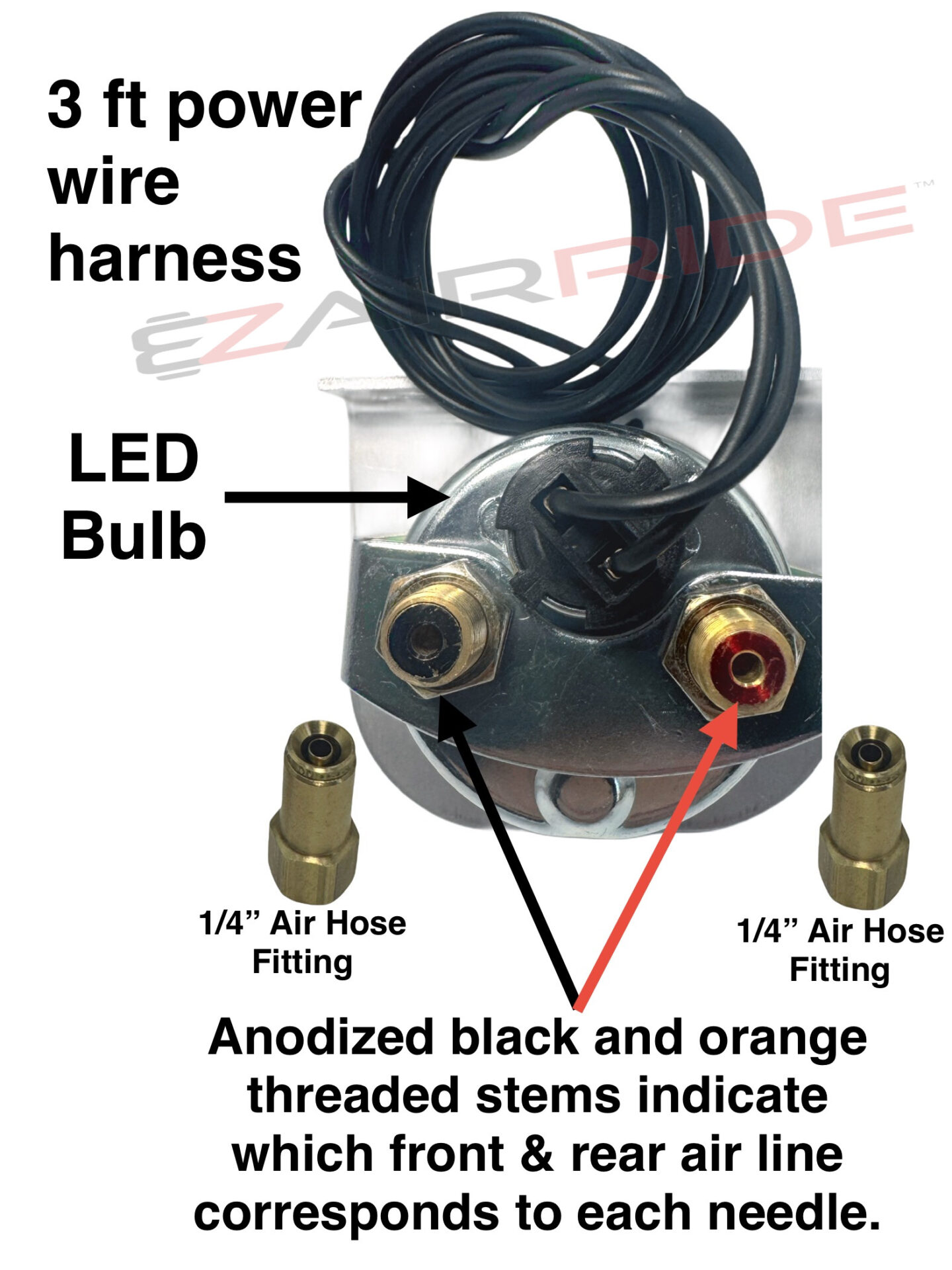
- Classic Plus Integrated Control Panel: Custom aluminum panel featuring four premium manual paddle valves paired with twin dual-needle, glass-domed gauges. Includes bright white LED illumination and DOT push-to-connect fittings for complete 4-corner pneumatic control and real-time pressure readout right from your dash.
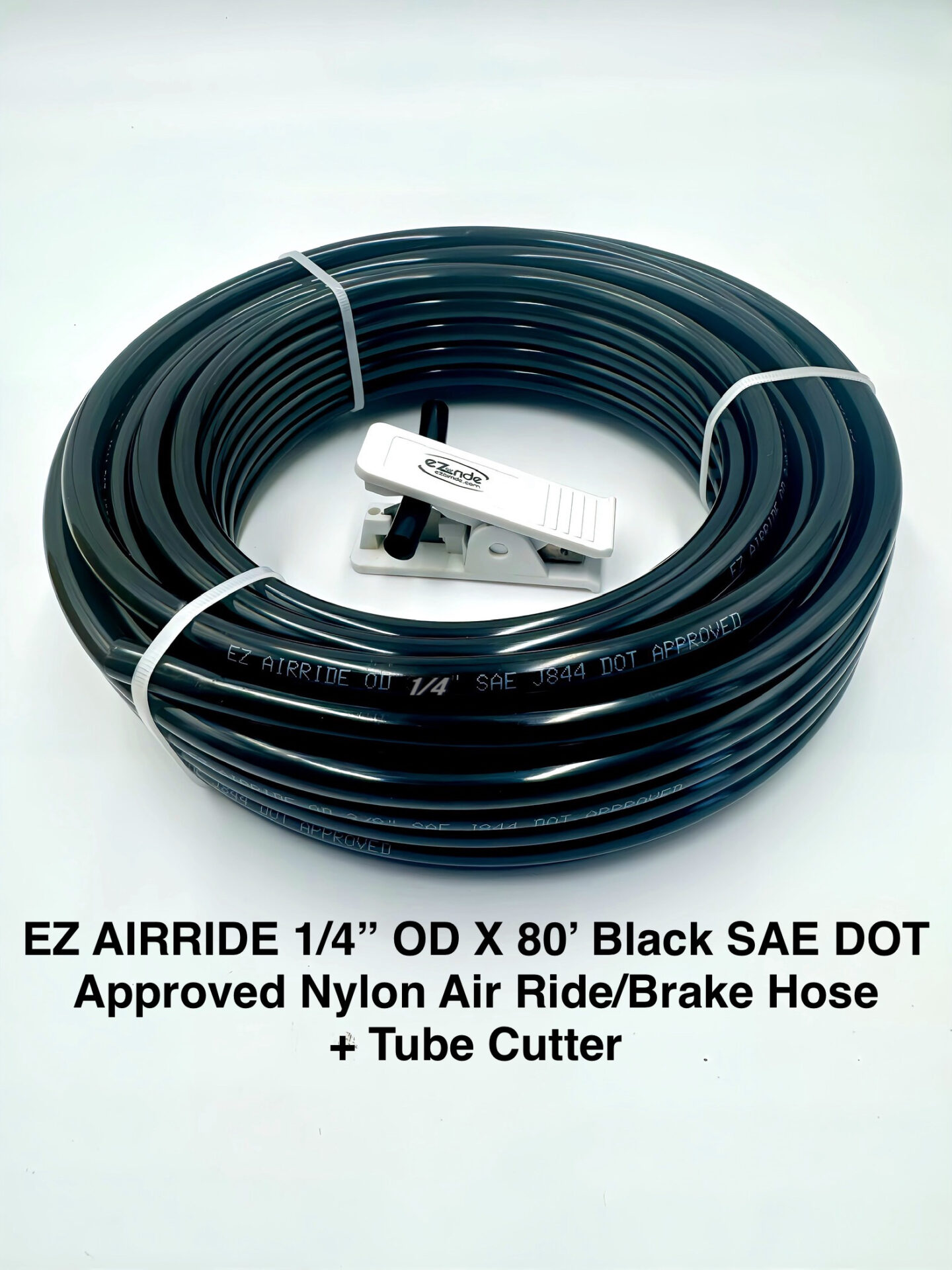
- 80-Foot Roll of 1/4″ DOT Airline: Premium, high-pressure airline with more than enough length to easily route through the longest C10 trucks and Suburbans.
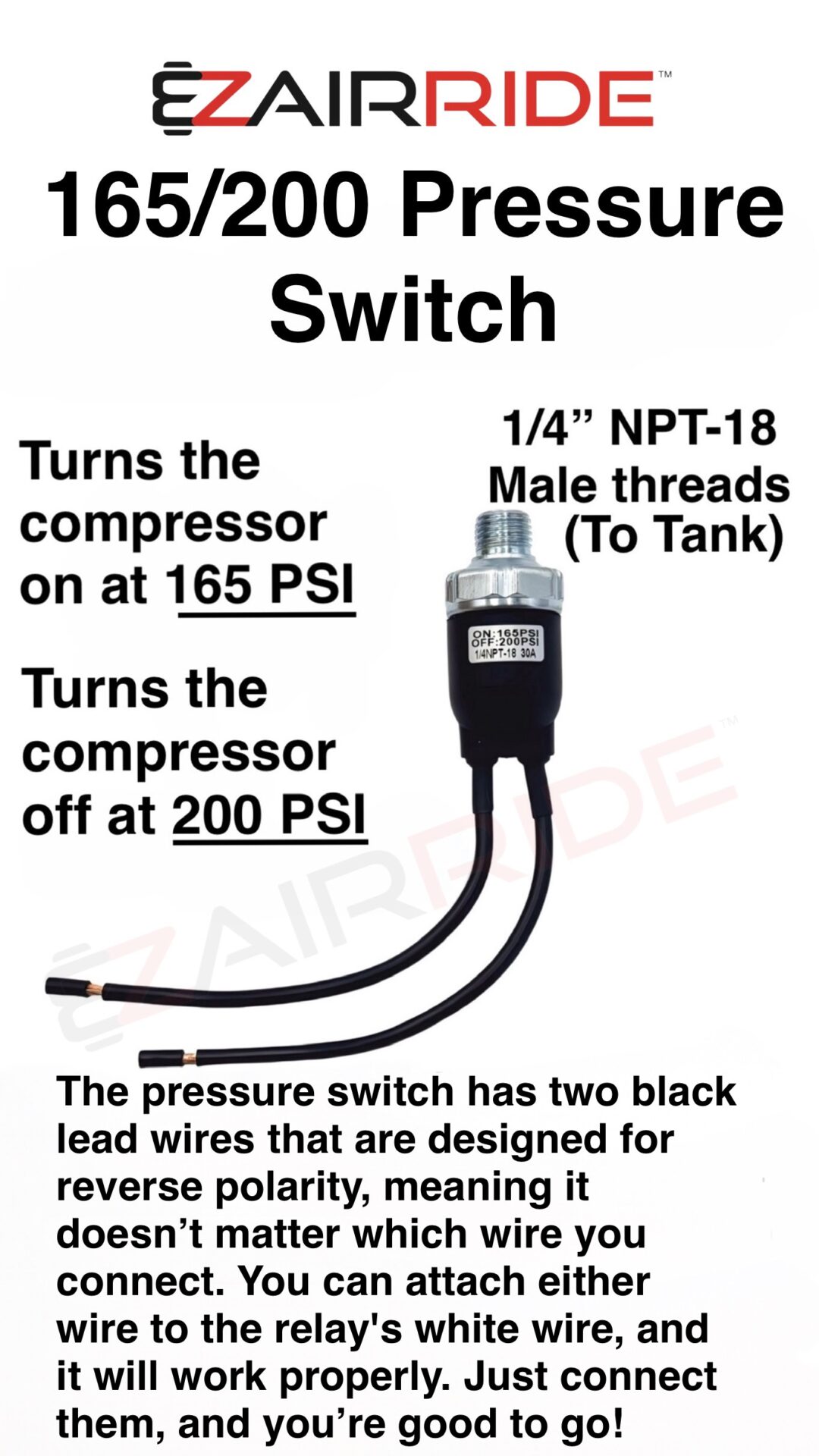
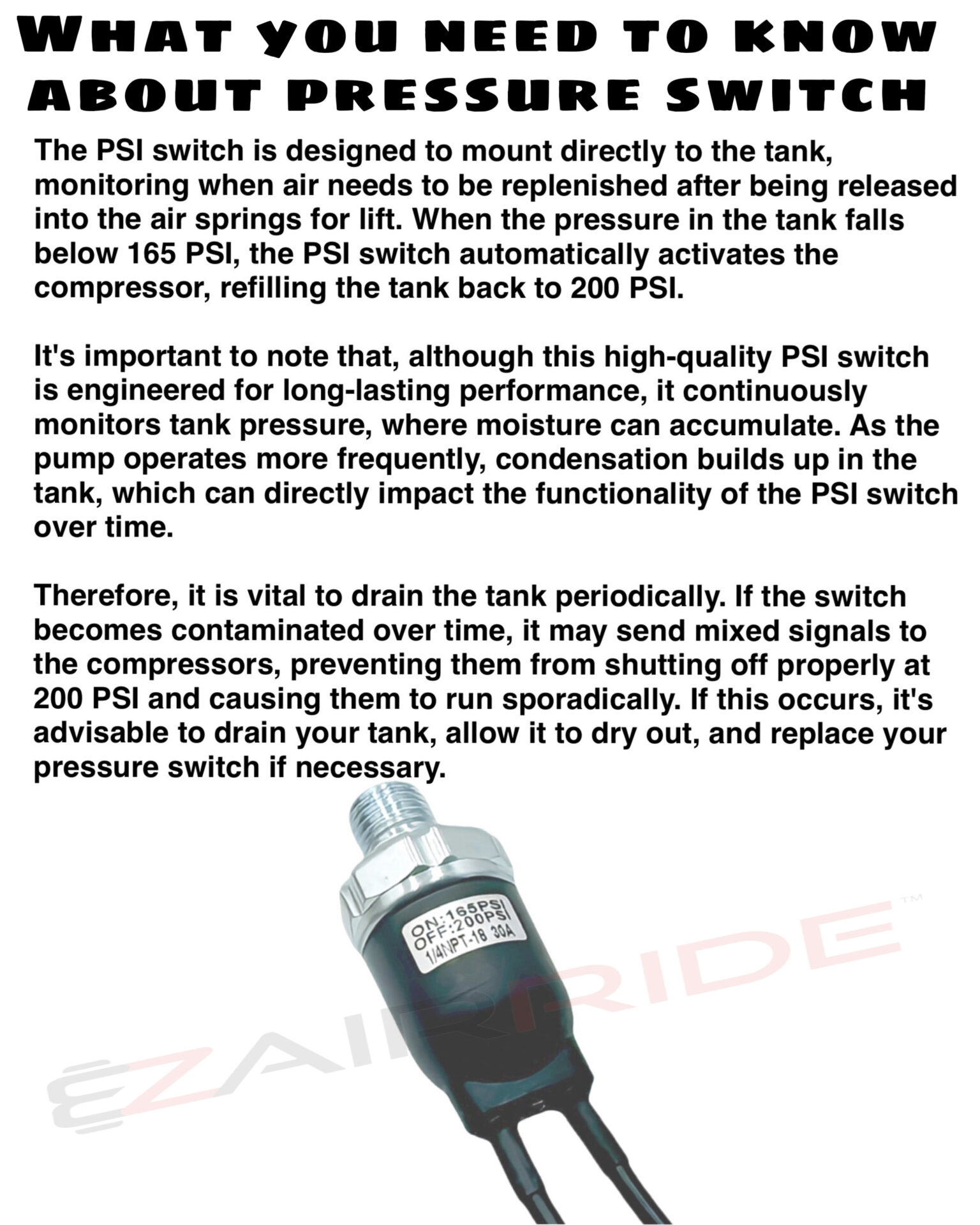
- Builders Power Pack: Includes 20 feet of 8-gauge UL-listed power wire, a 40-amp “Slow-Blow” integrated fuse, a clear diagnostic LED relay, a 165–200 PSI pressure switch, a dedicated tubing cutter, and high-performance AirTight sealant.
- “Spare Air” Roadside Relief Kit: Onboard air accessory package including a tank quick-connect, a 20-foot air coil hose, a 6″ air chuck, and a tire Schrader valve.
- Genuine DOT Brass Fitting Pack: A complete collection of premium DOT-approved brass fittings for your bags, tank, and gauges to ensure a reliable seal.
The Bottom Line:
- Not Just a Box of Parts: When you unbox your Classic Plus Kit, you are getting a complete, fully synchronized air suspension system designed to work together specifically for your vehicle’s chassis.
- Zero Guesswork: Every fitting, line, and bracket is perfectly matched to fit your ride right out of the box—with no extra trips to the hardware store.
- Built to Cruise: Bolt it on, drop it low, and finally enjoy the smooth, dynamic ride quality your classic C10 deserves.
Frequently Asked Questions
Is everything I need actually included in this kit?
The short answer is yes—and then some. Because “everything” means different things to different builders, we don’t expect you to just take our word for it. Check out our thumbnail galleries for a direct, visual checklist of every single component you will receive.
This is a completely synchronized system. You get the 600 PSI rated bags, vehicle-specific brackets with hardware, our exclusive 6+ gallon tank with premium fittings, the 200 PSI high-output pump featuring our anti-vibration “Sound Stabilizer” spring kit, and the custom aluminum 4-corner gauge panel (complete with Brass DOT fittings, LED bulbs and wiring).
We also include all the crucial installation incidentals the other guys leave out: a heavy-duty pressure switch with extra wire length to reach your keyed power source, 20 feet of 8-gauge UL power wire with a Maxi fuse, a diagnostic LED relay harness, pro-grade AirTight sealant, and our “Spare Air” roadside emergency kit. Aside from basic shop tools and the elbow grease, it’s all in the box.
Are shocks included with this kit?
No. The engineering layout of the legendary C10 platform means you do not require a set of overpriced aftermarket shocks the other guys want to sell you.
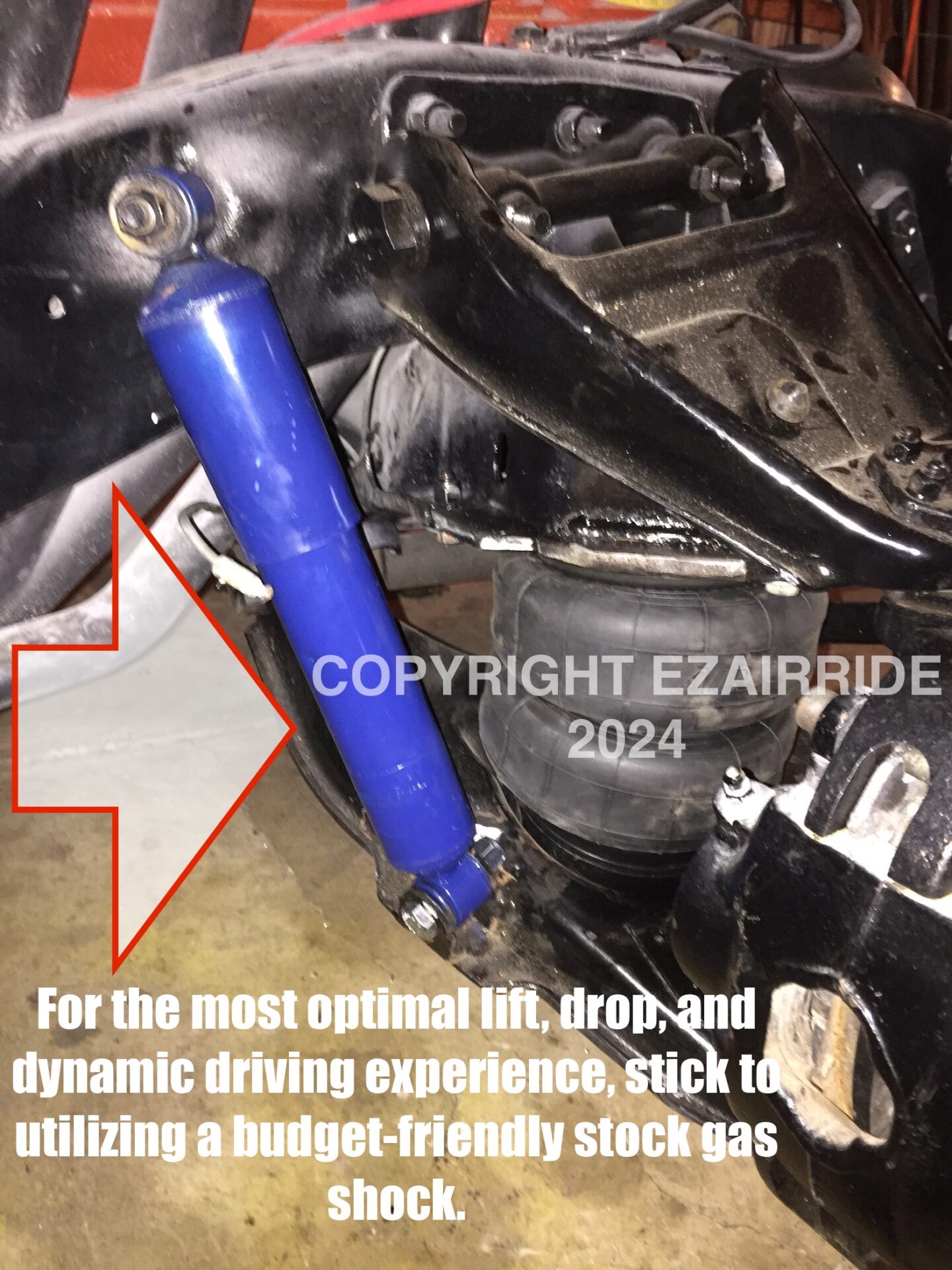
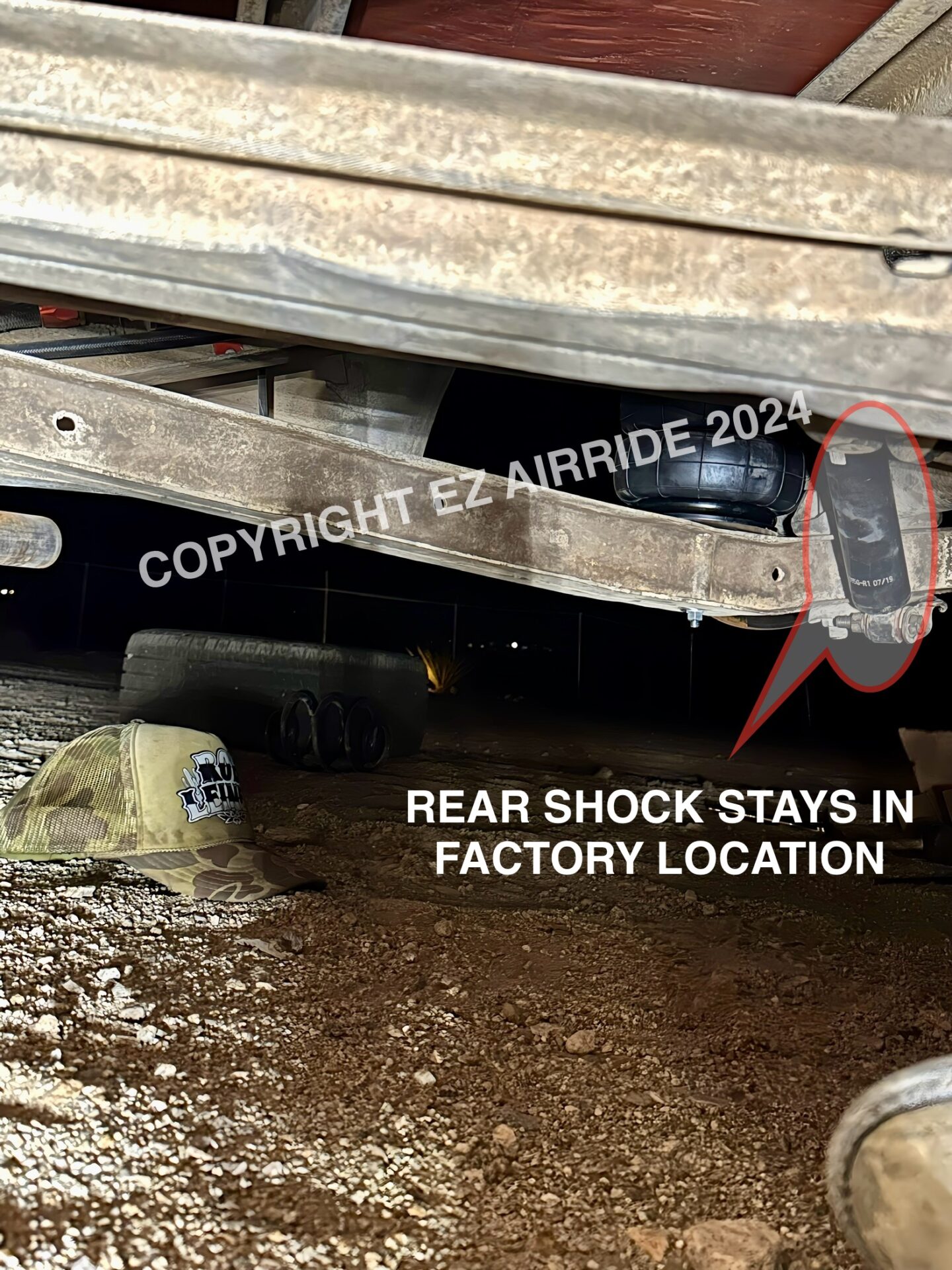
When GM designed the C10 chassis, they mounted both the front and rear factory shock absorbers completely outside of the coil springs. Unlike classic cars where the shock runs right down the center of the spring, the C10 frame virtually cries out for an air ride conversion. The factory mounting geometry is already perfectly clear and optimized for an air spring right out of the box.
Because our premium 2600-Series airbags deliver a massive 12.5-inch extension with nearly 10 inches of uninhibited stroke, the bags themselves shoulder 98% of the work. Decades of outfitting hundreds of C10s prove that a massive stroke capacity requires far less air pressure to lift the truck, creating a naturally plush, cloud-like ride.
Because the air spring handles the heavy lifting, your truck only requires a basic, traditional gas shock to control simple body rebound.
In fact, running stiff aftermarket performance shocks or specialized “drop shocks” will constantly fight your air ride quality. Drop shocks are engineered for cut-down steel springs or static drop coilovers—they are physically too short for a true air system. If you bolt them up to a standard chassis, they will act as a mechanical restriction, choking your optimal lift height and preventing the truck from fully laying out. Furthermore, heavy-duty shocks utilize aggressive internal valving that violently resists the natural, dynamic movement of an airbag, creating a harsh, rigid ride.
Our Absolute Recommendation: You 100% must run traditional shocks to control your suspension cycling—but no need to waste money on expensive aftermarket drop shocks or high-dollar dampers. If your current shocks are worn out, leaking, or say “Hi-Jacker” (or any other old-school helper air shock), replace them when doing your build by picking up a standard, budget-friendly set of factory-spec replacement gas shocks at your local auto parts store. Let our engineered air suspension system handle the ride quality and do the work it was built to do.
A Note on Hardcore, Deep-Custom Builds
The engineering data above applies to the vast majority of classic C10 builds on the road today. However, if you are a fabricator who falls into the select group of builders doing heavy modification—meaning you are cutting out factory inner wheel wells, welding custom deep drop-pockets into your lower control arms to clear massive wheels, or dropping a heavy, supercharged big-block between the rails—your suspension geometry changes completely.
Extreme modifications like drop-pockets drastically alter the physical distance between your shock mounts and change how the suspension cycles. If you alter your truck’s factory layout, you cannot rely on factory shock specs. You must mock up your suspension, cycle the suspension fully, measure your specific travel, and source a custom-length shock to properly match your custom fabrication work.
For everyone else putting together a clean, classic boulevard cruiser on factory geometry, standard factory-spec gas shocks remain the undisputed king of ride quality.
Do I need to buy aftermarket tubular control arms or drop spindles to run this kit?
No—and in most cases, you are actually better off sticking with your factory components right out of the gate. Many big-name brands and online salesmen will push a multi-thousand-dollar bill filled with tubular arms and drop spindles under the guise that they are “mandatory” for air ride. Based on our hands-on installation experience outfitting hundreds of trucks, here is why we design our kits to thrive on factory components, and how doing your air ride first saves you unnecessary headaches.
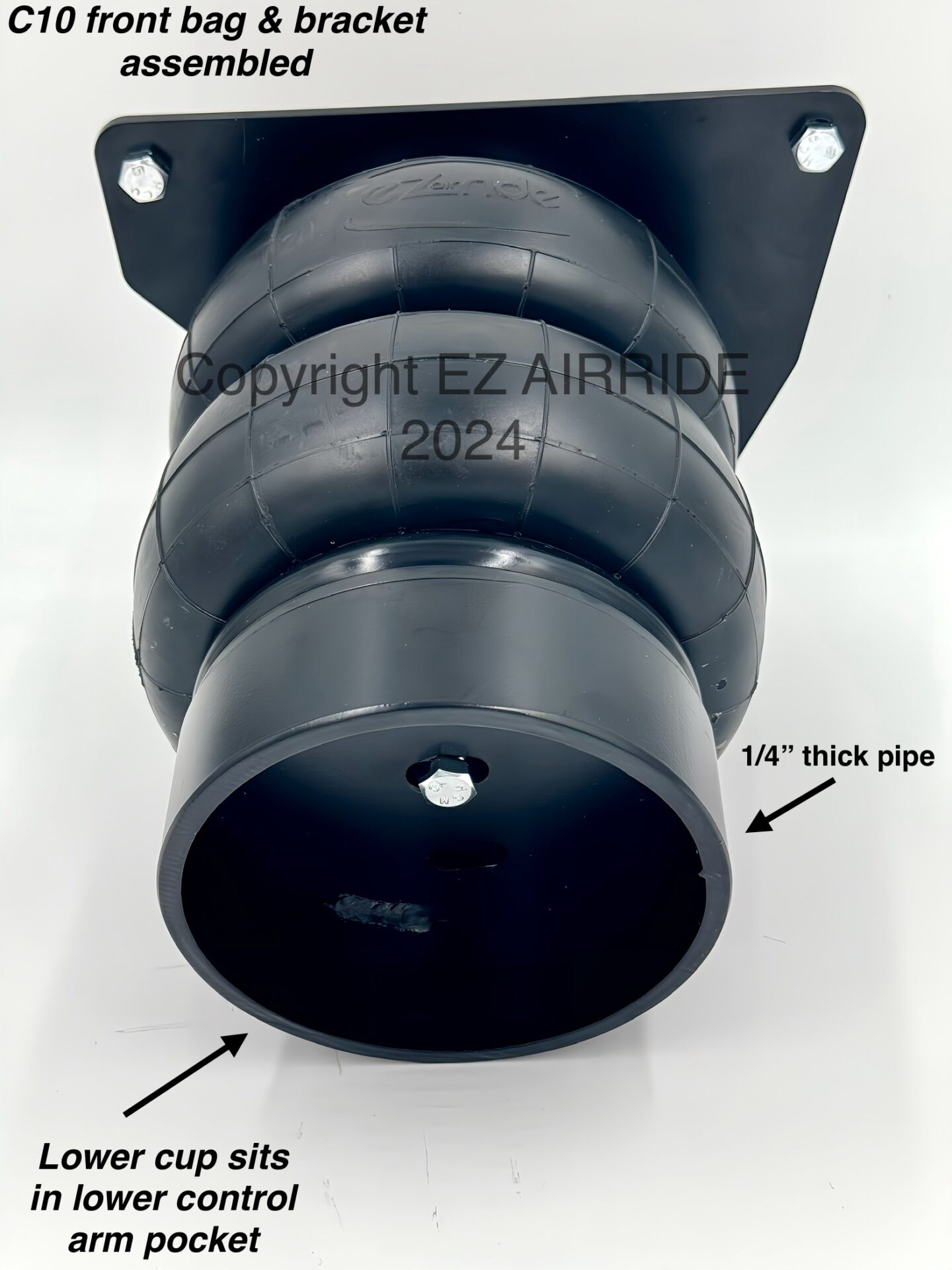
Factory Arms vs. Aftermarket Tubular Arms Our vehicle-specific lower brackets are engineered precisely to drop into the factory lower control arm spring pocket. However, because the C10 layout is so uniquely installer-friendly, our standard lower brackets should also drop right into 99% of the aftermarket tubular arms on the market.
Furthermore, unlike classic passenger cars, almost every reputable brand of aftermarket tubular lower arms for the C10 platform already comes with a lower shock mounting location tab welded directly to the arm. Because of this built-in geometry, you can simply mount your shock directly to the tubular arm’s tab without any custom fabrication. However, there is absolutely nothing wrong with freshening up your clean factory stamped arms with a new set of ball joints and a coat of paint, but if you choose to run aftermarket tubular arms, our kit is designed to adapt seamlessly.
The Physics of Drop Spindles (Catalog Specs vs. Real-World Clearances) Order-takers love pitching drop spindles because they promise a quick, extra 2 to 3 inches of drop. But they are selling catalog part numbers, not vehicle geometry, and they don’t know your specific truck. They don’t know your wheel diameter, your tire aspect ratio, or what is actually hanging underneath your chassis.
The Reality of Drop Spindles and Air Ride
Here is the mechanical reality of a classic truck: an air suspension kit drops the entire chassis toward the pavement. If you install drop spindles and an air ride kit together right out of the gate, you aren’t just lowering the body—you are dropping your mechanical vitals vulnerably close to the concrete.
Because drop spindles permanently lower your front crossmember and engine position relative to the wheels, components like oversized aftermarket oil pans, low-hanging exhaust headers, or custom exhaust pipes running below the factory frame rail lose critical ground clearance. If those vitals hang down, they will smash into the pavement long before your frame rails ever lay out at a show.
Our Absolute Recommendation: Build in stages. Install our air ride kit first on your factory spindles. For a vast majority of builders, our massive range of usable bag stroke will have your truck safely kissing the concrete and sitting exactly how you want.
Once the kit is installed, air the truck all the way down, crawl underneath with a tape measure, and check your clearances. If your oil pan and exhaust pipes still have ample room to breathe and you want to go even lower, then buy the drop spindles. Don’t risk cracking a custom oil pan on day one just to clear a catalog spec.
Your Classic Plus kits feature 4-corner (independent) control, but can't I just run a simpler front-and-back (2-switch) setup instead?
The Short Answer: Sure, you could buy a generic, old-school 2-switch kit somewhere else—but honestly, you wouldn’t want to run one on a C10 even if you could. While a front-and-back system sounds simpler on paper, classic Chevy trucks have a legendary characteristic known as the “Chevy Lean.” Because our kits are engineered for maximum ride quality and a perfect stance, we only provide true 4-corner independent control systems. This isolates each bag so your truck rides straight, handles beautifully, and allows you to adjust your exact ride height effortlessly.
The Physics of the “Chevy Lean”
Every classic truck guy knows that old coil-spring C10s and Suburbans almost always lean to the driver’s side. It’s the natural result of decades of real-world truck history:
Predominantly One Rider: Decades of a single driver sitting on the left side of the bench seat.
Mechanical Weight: The heavy factory steering linkage sits entirely on the driver’s side.
The Fuel Tank: On 1963–1972 trucks, the fuel tank is mounted right behind the seat, throwing a massive weight bias directly to the left side every time you fill it up.
Even with stiff, rigid steel factory coil springs, that lean is pronounced. But when you swap out those unforgiving steel springs for a luxurious, high-quality air spring, the skeletons in your truck’s chassis weight distribution really want to come out. Air bags are incredibly responsive, meaning that classic Chevy Lean will become drastically worse without a true 4-corner independent control system to isolate the pressure.
Why “Sharing Air” is a Bad Idea for a C10
In a front-and-back (2-switch) system, the left and right airbags are connected by a single T-fitting, meaning they share the exact same air line. They are constantly fighting for air pressure.
Because the driver’s side of your truck is naturally heavier, the weight of your body, the steering gear, and the gas tank will physically push down on the driver’s side airbag. In a shared system, that compressed air has nowhere to go except through the line and straight into the passenger-side airbag.
The result? The heavy side sinks lower, the light side balloons up higher, and your truck goes down the boulevard completely crooked. Worse yet, because most classic work trucks typically never came from the factory with a front sway bar—they were primarily utility trucks designed for the farms, not so much the freeways—every time you turn a corner, the air will rush to the outside bag, causing the truck to body-roll and lean aggressively into turns.
The Four-Corner Advantage
Our 4-corner independent control kits handle this automatically by isolating every single airbag. This completely stops air from transferring side-to-side when you are cruising or hitting a sharp turn.
Don’t worry—you don’t need to be a finger acrobat to operate this system, and your wife won’t be confused driving it. On our Classic Plus setup, the dual-needle gauges give you clear readouts, and the independent paddle switches are strategically grouped right next to each other. To lift the front end evenly, you don’t use individual fingers; you just take your thumb, or curl your finger, and lift both paddles together at the exact same time. The pressure equals out naturally and the truck lifts completely straight.
Think of it like a Sleep Number bed—there is no single “correct” pressure number. You calibrate it simply by driving around the block until it feels exactly how you want it to ride. Typically on a C10, you’ll run around 70 to 80 PSI in the front to support the engine, and since there’s no motor in the back, the rears sit happy around 40 to 50 PSI.
Best of all, having independent control means your truck stays versatile. If you ever do throw a heavy load of landscaping pavers, cement bags, or shop gear into the bed, you can easily use one finger to add a few extra PSI to that specific corner right from the cab. Your truck stays level, your suspension never sags, and you just cruise.
Why does this kit use 1/4" airline? Won't upgrading to 3/8" or 1/2" line make my car lift faster?
The Short Answer: No—and this is one of the single biggest misconceptions in the entire air ride industry. We get calls all the time from builders saying their buddies told them they need massive 1/2-inch lines to get a faster lift or drop. With all due respect to the garage rumors, that simply isn’t how fluid dynamics works. The diameter of your airline does not dictate the speed of your system. Your air flow is strictly limited by the single smallest restriction point in the loop: the mechanical opening inside the paddle valve itself.
The Hallway Analogy
Think of your air system like a crowded hallway leading to an exit door. The airline is the hallway, and the paddle valve on your dash is the exit door.
Our Classic Plus kit features high-quality manual paddle valves, which are engineered with a precise 1/4-inch internal seat opening. If you swap out the airline for a massive 1/2-inch line, all you are physically doing is making the hallway wider. You can jam more volume into that hallway, but the air still has to bottleneck and exit through that exact same 1/4-inch door to fill or dump the airbag. The velocity at the bag will not change, and your truck will not move one second faster.
The Real Headaches of Oversized Airlines
All you actually achieve by running unnecessary 3/8″ or 1/2″ lines on a manual paddle valve system is a mechanical and plumbing nightmare inside your cab.
Because the switches require a 1/4″ connection, running oversized lines forces you to use bulky step-down adapters, clunky reducers, and massive fittings. Every single adapter you add introduces two more potential failure points. You end up creating massive routing headaches, crowding your dash bezel, and practically guaranteeing a future of annoying, hard-to-find air leaks.
We supply high-pressure, premium 1/4-inch lines because they are perfectly matched to the flow rate of the valves, bend tightly without kinking, route cleanly through the chassis, and deliver a smooth, perfectly controlled, and reliable ride height adjustment every single time.
Our Recommendation: Trust the engineering. Our 1/4″ DOT airline is perfectly matched to the flow rate of the Classic Plus manual paddle valves, giving you a smooth, predictable, and incredibly reliable cruise height adjustment.
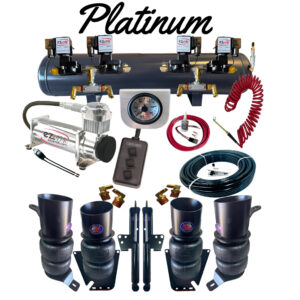
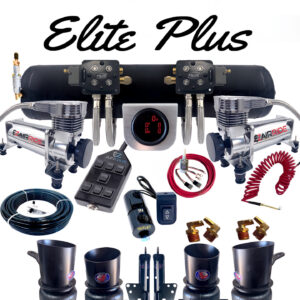
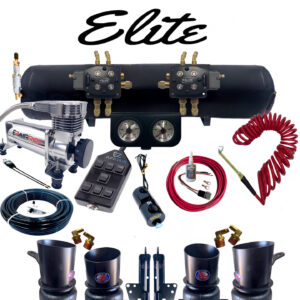
(Note: If you are looking for a more efficient and faster lift & drop speed, look into our Elite Series Electronic Manifold Kits. These systems eliminate the use of paddle valves at the dashboard and mount true 3/8″ electronic manifold blocks directly to the tank. With stored air pressure sitting right behind the manifolds, activating the switch unleashes a rapid, high-volume flow of air straight from the tank directly to the bags).
How difficult is this kit to install, and do I need to take it to a professional shop?
The short answer: If you can change brakes, route automotive power wire, and use basic shop tools, you have the right foundation for this install. Out of all the vehicle kits we sell, the 1963 through 1972 C10 and Suburban chassis is hands down the easiest of them all. There is absolutely zero welding required—the entire air suspension system is a direct bolt-on project you can easily knock out in your own garage over a weekend.
The Mechanical Breakdown
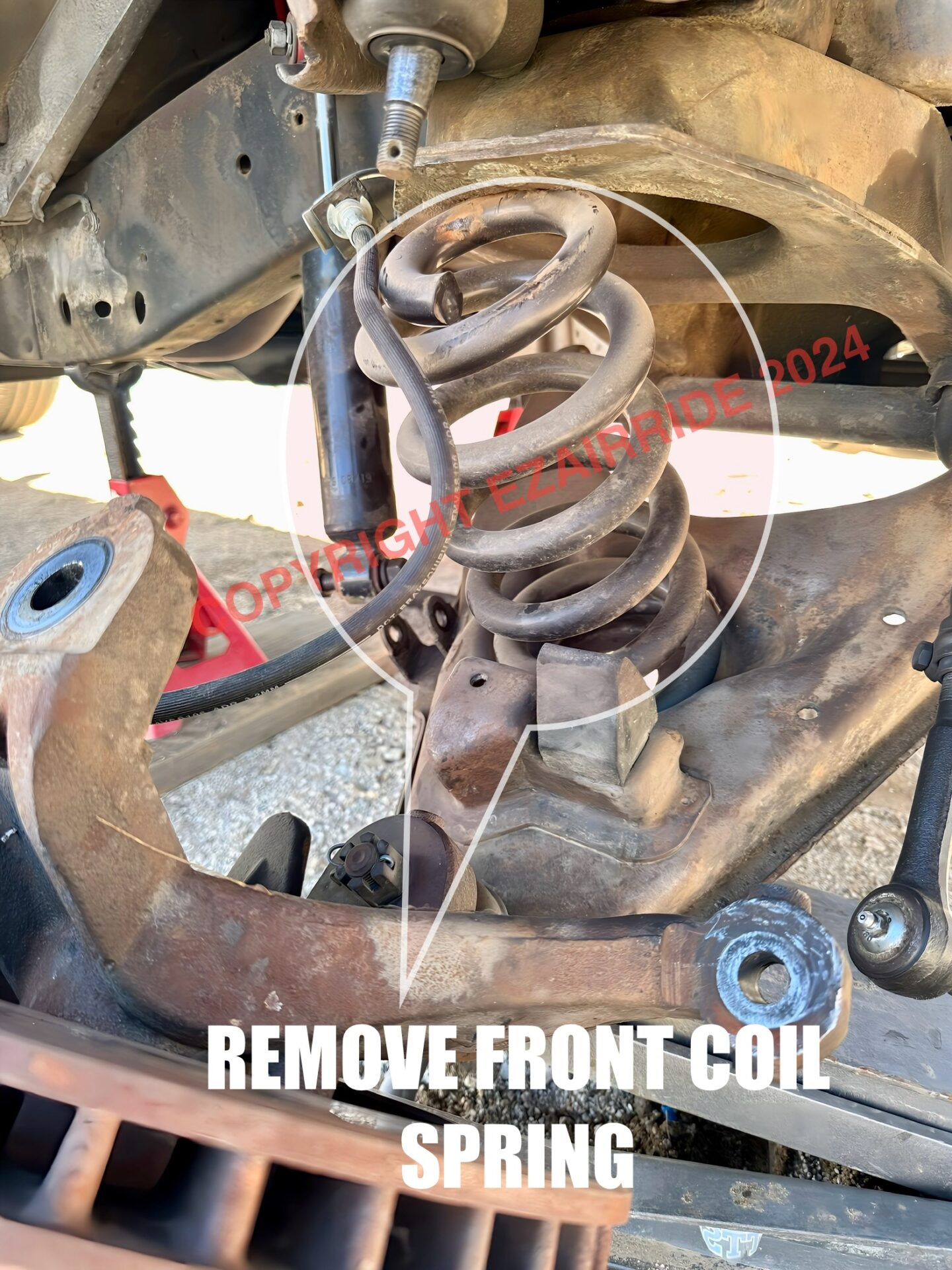
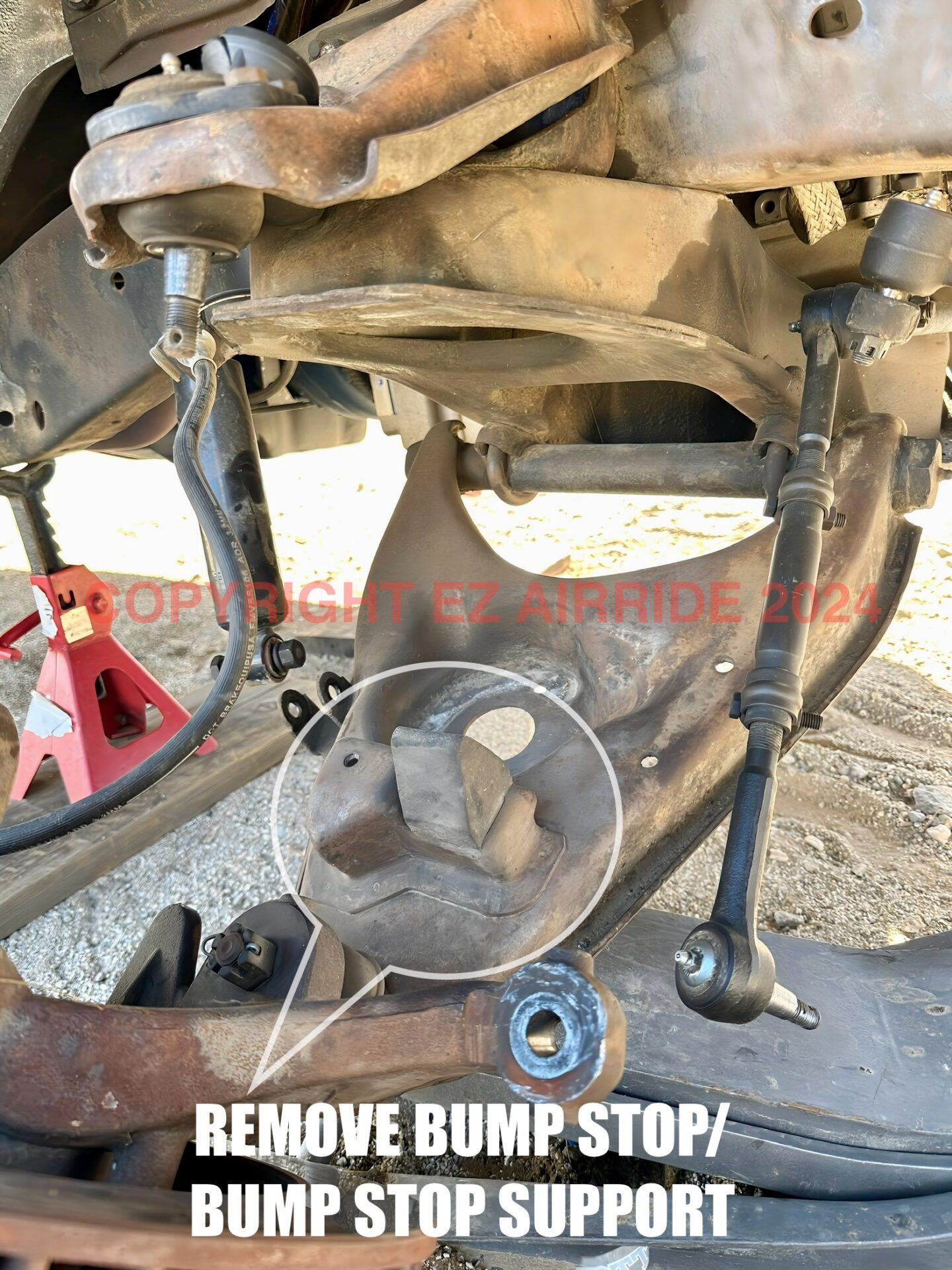
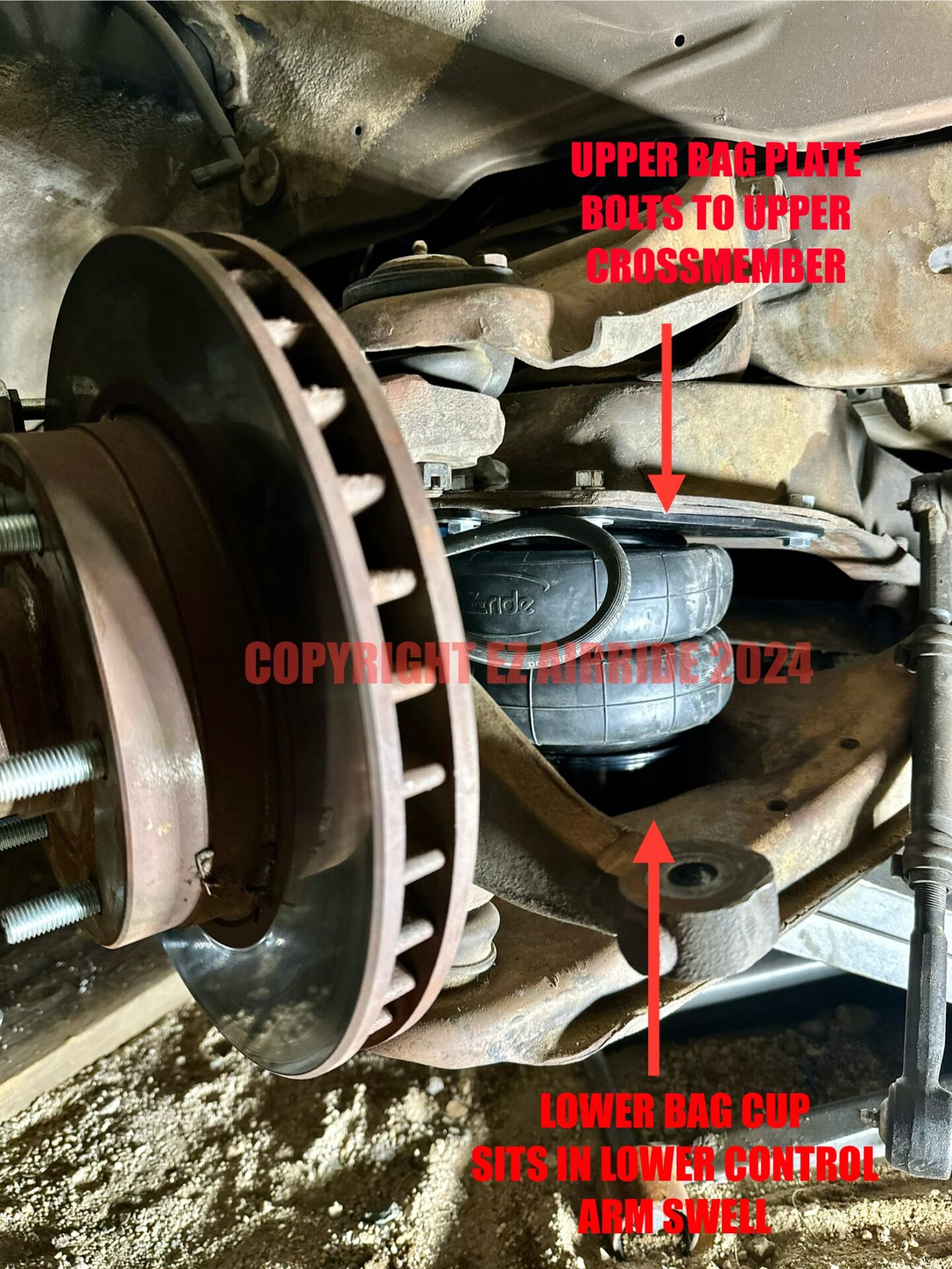
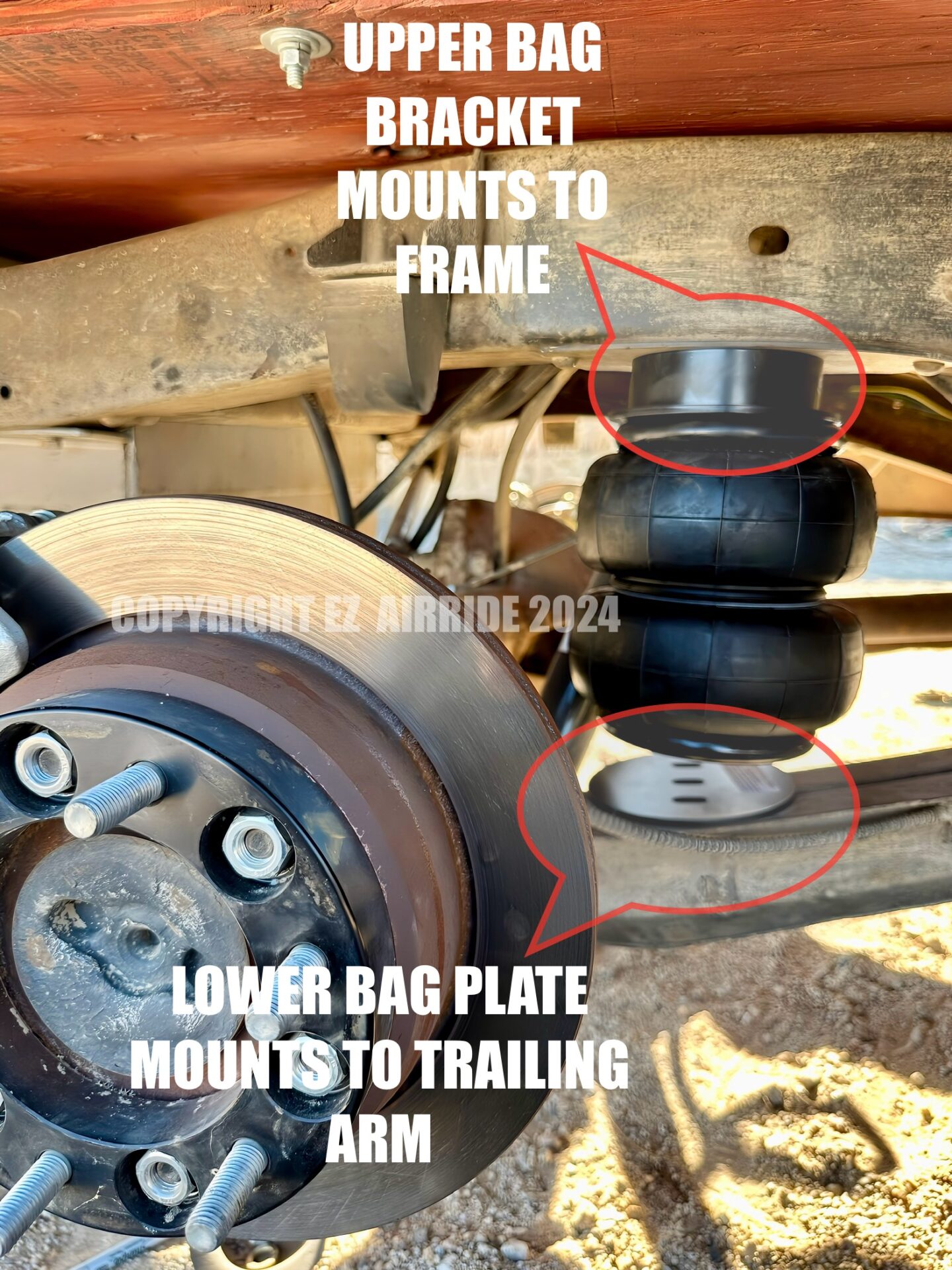
The Rear (100% Bolt-On): Relieve the factory spring pressure, slide the old coil springs out, and bolt our C10-specific brackets right up. The rear shock stays right in its stock factory position.
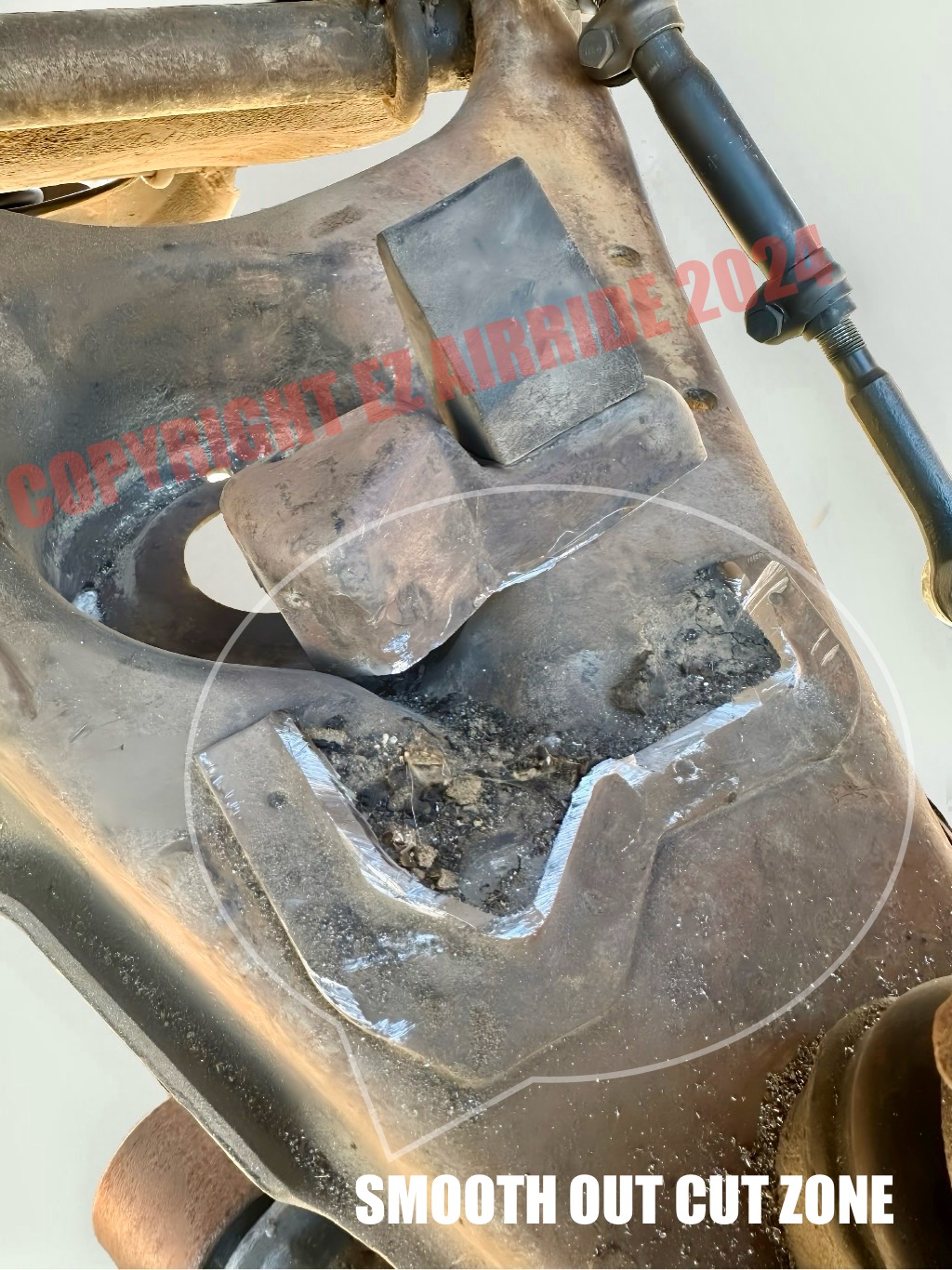
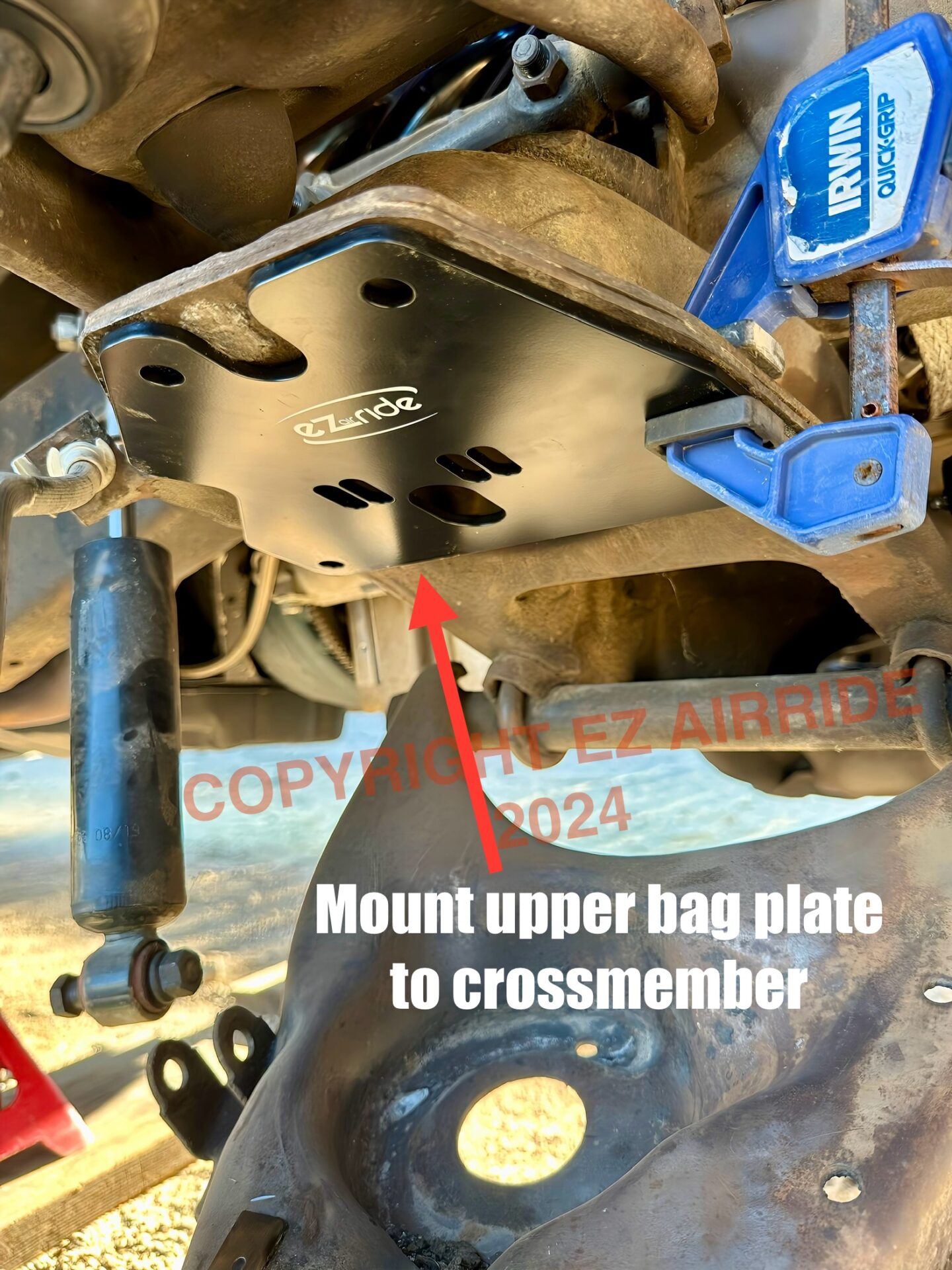
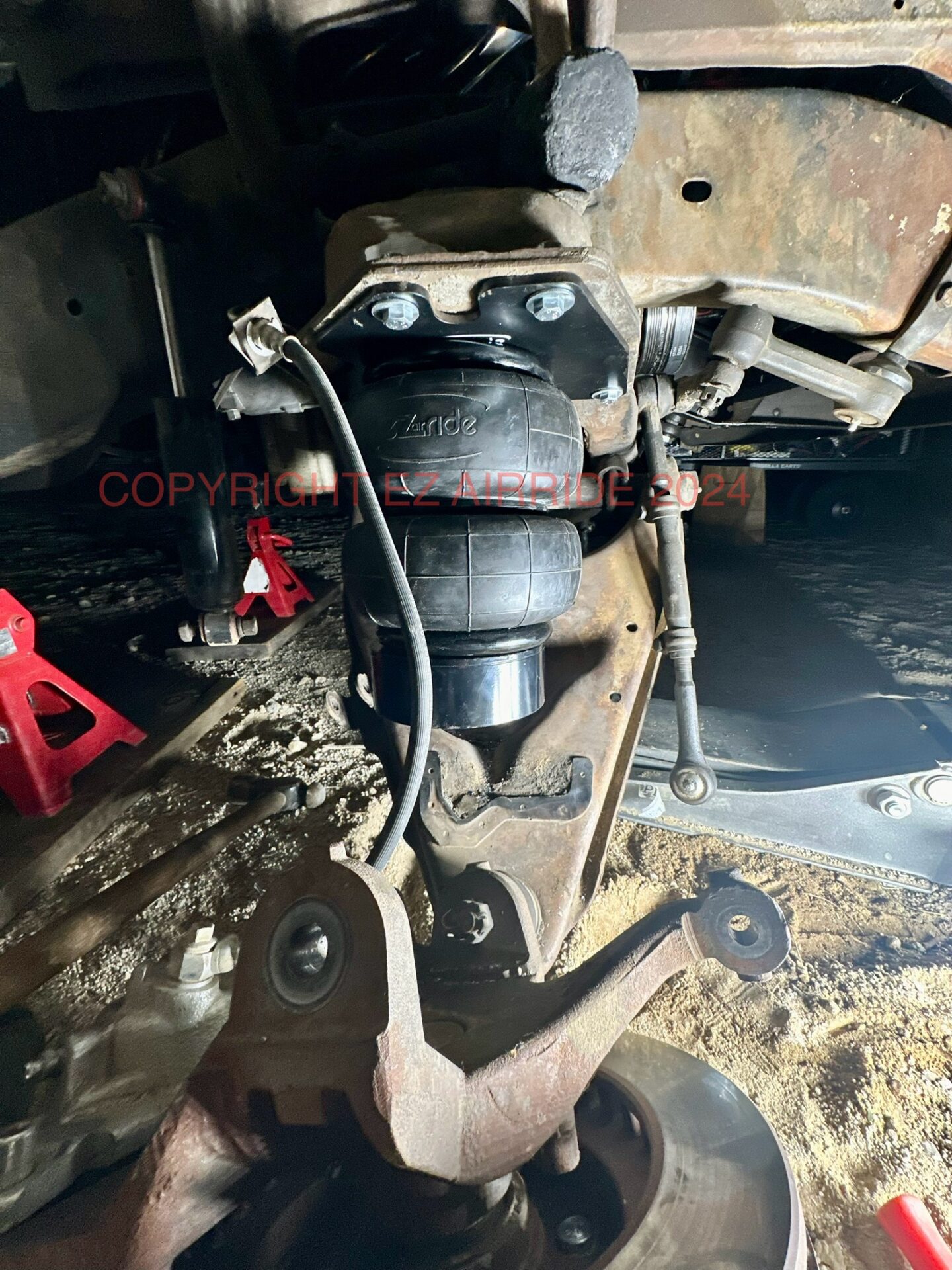
The Front (100% Bolt-On): Once the factory coil springs are safely uncompressed and removed, the airbag and bracket assembly bolts directly into place. The factory front shock remains completely unaltered in its stock position.
The Classic Plus Control Panel
This kit is built on pure manual mechanics over hardwiring headaches, putting total control right at your fingertips. The control valves used to air the truck up and down are built right into the gauge panel, which mounts to the dash.
The plumbing is very straightforward:
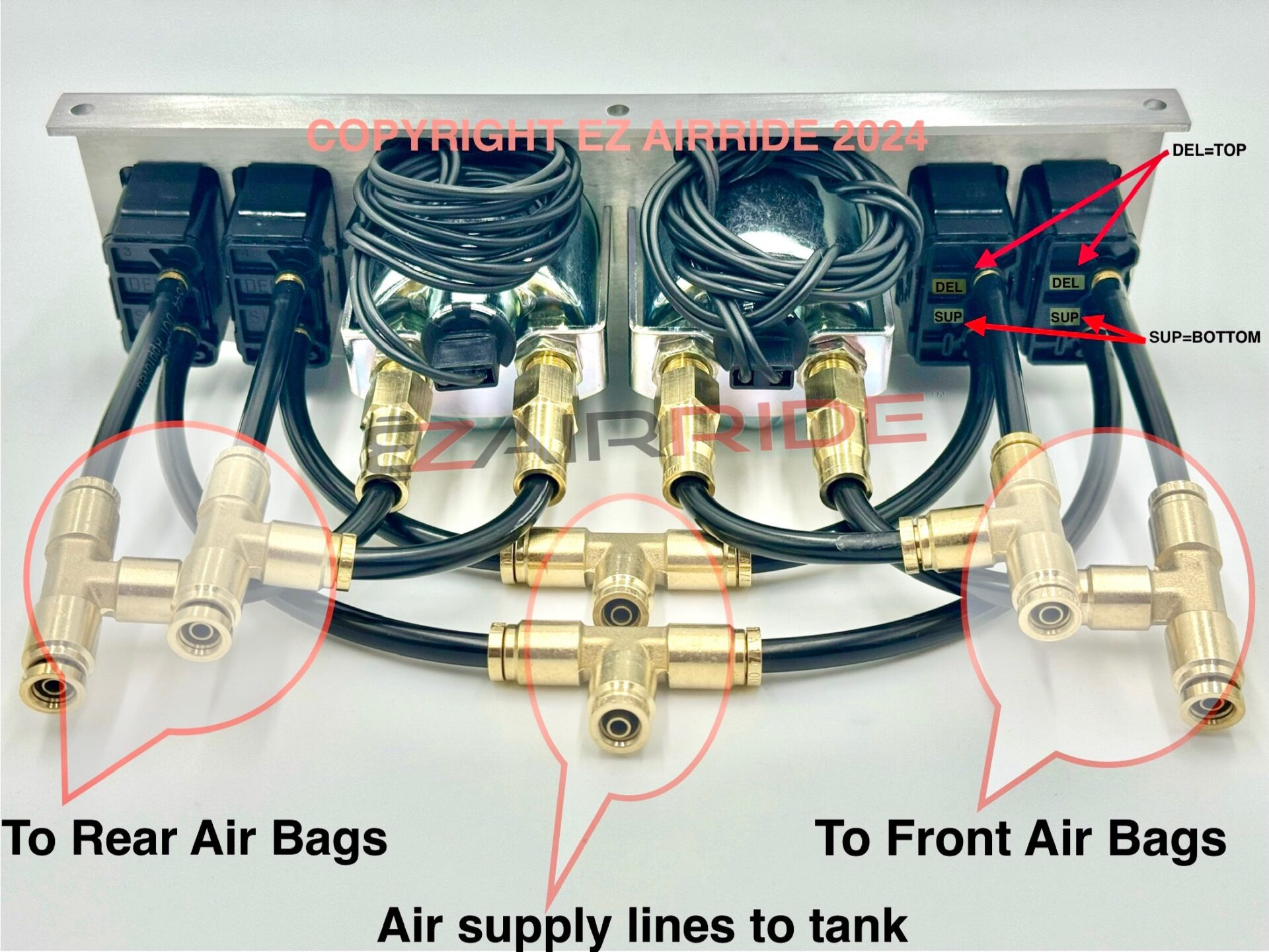
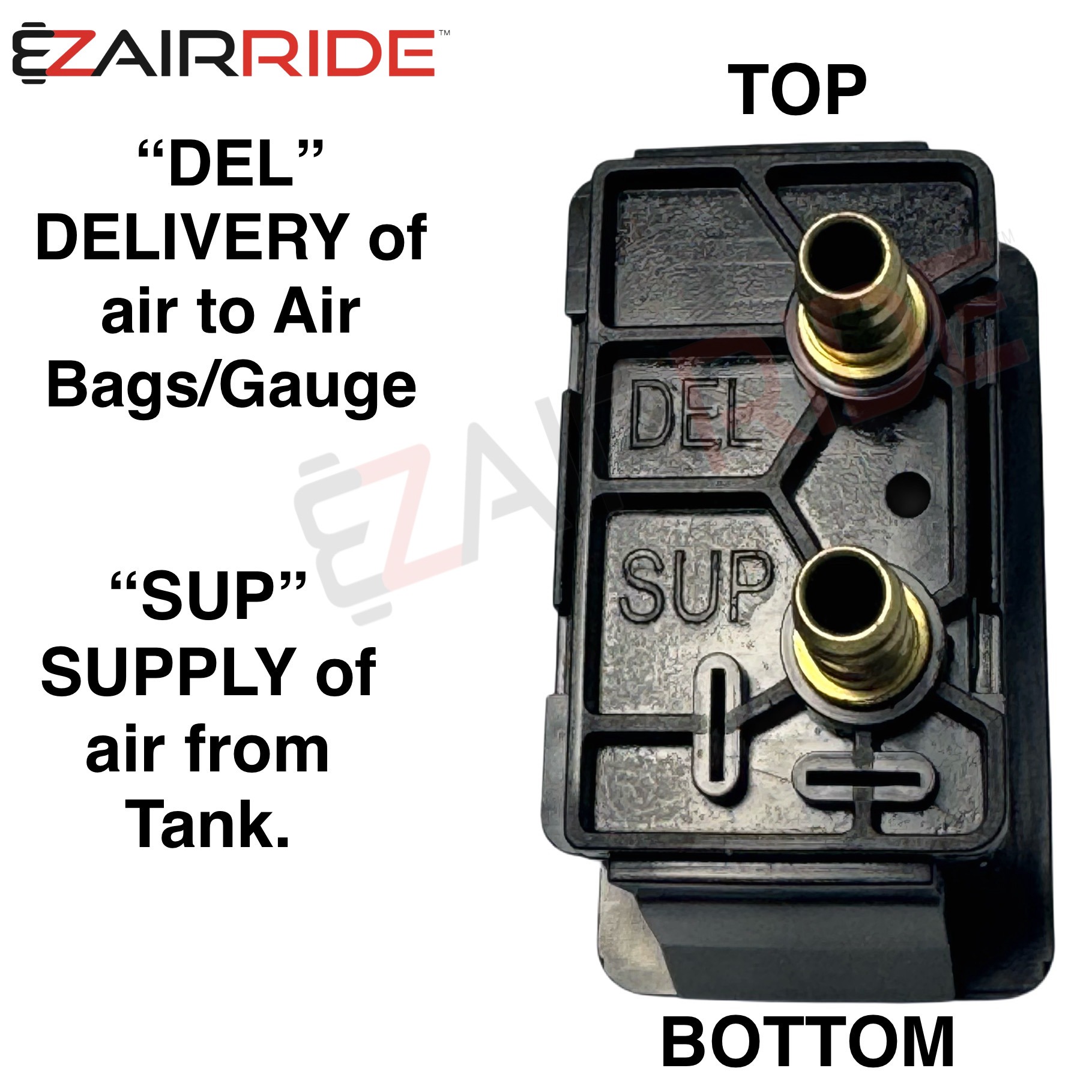
Run four 1/4″ air lines from the switches directly to your four individual bags.
Run two feed lines from those same switches straight back to the tank.
No complicated wiring diagrams, no electronics—just pure, mechanical reliability.
The Plumbing & Electrical
The rest of the Classic Plus kit requires only basic routing:
Compressor Mounting: Secure your compressor in the trunk, connect the leader hose to the tank, and run the power wire to the battery.
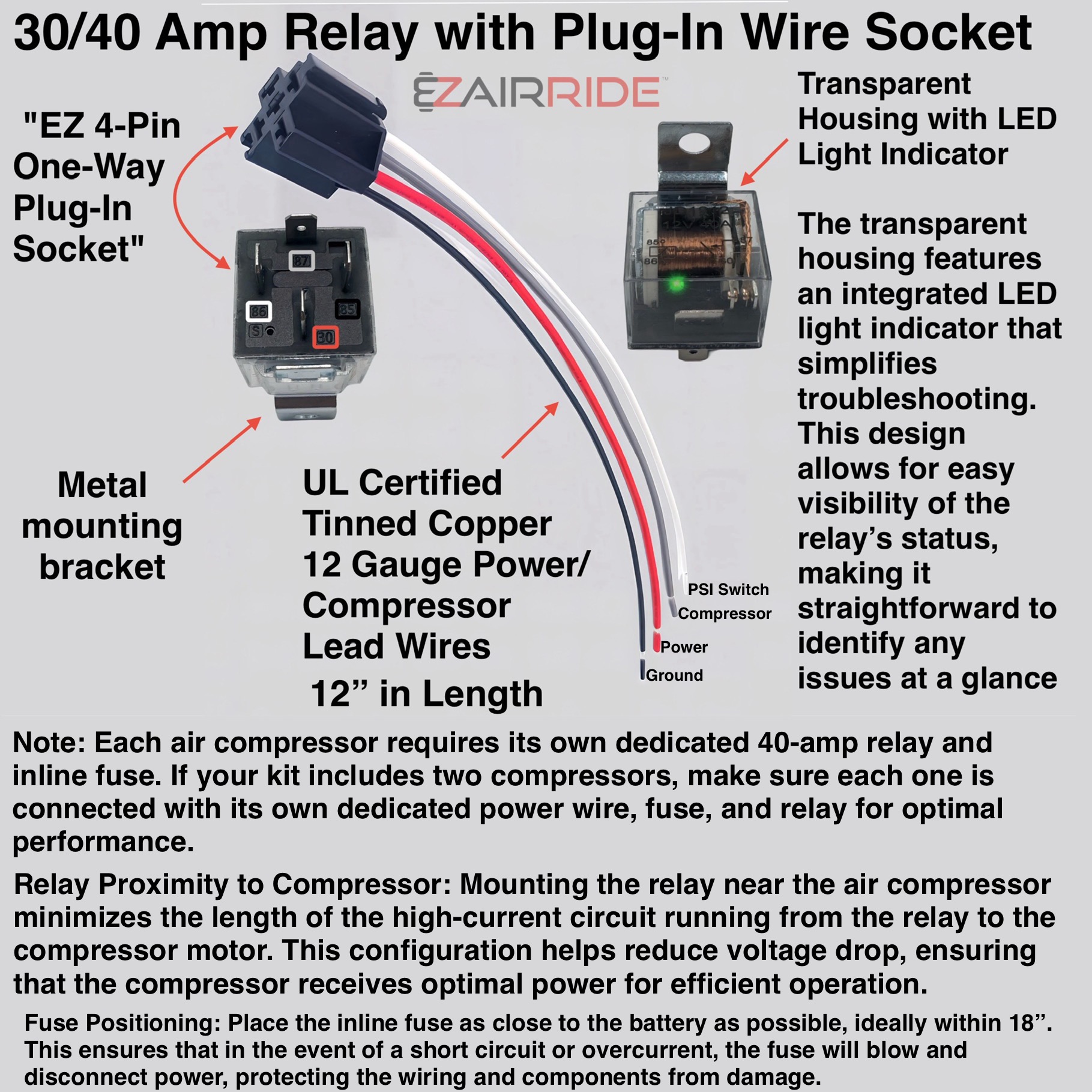
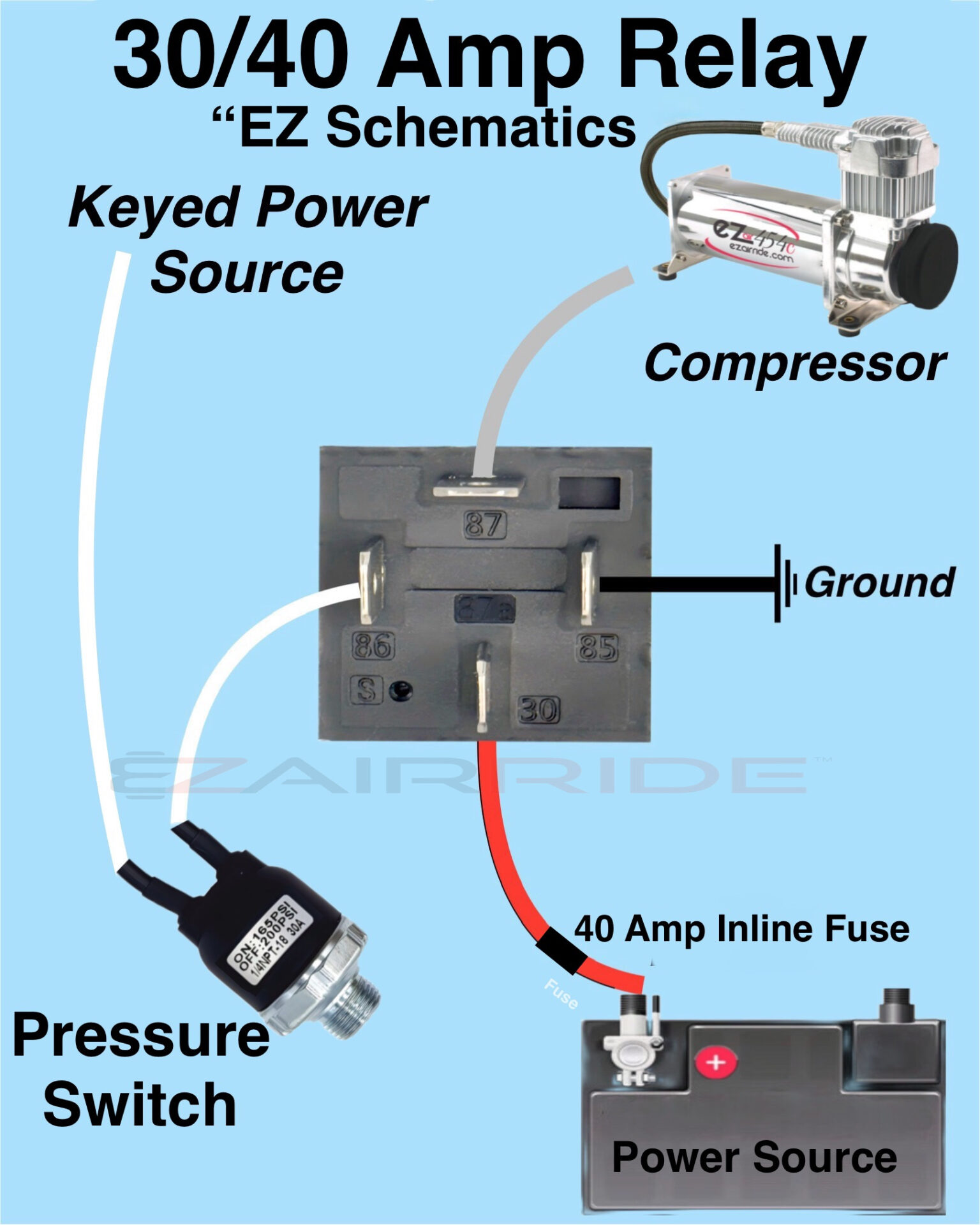
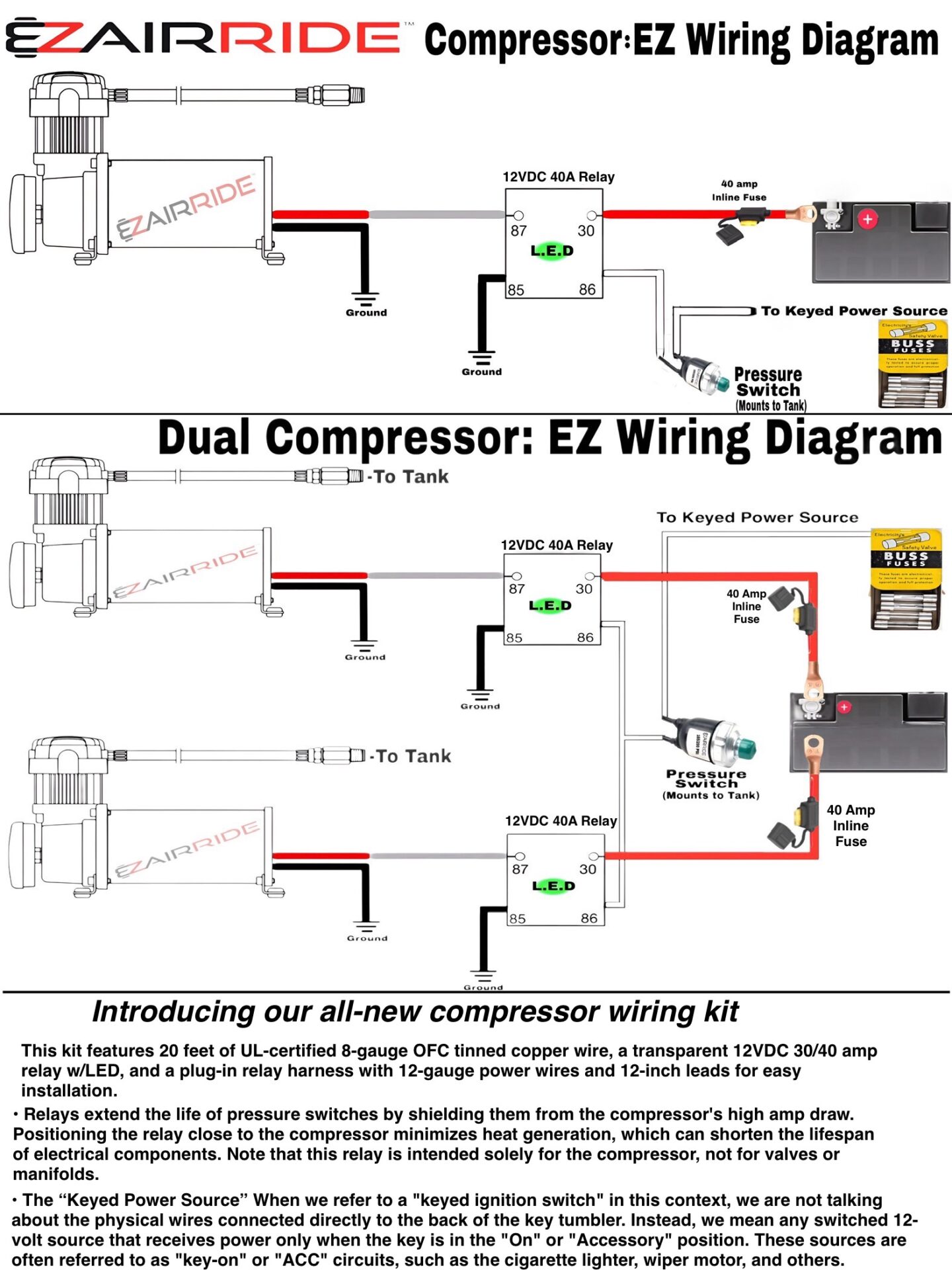
Relay & Power Wiring: Run the pressure switch trigger wire to your fuse panel for a keyed ignition power source, then connect the 4-pin relay to the pump, pressure switch, power wire, and ground—all right there in the trunk.
DIY vs. Professional Shop
Classic car and truck specialty shops typically charge anywhere from $1,500 to $2,500 in labor for a full air ride installation. The reality of a commercial shop means operating strictly on billable hours and fast lift turnover. Because plumbing and line routing are the most time-consuming parts of an air ride build—requiring patience to strategically route, tuck, and hide lines for a perfectly clean finish—critical details can easily get rushed under a tight shop schedule.
A fast-paced shop environment can mean missing the small things, like installing rubber protective grommets through frame holes, routing air lines completely clear of moving suspension components, or double-checking every single fitting. Furthermore, few commercial shops can afford to let a truck take up valuable lift space for a proper 24-hour overnight leak check or final clearance testing.
By taking your time in your own garage, you ensure every line and wire run is strategically hidden, secure, and protected. More importantly, you gain the priceless peace of mind that comes from knowing exactly how your system was installed, how every component works, and that it was done right.

Reviews
There are no reviews yet.