Universal Front Shock Relocation Kit | All Front & Rear Steer Classics
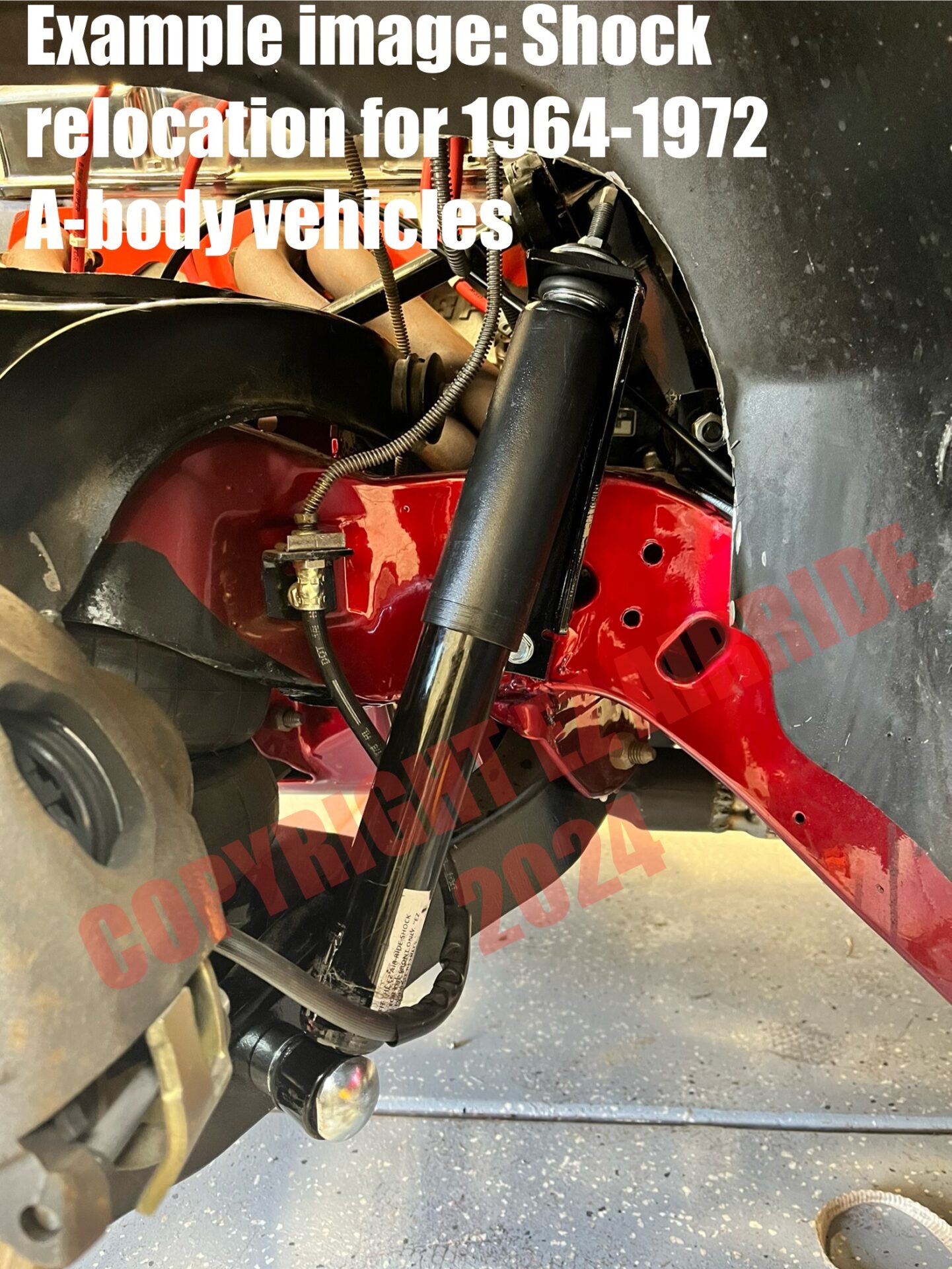
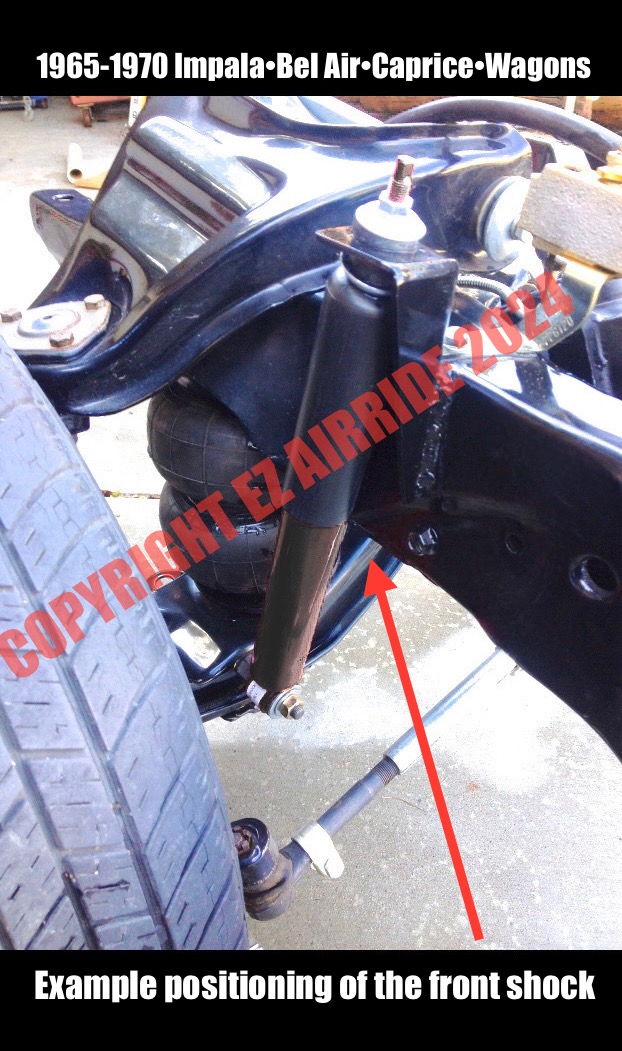
The Universal Front Shock Kit is engineered to provide the essential dampening needed for any classic car or truck equipped with aftermarket air suspension. When you replace your factory coil springs with air bags, the original shock—which sits vertically inside the coil—is permanently removed. Because the new mounting position is on the side of the control arm rather than through the center, a factory-style shock cannot be reused. Our kit includes specialized shocks designed for this specific exterior angle, ensuring that when you zip over a set of railroad tracks or catch an unexpected pothole, the shock dampens the bounce instantly for a smooth, controlled ride.
What’s in the Box:
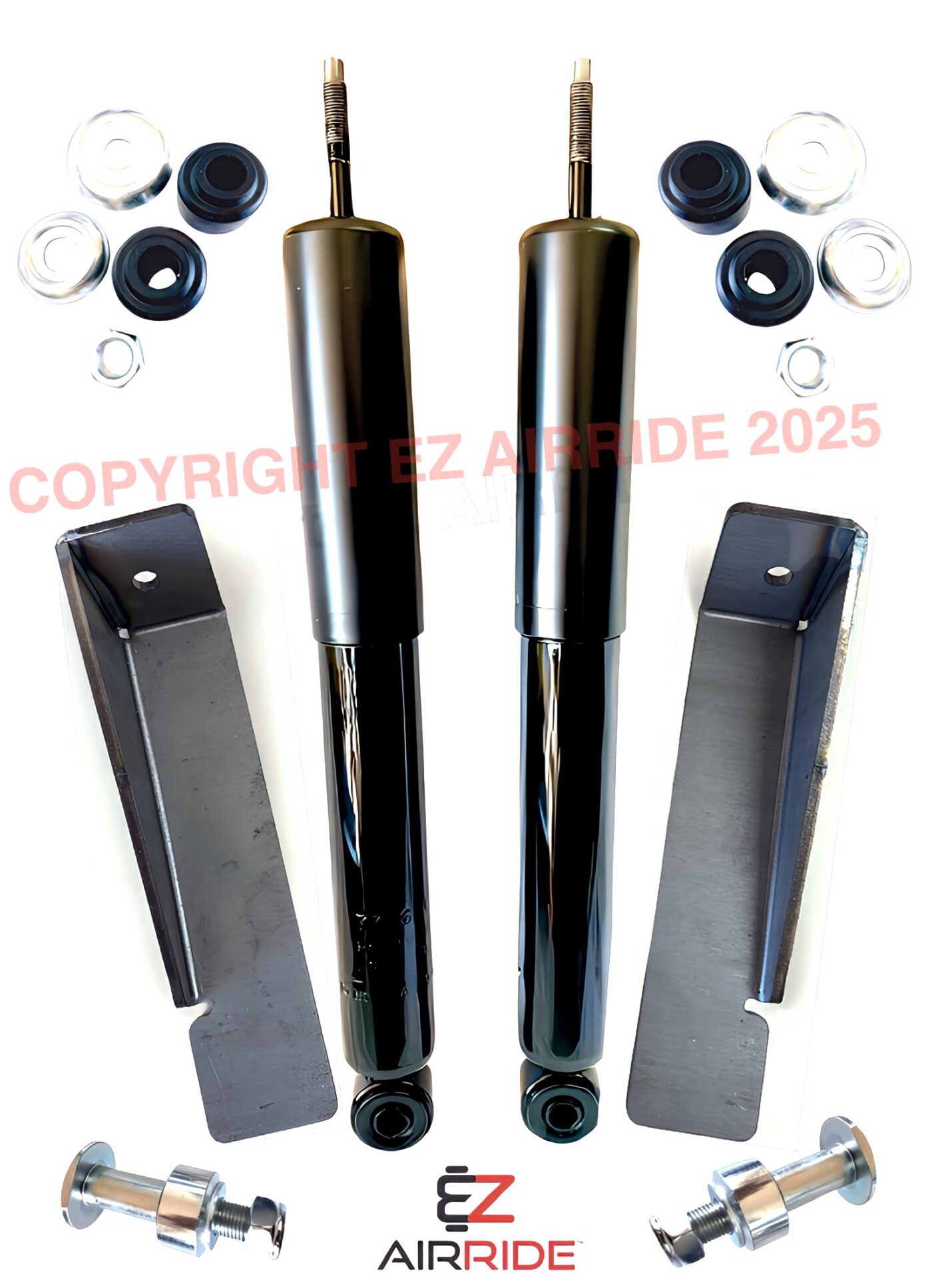
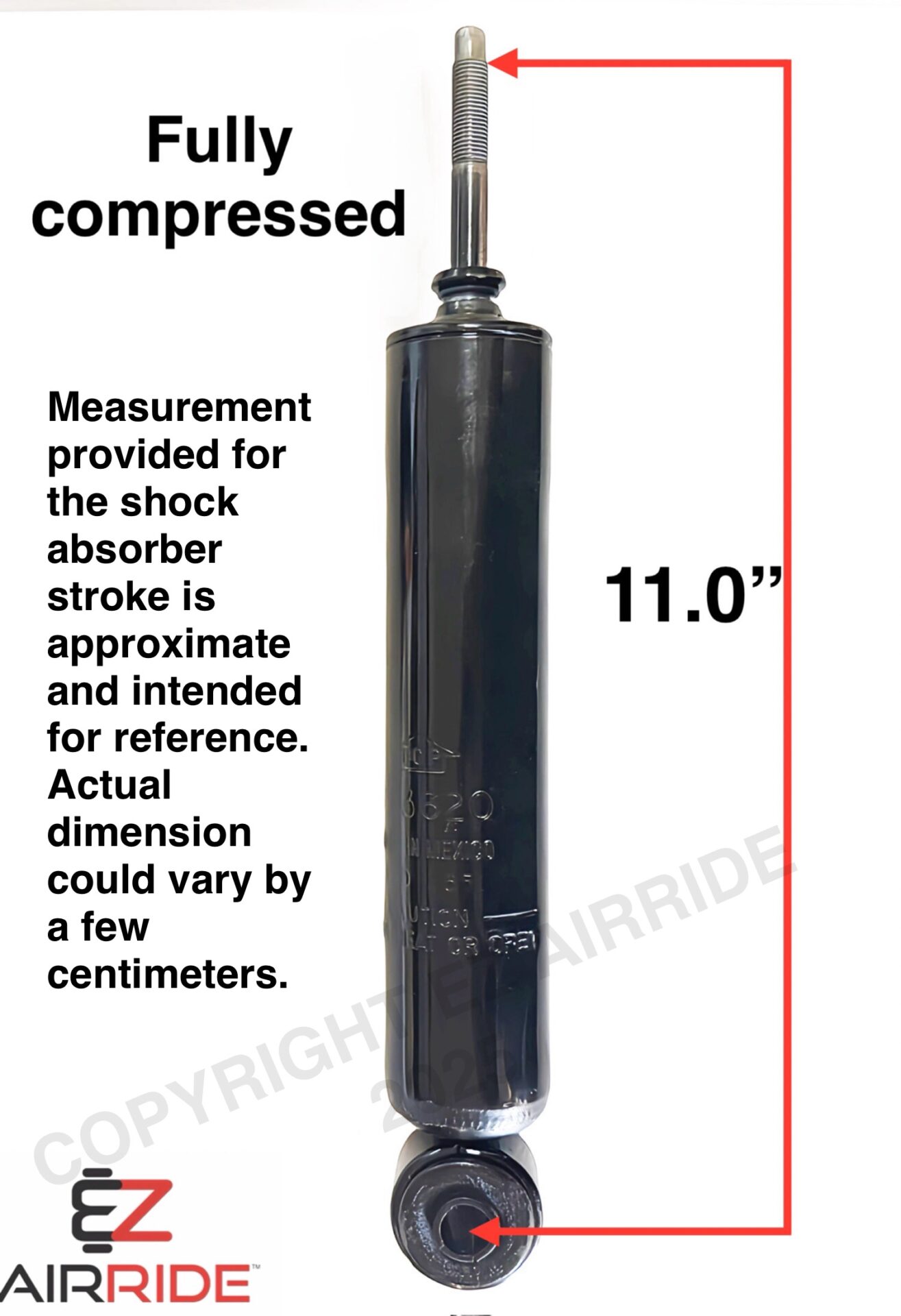
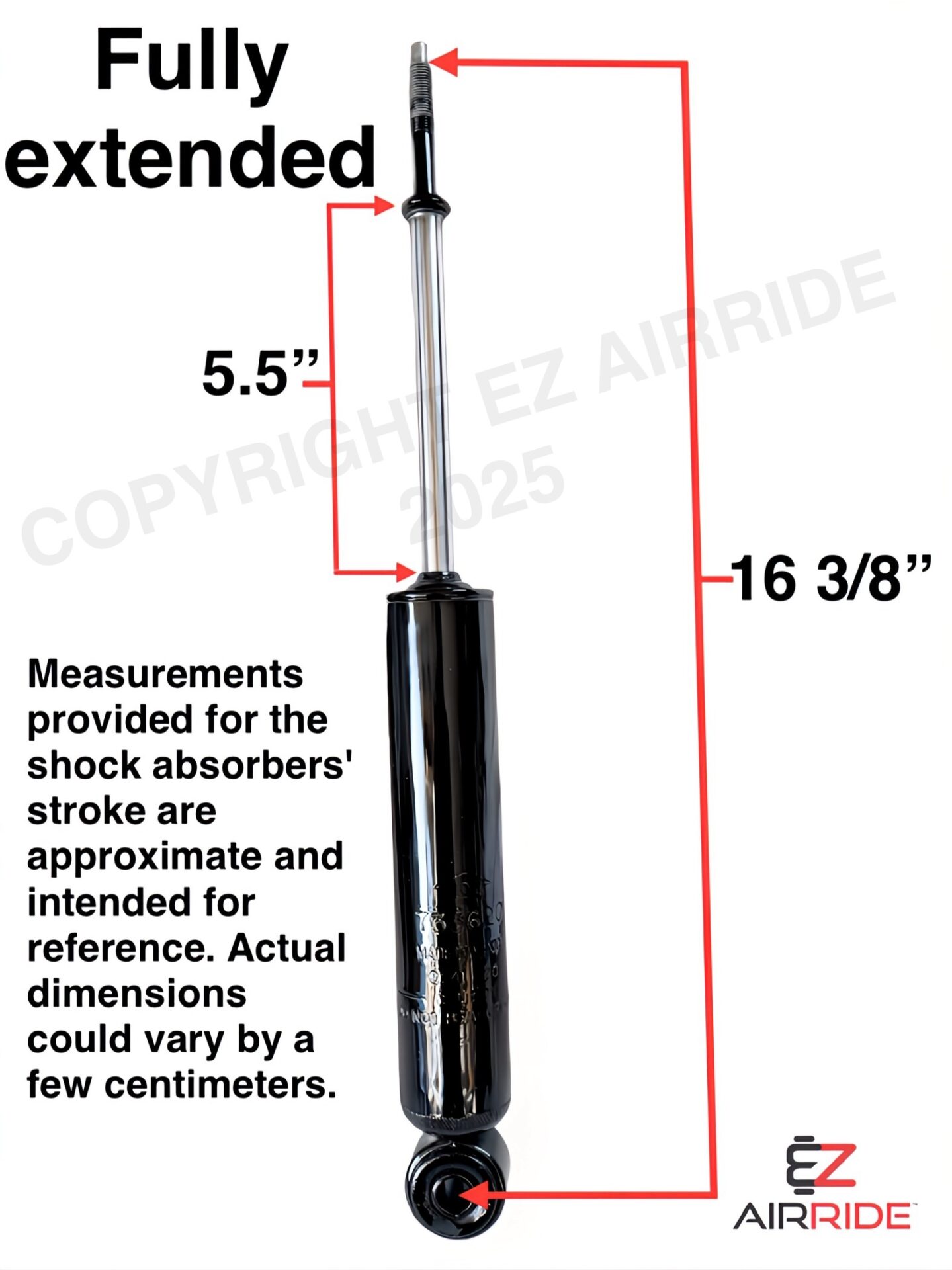
- (2) Premium Shock Absorbers with Dust Covers
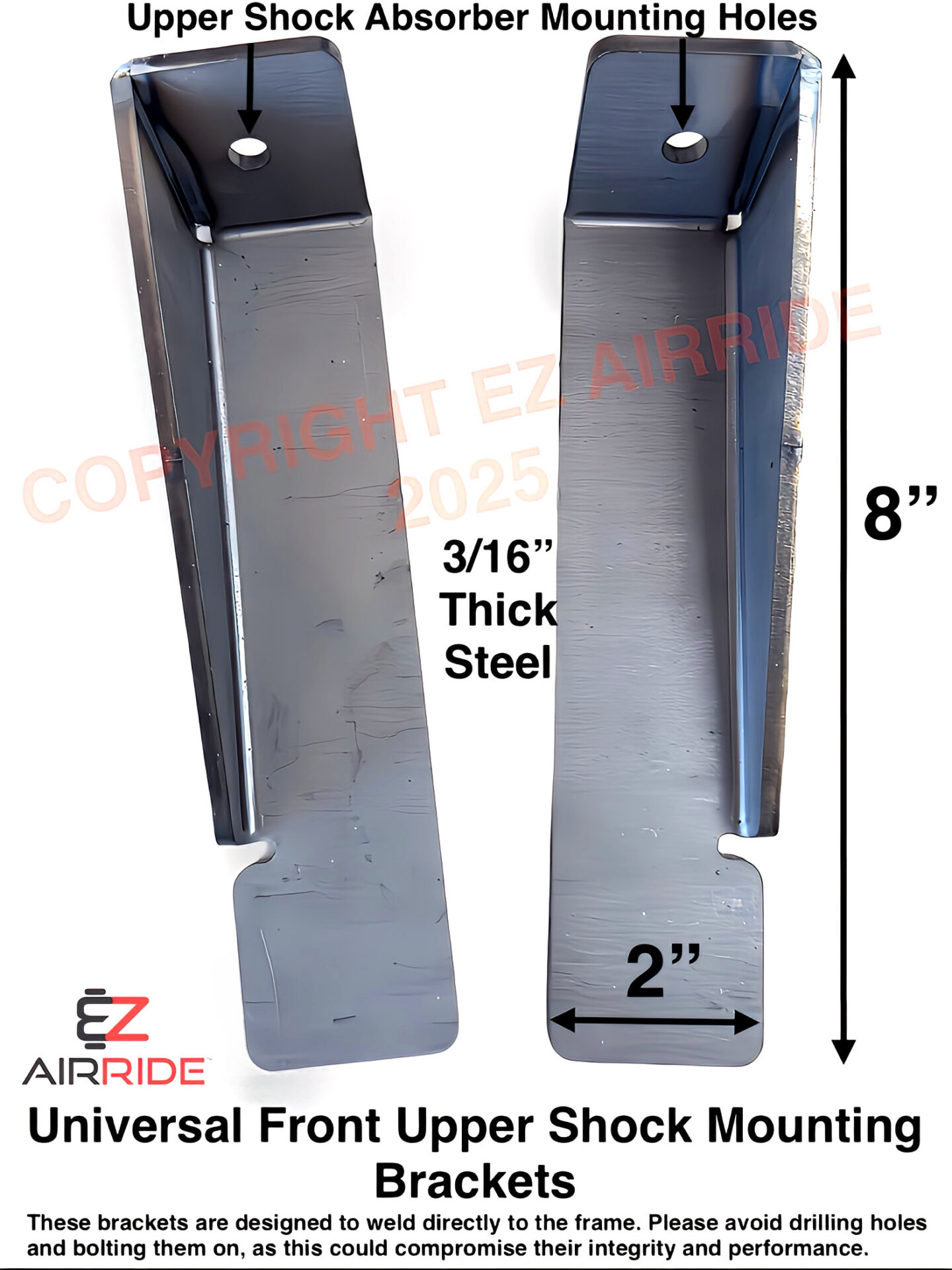
- (2) Universal Weld-on Steel Upper Shock Towers
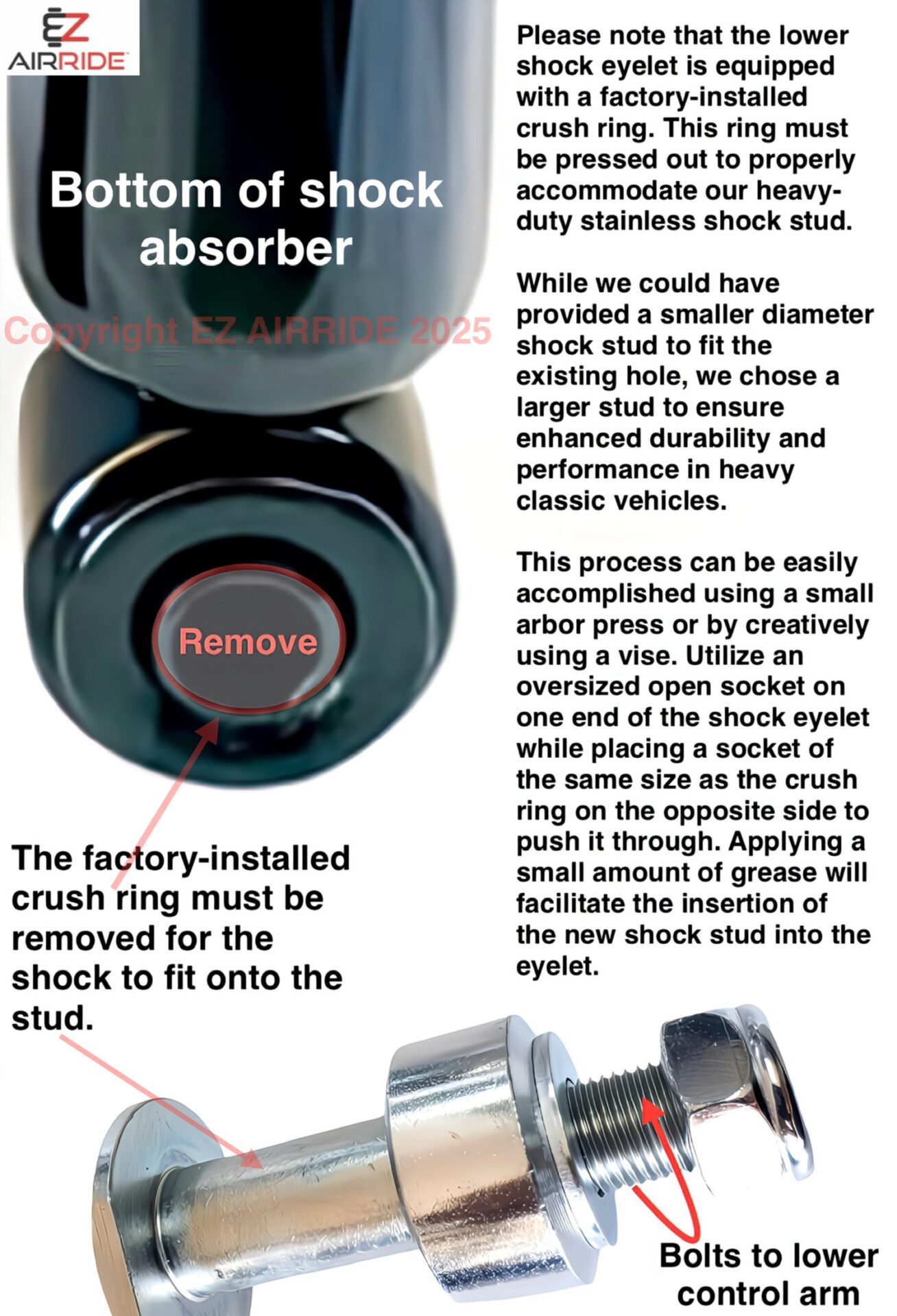
- (2) High-Tensile Stainless Steel Lower Control Arm Studs
- All necessary mounting hardware
Installation Overview:
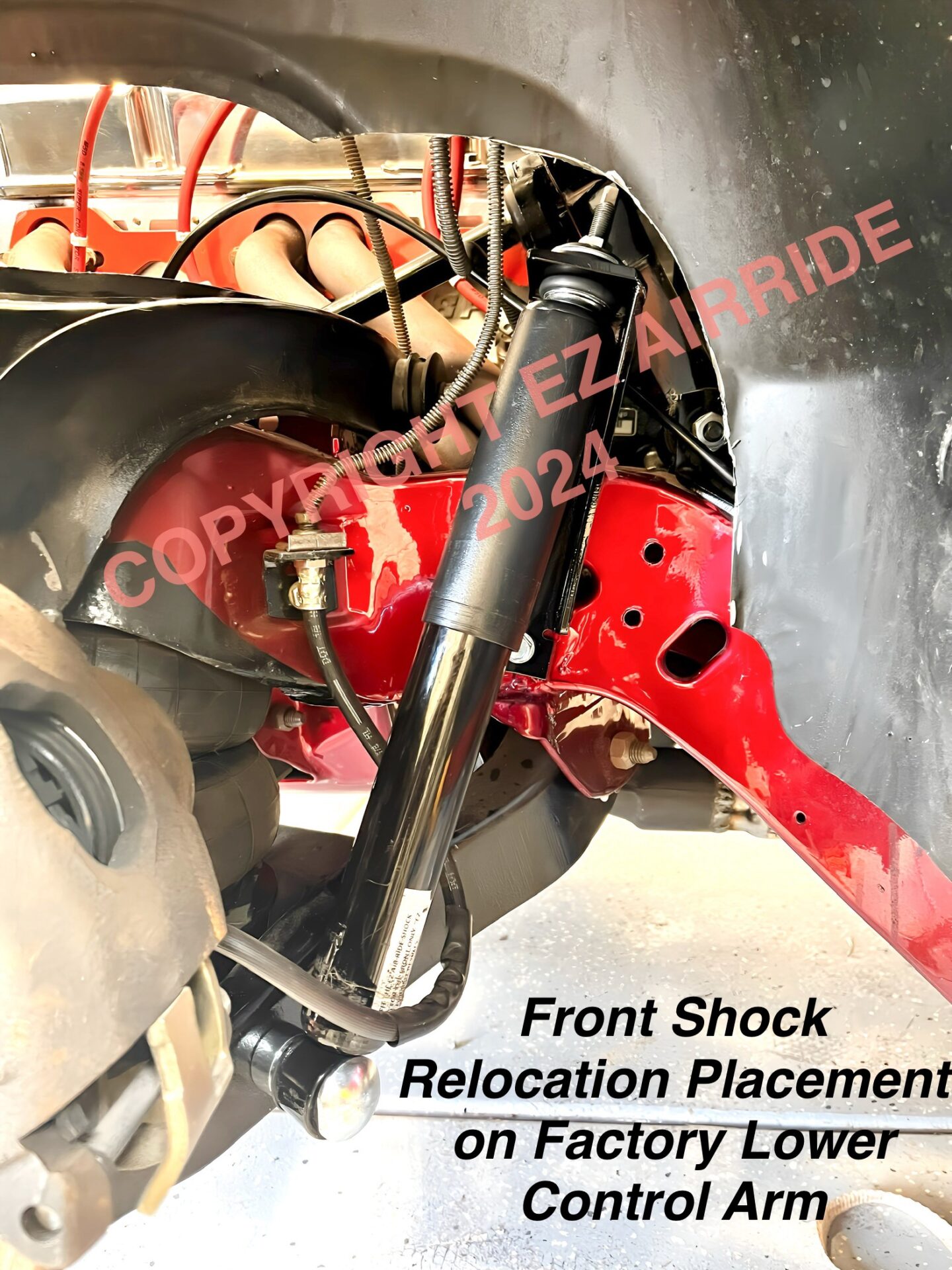
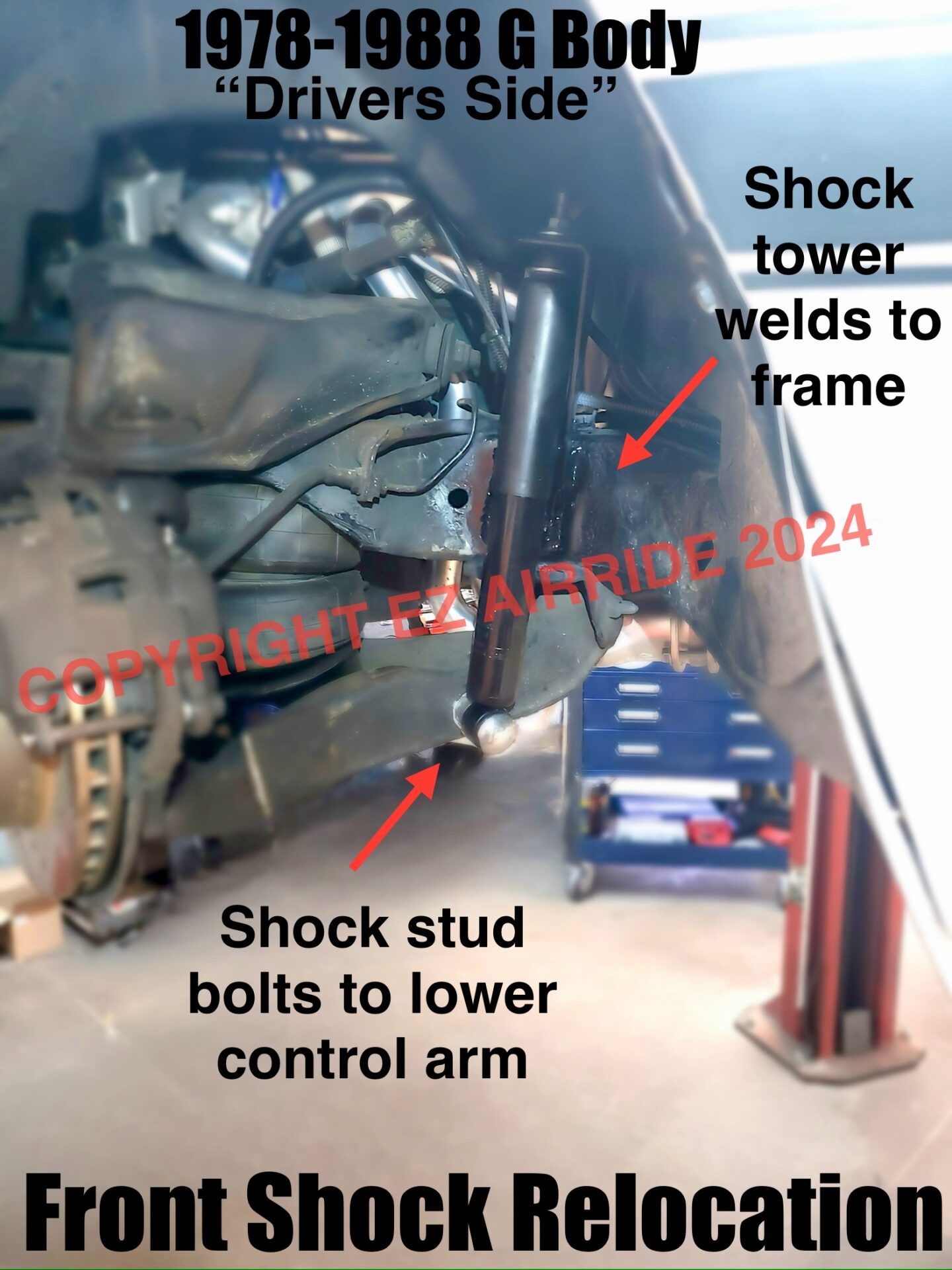
- Lower Mount: The stainless steel studs bolt directly to your factory lower control arms to secure the bottom of the shock.
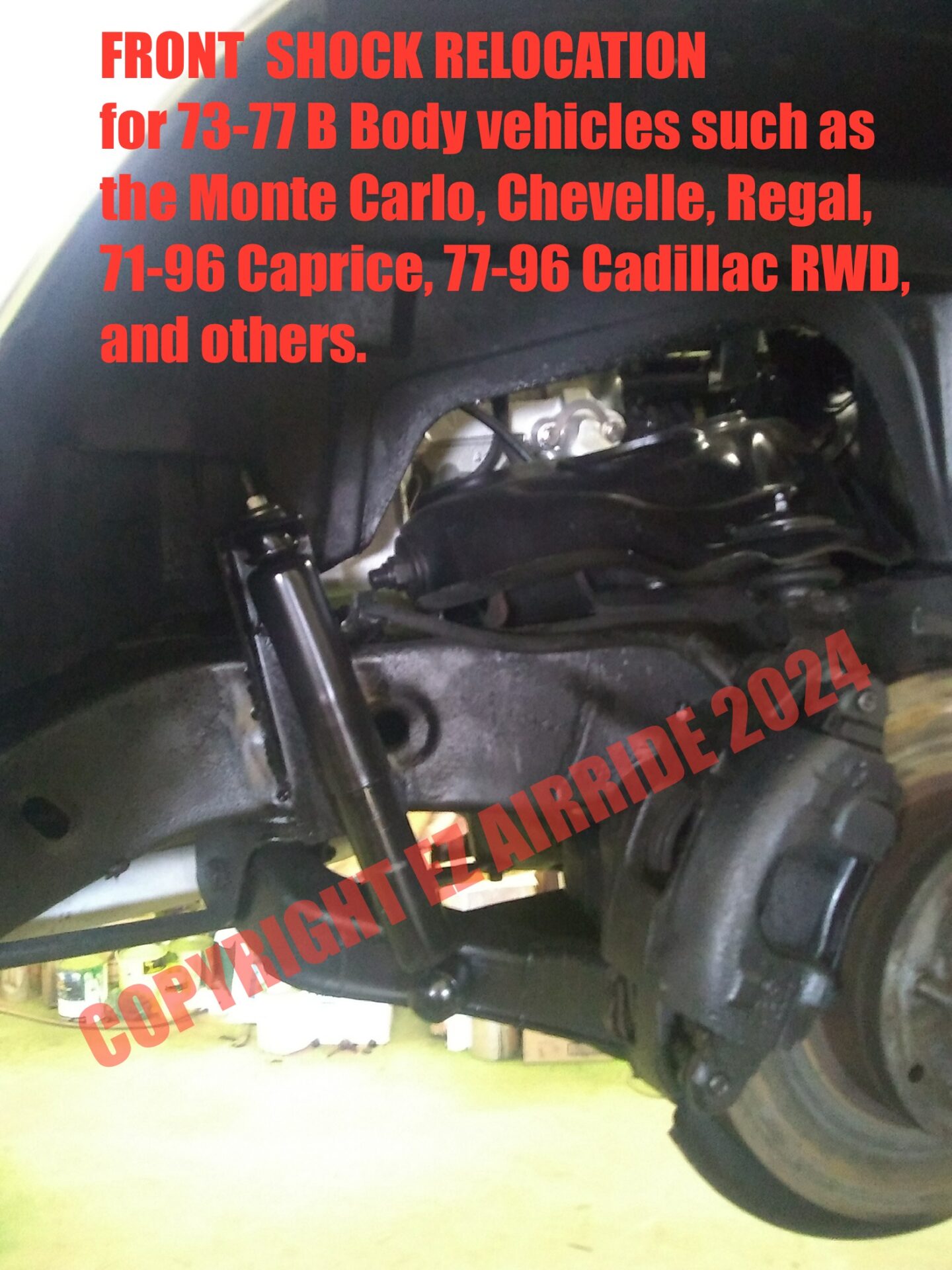
- Upper Mount: These universal towers are designed to be permanently fixed to the upper frame via welding. For a permanent, high-strength bond and a show-quality finish, welding is the only industry-recommended method.
Pro Installer Tech: Front vs. Rear Steer Layouts
The advice provided is relevant for the majority of vintage vehicles, but there are critical differences in shock placement depending on your vehicle’s steering geometry:
- Front Steer Models (Chevelle, Monte Carlo, Caprice, etc.): These vehicles feature steering components positioned in front of the wheels. This typically leaves ample clearance to mount the shock on the backside of the control arm (facing the firewall).
- Rear Steer Models (1958–1970 Cadillac & Similar): On these chassis, the steering components are located behind the wheels. This leaves very little room behind the arm. Professional builders often follow the approach taken by Cadillac engineers in the late 1950s and opt to mount the shock on the front side of the control arm (facing the bumper).
Important: Aftermarket Tubular Control Arms
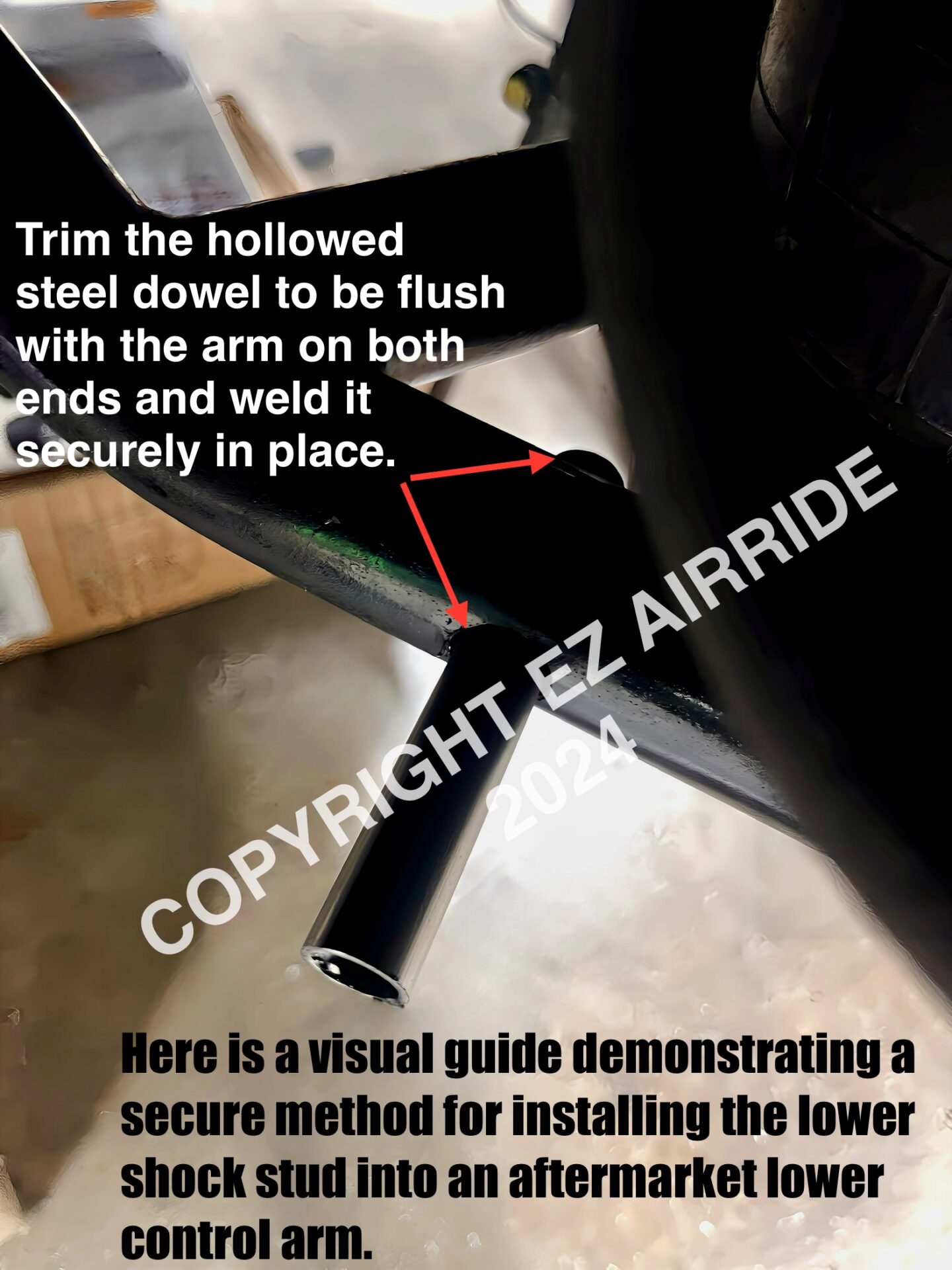
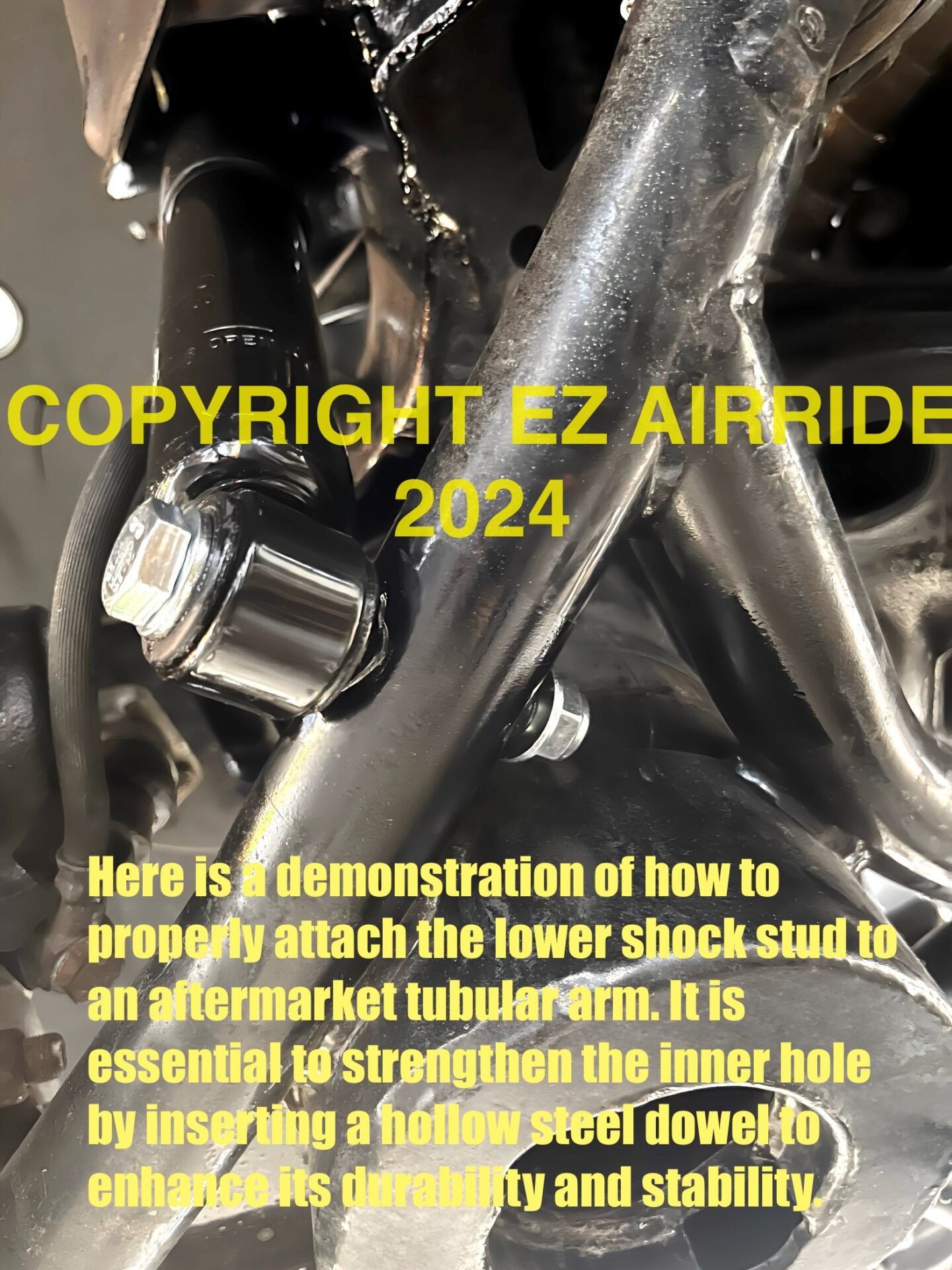
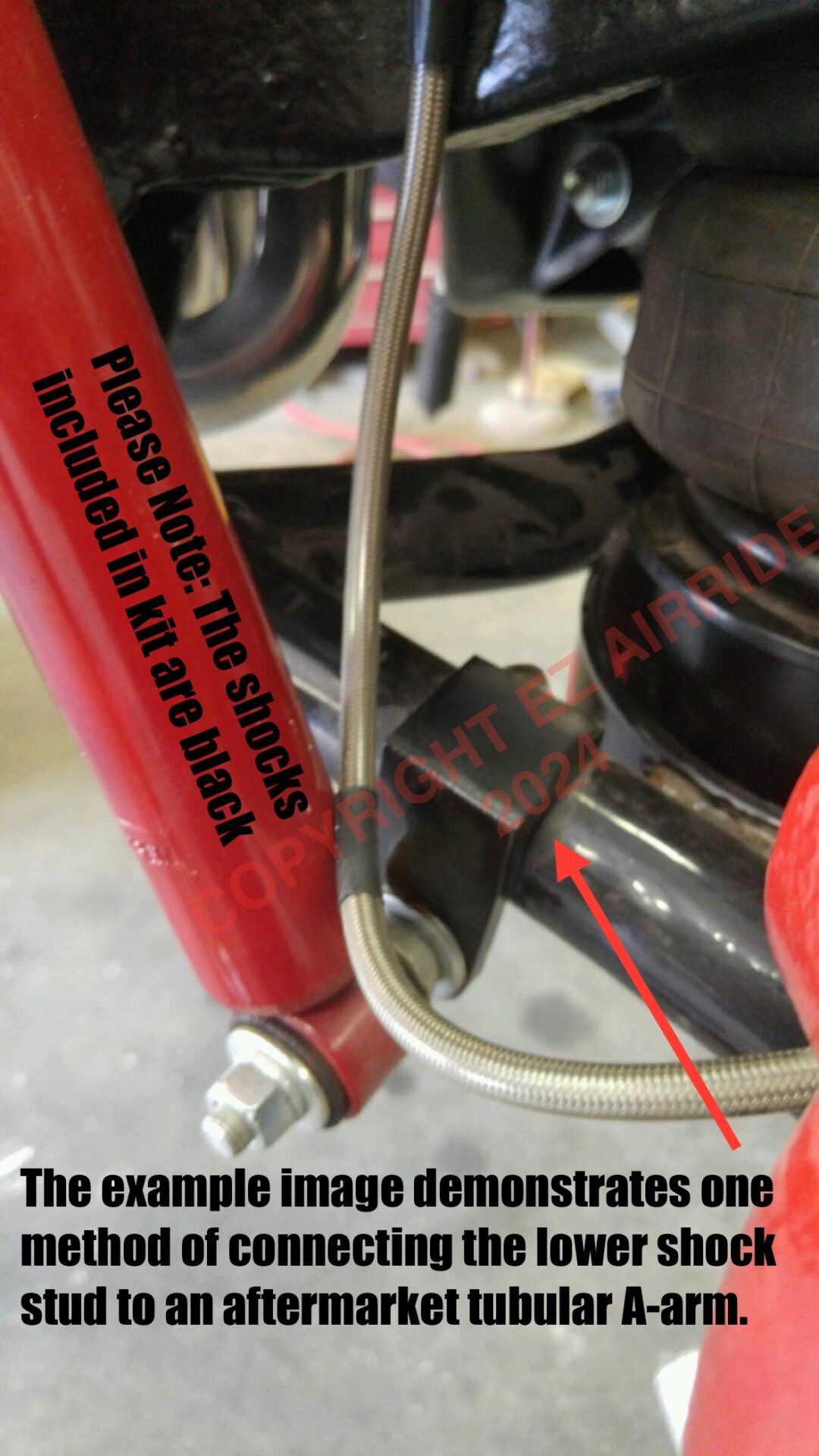
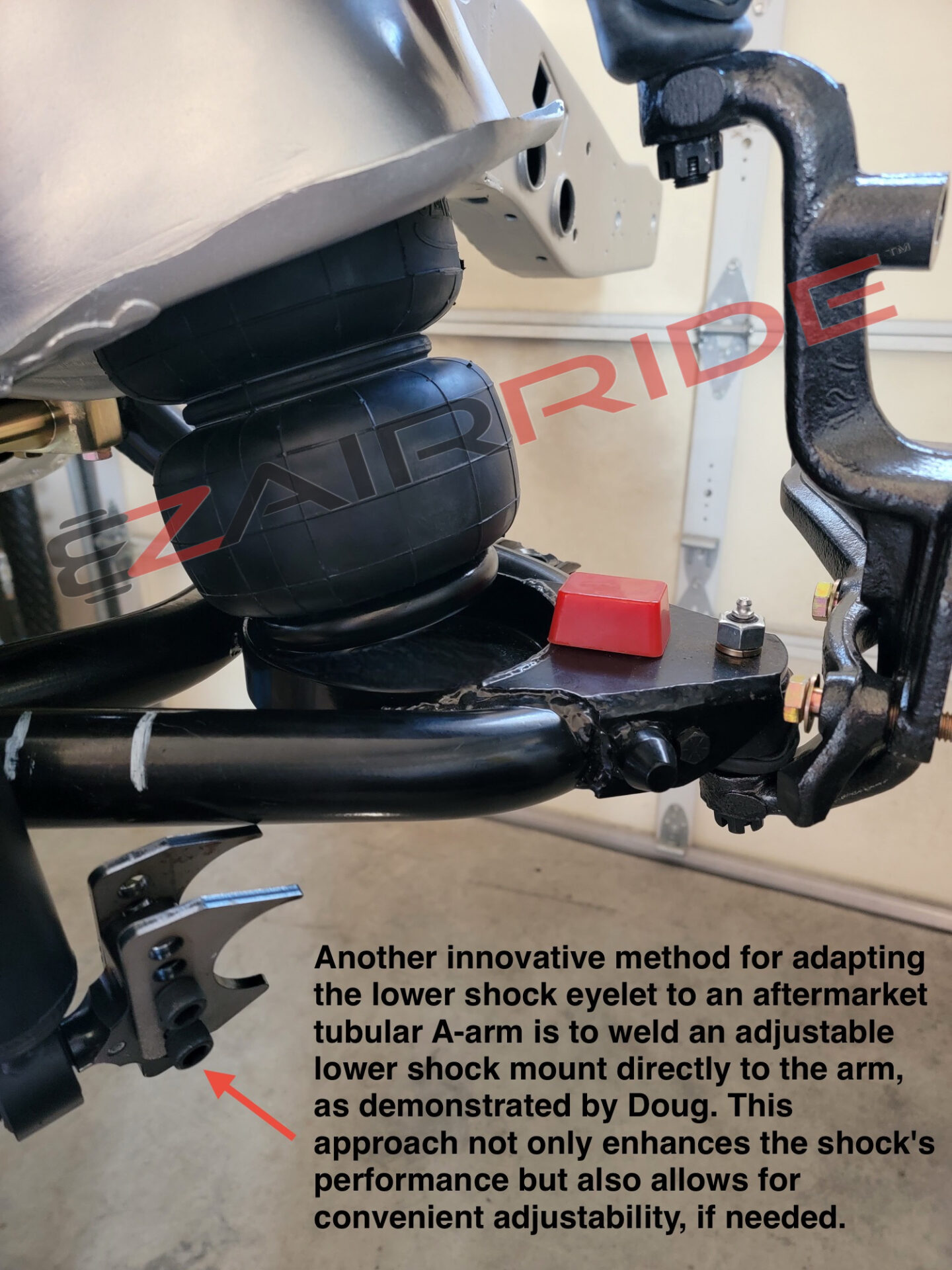
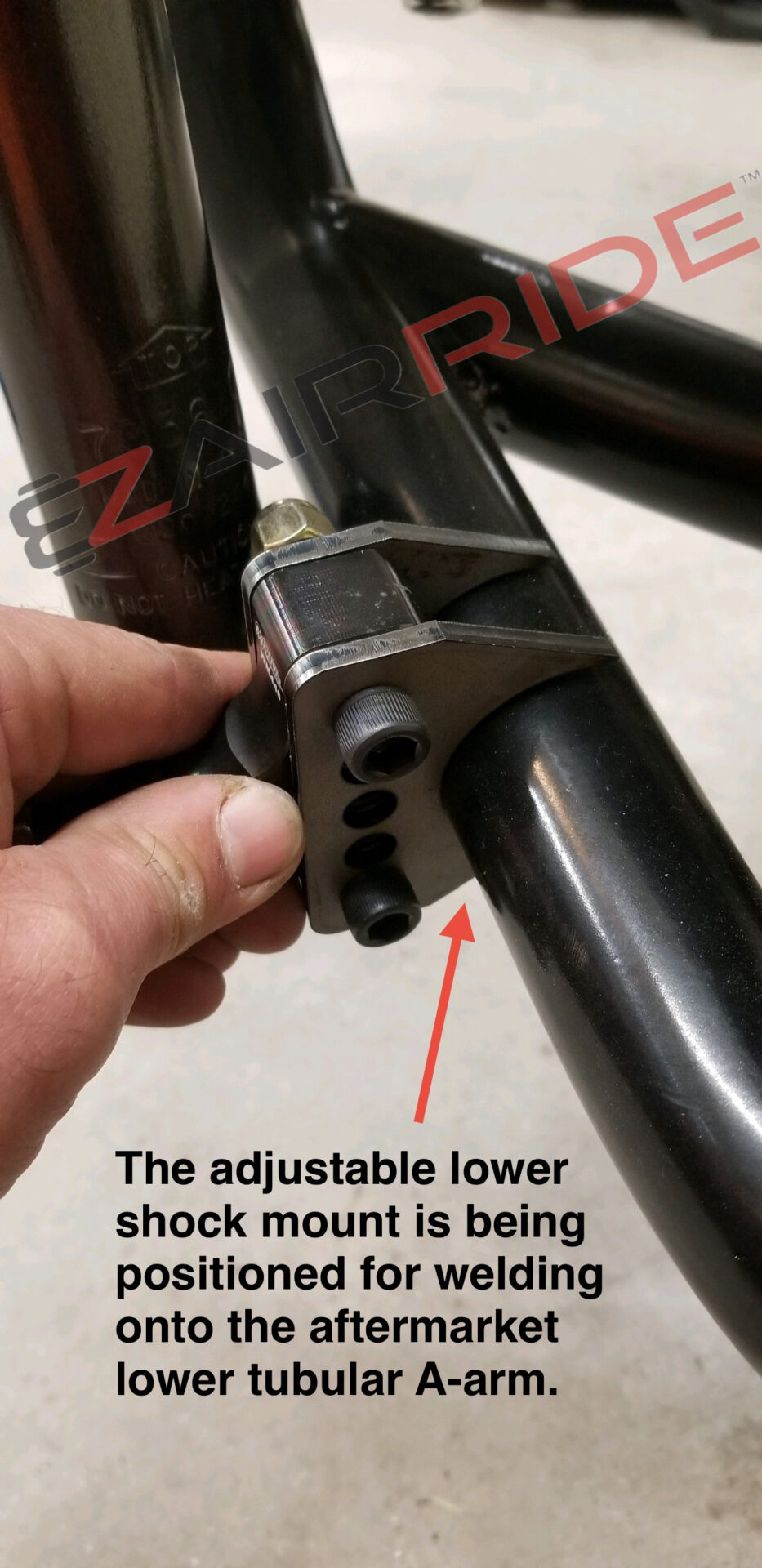
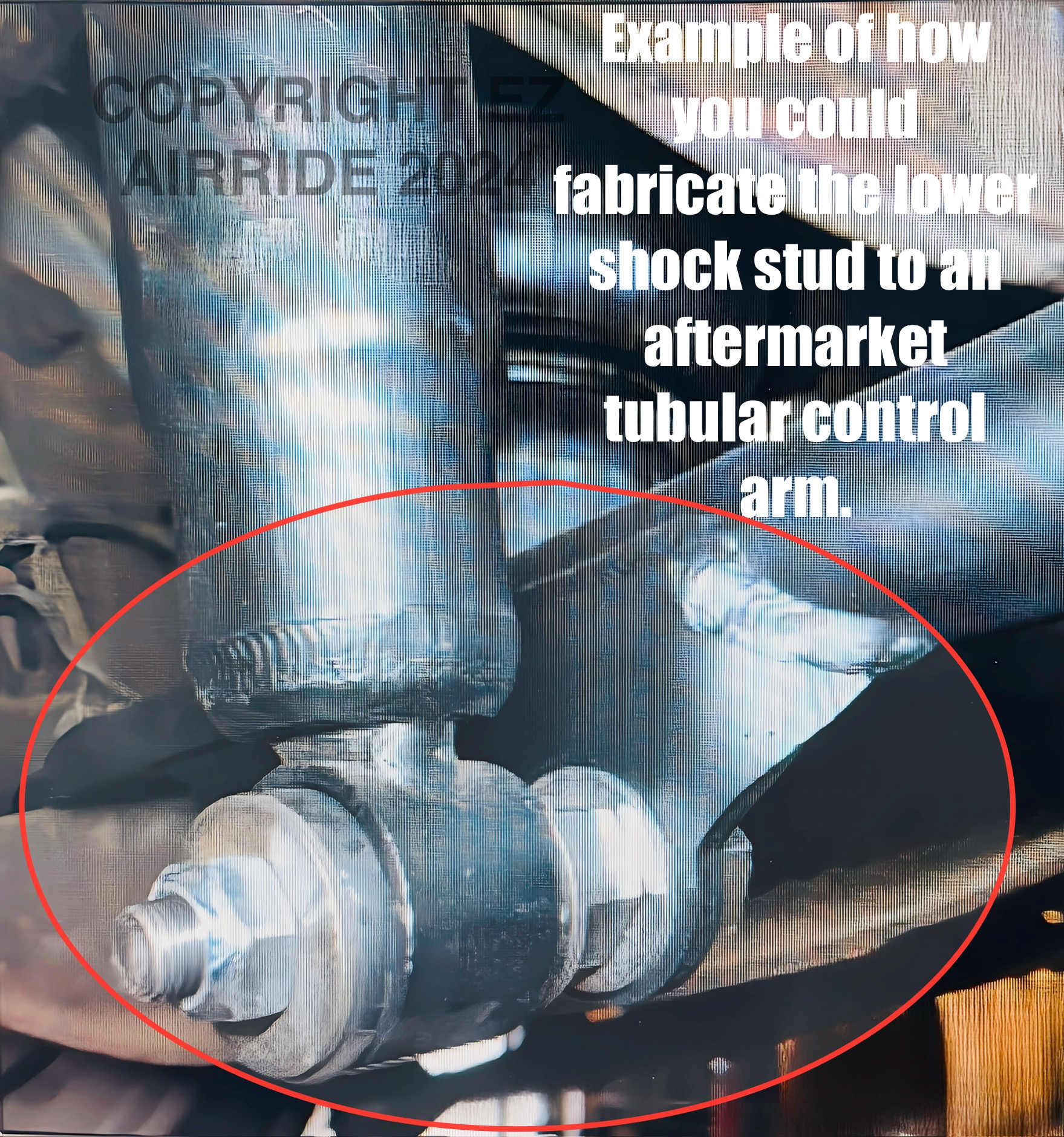
If your vehicle is equipped with aftermarket tubular lower control arms, please be aware that the lower shock stud installation will require additional fabrication. While the stainless steel studs are a direct bolt-on for factory stamped-steel arms, tubular arms lack the necessary flat mounting surface and internal support.
- Fabrication Methods: This typically involves drilling through the tubular arm and inserting a DOM (Drawn Over Mandrel) steel sleeve to support the lower stud, or fabricating custom mounting tabs on the underside of the arm.
- Pro Tip: If you haven’t purchased aftermarket arms yet, we highly recommend refurbishing your original factory arms with fresh paint and new ball joints. This simplifies the install, avoids the need to grind off new powder coating, and can save you hundreds of dollars in shop labor.
Final Installation Note: Measure Twice, Weld Once
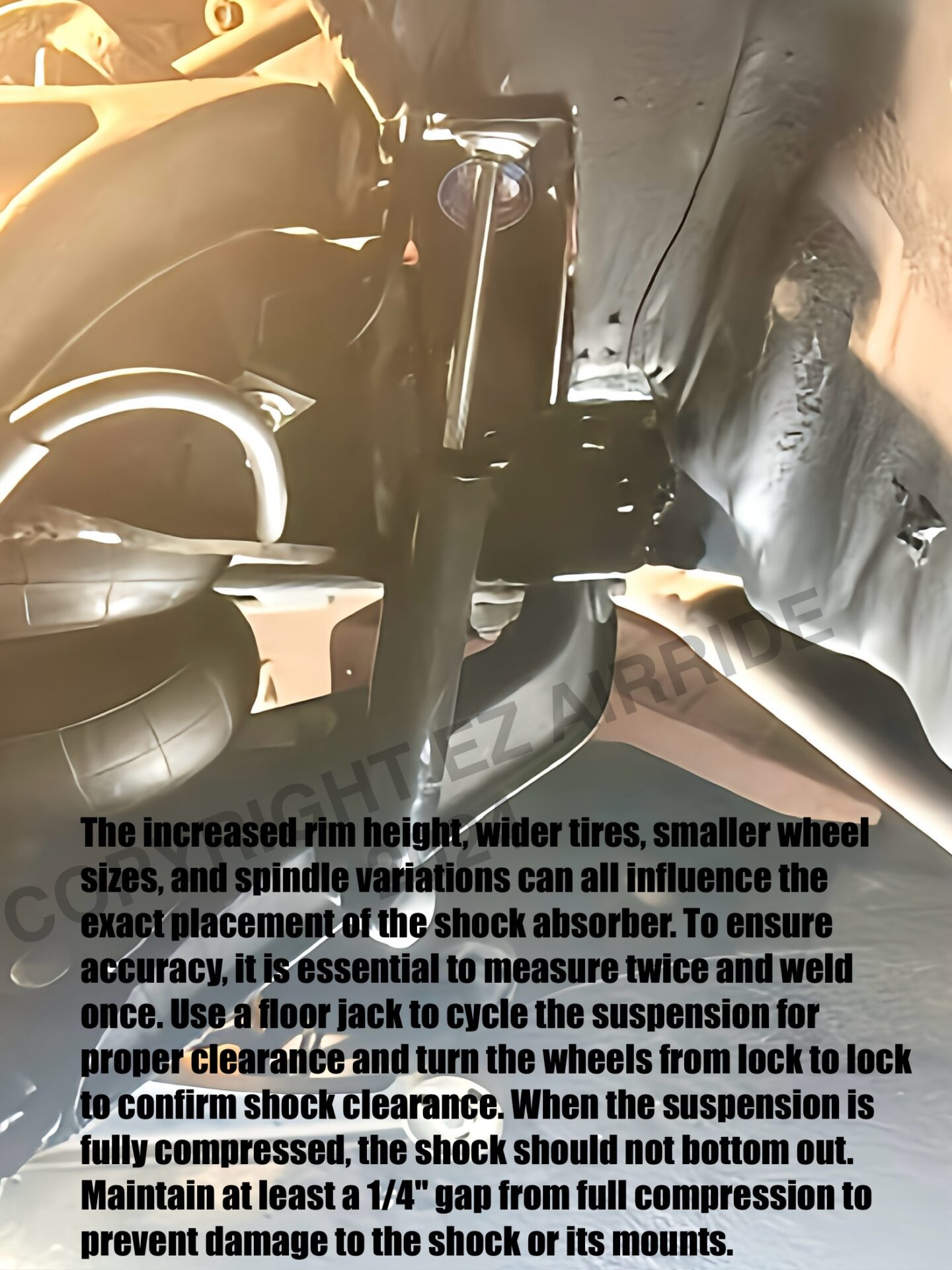
Because every custom build is unique, a “dry fit” mockup is essential before final welding. Variations in rim height, wheel backspacing, aftermarket spindles, and upgraded brake kits can all influence the exact placement of your shock absorbers. It is essential to check your steering sweep from lock-to-lock to ensure no part of the wheel or braking system interferes with the shock.
To ensure a successful installation, we recommend the following pro-tips:
- Cycle the Suspension: Use a floor jack to cycle your suspension through its full range of motion. Turn the wheels lock-to-lock to confirm there is no interference with the shock at any steering angle.
- Check Full Compression: When the vehicle is fully “aired out” (laid down), the shock should not bottom out. We recommend maintaining at least a quarter-inch gap at full compression to prevent internal damage or mount failure.
- Clearance Check: Ensure your shock position provides a safe distance from factory sway bars, brake lines, and oversized wheels.
If you are a novice builder, consulting with a professional shop or a certified welder is highly advisable to ensure your shock relocation is safe, functional, and built to last.